Foucault News

News and resources on French thinker Michel Foucault (1926-1984)

Vanessa Lemm, and Miguel Vatter (eds) The Viral Politics of Covid-19 Nature, Home, and Planetary Health. Palgrave Macmillan, 2022.

About this book
This book ​ critically examines the COVID-19 pandemic and its legal and biological governance using a multidisciplinary approach. The perspectives reflected in this volume investigate the imbrications between technosphere and biosphere at social, economic, and political levels. The biolegal dimensions of our evolving understanding of “home” are analysed as the common thread linking the problem of zoonotic diseases and planetary health with that of geopolitics, biosecurity, bioeconomics and biophilosophies of the plant-animal-human interface. In doing so, the contributions collectively highlight the complexities, challenges, and opportunities for humanity, opening new perspectives on how to inhabit our shared planet. This volume will broadly appeal to scholars and students in anthropology, cultural and media studies, history, philosophy, political science and public health, sociology and science and technology studies.

Chen, Z., & Wang, C. Y. (2019). The Discipline of Happiness: The Foucauldian Use of the “Positive Energy” Discourse in China’s Ideological Works. Journal of Current Chinese Affairs, 48(2), 201–225.
https://doi.org/10.1177/1868102619899409

Abstract
One important question about ideological works in China concerns the tension between mobilisation (encouraging public expression) and control (limiting public expression). Recently Xi Jinping’s administration has doubled down on both strategies. To study the rationale of this seemingly self-contradictory move, the authors examine the recently prominent ideological discourse of “positive energy.” Through a combination of online ethnography and discourse analysis using Foucauldian methods, we find that the discourse borrows and evolves from previous ideological works, but most importantly and distinguishably features a more dispersive, rather than centralised power structure. It penetrates popular culture and private lives, and by doing so disciplines people’s subjectivities, rather than only aiming at top-down persuasion or control. The logic of “positive energy” produces self-disciplined docile subjects, and quietly resolves the tension between mobilisation and control by having subjects internalise the interests of the state as their own good.

WORLD CONGRESS
Foucault: 40 years after

Call for proposals


PDF World Congress F40 Call for proposals

1. Introduction

Michel Foucault died in Paris on 25 June 1984 at the age of 57. Forty years after his death, his work has continued to attract scholars and the general public. The number of books, as well as the doctoral theses, seminars, and conferences focused on his thought around the world is immense. Due to the posthumous publication of his lectures and unpublished material, Foucault’s international impact has continued increase in the last four decades. In fact, Foucault has now become a fundamental academic reference for any research in the Humanities and Social Sciences. The global impact of his work, as well as the increasing global proliferation of Foucauldian groups and networks justifies giving special significance to the forthcoming commemoration of the fortieth anniversary of his death. This is why we would like to organise a world-wide event dedicated to analysing the last four decades of intense reception of Foucault’s work but also to exploring the current repercussion of his thought. To do so, we would like to invite all researchers working on Michel Foucault’s thought to join the project of holding a World Congress in 2024 that will encompass and examine all aspects of the French philosopher’s intellectual production.

2. Methodology

The global impact of Foucault’s work has reached such an extent that it would be impossible to bring together in one place the different groups working on his philosophy. Therefore, we propose to organise a World Congress that will be held in different venues without losing a sense of unity in terms of format and themes. To make this possible, we propose to constitute an International Scientific Committee (ISC), which will receive the activity proposals from different institutions/groups. These proposals will be considered based on a set of general criteria which will establish the minimum conditions to be met. Once the proposal has been accepted, the organisers of the specific event will receive the World Congress logo, which will include the name of the city where the activity in question takes place. Information about all activities will be gathered on and disseminated through the World Congress website and social networks. This will give an extraordinary visibility to all the events. Each local activity will become part of an unprecedented global initiative which will both highlight the relevance that Michel Foucault’s thought has attained and contribute to widening the audience of readers and researchers on a global scale.

3. Criteria

Proposals will be evaluated according to the following criteria:

    • Activities should focus on Foucault’s thought and be inspired by the commemoration of the 40th anniversary of his death;
    • The ISC will make sure that the topics of the activities do not overlap;
    • Activities should be scheduled to be carried out throughout 2024. However, activities should take place between May and June 2024 if possible;
    • Activities may be organised as seminars, workshops, colloquia, or conferences, which could be held in one day or more. One-person activities are excluded;
    • Online streaming of each activity is highly recommended. Event videos will be gathered on the World Congress website;
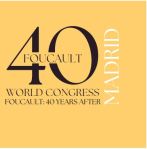
    • Each activity accepted by the ISC should use the World Congress logo (at the top of this document) for promotional purposes. The name of the city in which the event in question takes place will be included on the side of the logo as shown in the example below;
  • Coordination of different activities that take place in the same venue is recommended. Such coordination should not affect the topic or the diversity of the participants.
  • Activities at different venues in the same country are allowed.

4. International Scientific Committee Members

Daniele Lorenzini (USA)
Edgardo Castro (Argentina)
Clare O’Farrell (Australia)
Ernani Chaves (Brazil)
Santiago Castro-Gómez (Colombia)
Adán Salinas (Chile)
Sverre Raffnsøe (Denmark)
Rodrigo Castro (Spain – Coordinator)
Bernard Harcourt (USA)
Frédéric Gros (France)
Philippe Sabot (France)
Elisabetta Basso (Italy)
Yasuyuki Shinkai (Japan)
Alberto Constante (Mexico)
Jesús Ayala-Colqui (Peru)
Mateusz Ozimek (Poland)
Eugenia Vilela (Portugal)
Vanessa Lemm (UK)
Achille Mbembe (South Africa)

5. Submission of proposals

Proposals for activities should be sent to: foucault40after@gmail.com to the Coordinator of the International Scientific Committee: Prof. Rodrigo Castro. Information about activities should include:

a) The title of the activity
b) A short description (5 lines)
c) The city and country in which the activity is to be held
d) The dates on which the activity is to be carried out
e) The name of the coordinator or person in charge of the activity and their e-mail address.

The deadline for submission of proposals is 29th of September 2023.
Decisions on proposals will be communicated in October 2023.

Aurora Cathrin Eidem Adolfsen, Queer Case of Dr Jekyll’s Double Life. A Queer Reading of R. L. Stevenson’s Strange Case of Dr Jekyll and Mr Hyde (1886)

Bachelor’s thesis in English for teacher training students, NTNU, Norwegian University of Science and Technology, Supervisor: Wassim Rustom, May 2023

Abstract
This bachelor’s thesis is a queer reading of Robert Louis Stevenson’s 1886 novella Strange Case of Dr Jekyll and Mr Hyde. The discussion explores the motif of the double in context of Michel Foucault’s concept of discipline and the Labouchère Amendment of 1885. This exploration is carried out through analyses of the three following character dyads: Dr Lanyon and Mr Utterson, Mr Utterson and Dr Jekyll, and Dr Jekyll and Mr Hyde. The analyses paint a holistic picture of the effects of discipline, which reveals substantial connections between the double life conducted by Dr Jekyll and the double life conducted by homosexuals in late 19th century London.

mghamner's avataraffecognitive

Lectures on the Will to Know (Leçons sur la volonté de savoir) contains Michel Foucault’s inaugural lectures at the Collège de France from December 1970 to March 1971. The published text gathers Foucault’s written notes and manuscripts into a considered presentation of what his oration might have been. I stress the form of the text, not only because its tone differs starkly from the later recorded lectures that capture the grain of Foucault’s speaking voice and his delightful asides, but also because the notion of something “beneath” or in “excess” of his written statements vibrates at the core and throughout these lectures. By the end of these lectures, he will call this beneath a “discursive event.” I consider it the central logic of his genealogical method.*

Foucault tasks himself here with clarifying the jeu of truth, that is, the game or play entailed in our desire for, appeal…

View original post 3,209 more words

van der Merwe, Tania Rauch, Elelwani Lara Ramugondo, and André Keet. 2023. “Crafting a Foucauldian Archaeology Method: A Critical Analysis of Occupational Therapy Curriculum-as-Discourse, South Africa” Social Sciences 12, no. 7: 393.
https://doi.org/10.3390/socsci12070393

Abstract
South Africa has a colonial and apartheid past of social injustice, epistemological oppression, and exclusion. These mechanisms are historically inscribed in the designs, practices, and content of higher education—including in occupational therapy curriculum. If these historical markers are not consciously interrogated, patterns of reproduction are reified along the fault lines that already exist in society. The focus of this article is to demonstrate how an archaeological Foucauldian method was crafted from foundational Foucauldian archaeology analytics and existing approaches of Foucauldian discourse analysis to unearth the rules of the formation of the occupational therapy profession. These rules pertain to the formation of (a) the ‘ideal occupational therapist’; (b) who had a say about the profession; (c) the ways of preferred reasoning; and (d) underlying theoretical themes and perspectives about the future. Data sources for this archaeology analytics included commemorative documents of universities on the origin of their programmes; historical regulatory documents; and the South African Journal of Occupational Therapy archive from the period 1953–1994. The analysis rendered two subthemes for each of the rules of formation including ‘white exceptionalism’, white male national, and international, regulatory bodies, the profession’s know-how practical knowledge, and its need for recognition within a bio-medical paradigm. Unearthing the historical markers of a curriculum and viewing it as discourse may enable a conscious reconfiguration thereof.

Keywords: critical discourse analysis; Foucauldian archaeology; occupational therapy curriculum

Bommenel, E., Richard, E., Reid, S.
Using teaching and learning regimes in the international classroom to encourage student re-subjectification
(2023) Journal of Applied Learning and Teaching, 6 (1), pp. 81-92.

DOI: 10.37074/jalt.2023.6.1.14

Abstract
This paper addresses one of the pedagogical challenges that followed the presence of increasingly multinational student groups, particularly the increased diversity of academic backgrounds among students. Theoretically, this challenge can be understood as an encounter between different teaching and learning regimes (TLRs). TLR, coined by Trowler and Cooper (2002), implies a constellation of assumptions, rules, relationships, and practices regarding the conduct of higher education that colours academic staff members’ performance in their profession. It has become a widely used heuristic tool in the reflection process among university staff. It is shown in this paper that TLRs are not only a heuristic tool that can be applied in teacher reflection but may also be fruitfully applied in the classroom in student-teacher interaction. Consequently, we decided to bring the TLR into the classroom. The written student reflections constitute the empirical material that this analysis is based on. We approach these reflections as expressions of confessions of the Self, as laid out by Michel Foucault. We conclude that it is useful for the students to reflect upon TLR’s, but simultaneously, such an approach runs the risk of enhancing pedagogical and epistemological conformism at the neoliberal university. © 2023. Elin Bommenel, Richard Ek and Stuart Reid.

Author Keywords
Foucault; multinational classroom; neoliberal university; power; student subjectification; teaching and learning regime

He, Q.
Avowal or Obedience: Foucault on the Solution to the Dilemma of Examination of Conscience and Its Influences
(2023) Logos and Pneuma – Chinese Journal of Theology, 2023 (58), pp. 169-195.

Note: This article is in Chinese

Abstract
Michel Foucault analyzed the ideas of John Cassian, a Church Father who lived in the 4th century. His interpretation focused on Cassian’s doubt concerning the authenticity of the examination of conscience, practiced by monks during their ascetic life, and Cassian’s solution to this. However, using the theory of imperfection proposed by Anthony Manicki as our perspective, we would propose that Foucault has overemphasized the role of avowal in his interpretation. and at the same time, he has underestimated the role of obedience. However, on the positive side, Foucault’s biased interpretation has inspired many new theological studies on Cassian, as well as proposed a new starting point for further research on Cassian’s understanding of the hermeneutics of the self, the avowal and the test. © 2023, Logos and Pneuma Press. All rights reserved.

Author Keywords
Avowal; Examination of Conscience; Obedience; Test; Theory of Imperfection

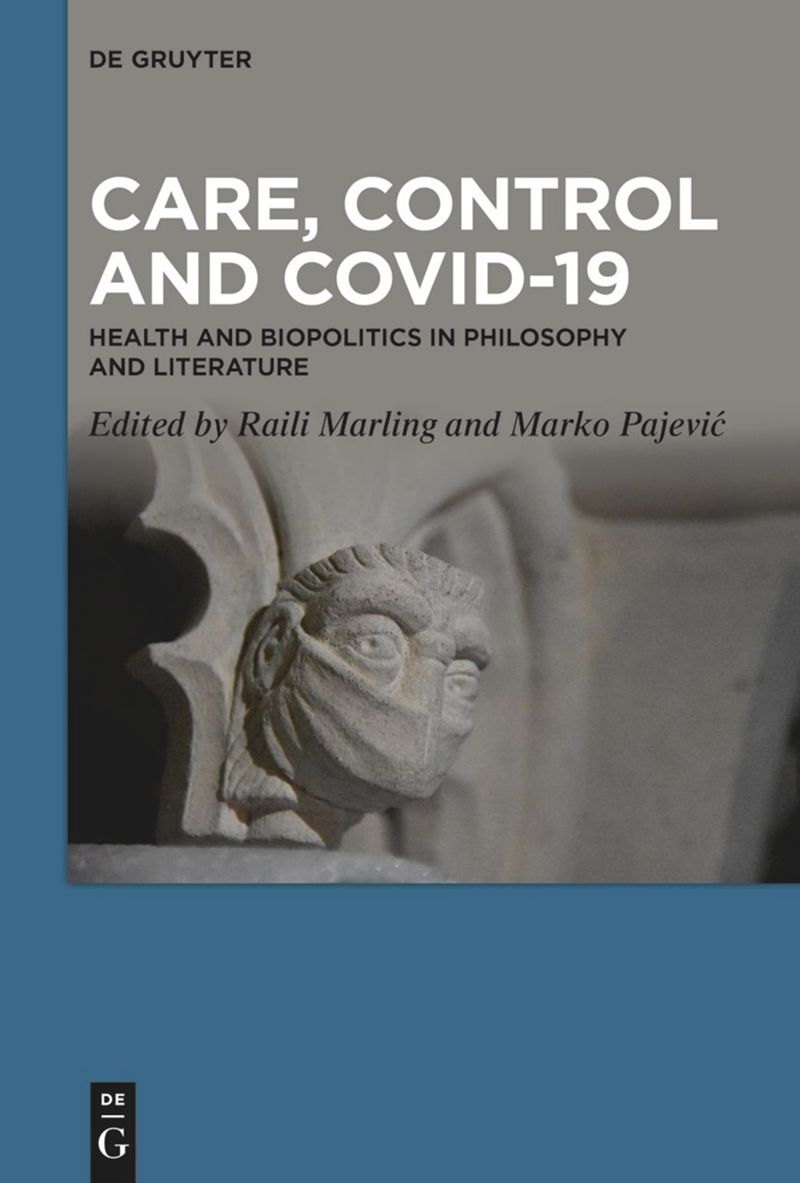
Raili Marling and Marko Pajević (eds), Care, Control and COVID-19. Health and Biopolitics in Philosophy and Literature, de Gruyter, 2023

https://doi.org/10.1515/9783110799361

About this book
This volume sheds light on the social and cultural transformations that accompanied the Covid-19 crisis by looking at health and biopolitics from a philosophical and literary perspective.

The biopolitical measures taken globally in response to the crisis have led to previously unheard-of restrictions in liberal societies, resulting in deep and potentially lasting transformations both in social structures and interpersonal relationships. Many researchers have addressed the Covid-19 crisis as a political or epidemiological challenge, but few have paid sufficient attention to the culturally specific reactions and cultural representations of the human beings at the centre of events. Literary analyses capture this human component and give insights into different reactions to, and protests against, the health-political measures addressing the crisis.

This book puts the notion of biopolitics, first extensively theorised in the 1970s, to work in the context of the Covid-19 pandemic, and uses literary case studies as starting points for discussions of contemporary politics, media, and legal and surveillance regimes. It brings together eleven scholars from six countries with the shared aim of combining literary and philosophical expertise to create a better understanding of the changes in society and political attitudes induced by the ongoing pandemic.

Editor information
Raili Marling, University of Tartu, Tartu, Estonia; Marko Pajević, University of Tartu, Tartu, Estonia.

Højme, Philip. 2022. “Biopolitics and the COVID-19 Pandemic: A Foucauldian Interpretation of the Danish Government’s Response to the Pandemic” Philosophies 7, no. 2: 34. https://doi.org/10.3390/philosophies7020034

Abstract
With the coronavirus pandemic and the Omicron variant once again forcing countries into lockdown (as of late 2021), this essay seeks to outline a Foucauldian critique of various legal measures taken by the Danish government to cope with COVID-19 during the first year and a half of the pandemic. The essay takes a critical look at the extra-legal measures employed by the Danish government, as the Danish politicians attempted to halt the spread of the, now almost forgotten, Cluster 5 COVID-19 variant. This situation will serve as a critical point from where to start using Foucault’s writings on life and biopolitics in order to expose various legally problematic governmental decisions that became visible during the handling of COVID-19 in general and the Cluster 5 mutation in particular. Reframing the pandemic within Foucault’s concept of biopolitics, this essay concludes that the state of exception has led to an increase in biopolitical logic, where some lives have come to matter more than others. As a critical counterpoint to this logic, the conclusion suggests that the notion of biocommunism could provide a suitable reconfiguration of communism. A reconfiguration that could mitigate some of the issues related to biopolitics is uncovered earlier in the essay.

Keywords: G. Agamben; J. Butler; biopolitics; biocommunism; COVAX; COVID-19; Denmark; M. Foucault; pandemic; vaccine nationalism