Foucault News

News and resources on French thinker Michel Foucault (1926-1984)

Editor: I have recently developed an interest in fountain pens and was wondering if anybody knew what brand of fountain pen Foucault used? He may have used a biro (like Ian Fleming) but most writers at the time he was writing would have used fountain pens.

From the biographies and from those currently working in the archives we know he wrote by hand and that his writing is no easy matter to decypher. He had a secretary who was expert in decyphering his writing and typing up his work for publication.

For those of you curious about the writing instruments used by other philosophers and Martin Heidegger in particular, there is an interesting discussion on the Fountain Pen Network concerning Heidegger’s writing instruments and a most informative article by Richard Polt titled ‘Heidegger’s Typewriter’ published in 2022. (With thanks to Stuart Elden for both these references.)

If you have any information, feel free to leave a comment on this post or to email me directly.

Baker, E.-R.
The Third Reich of Dreams: Resisting fascism through the oneiric unconscious
(2023) In Emily-Rose Baker and Diane Otosaka (eds) Dreams and Atrocity: The Oneiric in Representations of Trauma, Manchester University Press, 2023, pp. 120-138.

DOI: 10.7765/9781526158086.00015

Abstract
Between 1933 and 1939, Berlin-based Jewish journalist Charlotte Beradt undertook a clandestine project to collect the nightmares of the German nation, which were eventually published in 1966 under the title The Third Reich of Dreams. Demonstrating the deep psychological reach of the Third Reich, which penetrated even the unconscious minds of its subjects during sleep, this extensive archive boasts over three-hundred dreams of German citizens, both Jews and gentiles, yet has received little critical attention since its publication over fifty years ago. This chapter critically examines the political potency and collective nature of dreams of Nazi fascism in Beradt’s archive alongside an analysis of Arthur Miller’s play Broken Glass (1994), in which a Jewish woman living in 1938 New York is inexplicably paralysed by reports of antisemitic violence in the Third Reich. By uniting these real and fictional episodes of the collective interwar unconscious, this chapter demonstrates the ability of dreams and other psychic modes to not only reflect but respond to the otherwise latent fears of the collective interwar imaginary as a reaction against the ways in which totalitarianism seeks to colonise the psyche. Bringing Michel Foucault’s early work on the dream as constitutive of the imagination into dialogue with Cathy Caruth’s notion of the ‘life drive’ central to traumatic dreams, I build on Sharon Sliwinski’s convincing notion of dreaming as an expressly political act to elucidate the decolonising logic harnessed by dreams. © Manchester University Press 2023.

Leclercq-Vandelannoitte, A.
Is employee technological “ill-being” missing from corporate responsibility? The Foucauldian ethics of ubiquitous IT uses in organizations
(2022) In Kirsten Martin, Katie Shilton, Jeffery Smith (eds.)Business and the Ethical Implications of Technology, Springer, 2022, pp. 33-55.

DOI: 10.1007/s10551-019-04202-y

Abstract
The ethical issues introduced by excessive uses of ubiquitous information technology (IT) at work have received little attention, from either practitioners or ethics scholars. This article suggests the concept of technological ill-being and explores the ethical issues arising from such ill-being, according to the individual and collective responsibilities associated with their negative effects. This article turns to the philosopher Michel Foucault and proposes a renewed approach of the relationship among IT, ethics, and responsibility, based on the concepts of practical rationality, awareness, and self-engagement. This article reports a case study of an international automotive company actively engaged in both corporate social responsibility (CSR) and ubiquitous IT deployment. Technological ill-being is an expression of the tension between an individual’s social attributes and aspirations when using modern IT and a system of norms, rules, and values imposing constraints on him or her. We identify the reasons for the lack of consideration of technological ill-being in CSR through identification of the inclusion-exclusion principle. The resulting critical, comprehensive approach to corporate responsibilities and IT uses incorporates the ethical implications of the latter, highlights the practical rationality of their relationship, and demands both individual and collective responses, through a call for collective ethical awareness and self-engagement. The findings prompt a Foucauldian ethics of IT use in organizations, which emerges in a mutually constitutive relationship between the self, as a moral subject of own actions, and broader organizational principles, in which CSR appears as a techne (i.e., a practical rationality governed by conscious aims). © Springer Nature B.V. 2019. All rights reserved.

Author Keywords
Corporate responsibility; Ethics; Inclusion-exclusion principle; Michel Foucault; Technological ill-being; Ubiquitous information technology

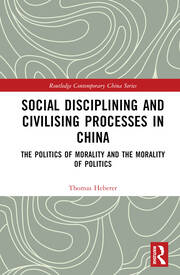
Thomas Heberer, Social Disciplining and Civilising Processes in China. The Politics of Morality and the Morality of Politics, Routledge, 2023

This book argues that a major part of the Chinese government’s road map, formulated in 2017, to modernise China comprehensively by 2049 is the process of social disciplining. It contends that the Chinese state sees that modernisation and modernity encompass not only economic and political–administrative change but are also related to the organisation of society in general and the disciplining of this society and its individuals to create people with “modernised” minds and behaviour; and that, moreover, the Chinese state is aspiring to a modernity with “Chinese characteristics”. The question of modernising by disciplining was extensively dealt with in the twentieth century by leading Western social scientists including Max Weber, Norbert Elias and Michel Foucault, who argued that disciplining, extending from external coercion towards the internalisation of restraints, is indispensable for achieving social order and thereby for “civilisation” –but defined from a European perspective, in relation to developments in Europe. This book therefore not only discusses the Chinese experience of social disciplining, but also, by looking at a non-Western society, identifies universal tendencies of societal change and social disciplining and separates them from particular occurrences.

Autour du Discours philosophique de Michel Foucault

Journées d’étude internationale

4 et 5 décembre 2023

Université Paris 1 Panthéon-Sorbonne et Université Paris 8

Journées coorganisés par l’Institut des sciences juridique et philosophique de la Sorbonne (ISJPS, UMR 8103) à l’Université Paris 1 Panthéon-Sorbonne, par le Laboratoire d’études et de recherches sur les Logiques Contemporaines de la Philosophie (LLCP, EA 4008) pour l’Université Paris 8, avec le soutien du Centre Michel Foucault.

Organisation : Philippe Büttgen (Univ. Paris 1) ; Orazio Irrera (Univ. Paris 8) ; Judith Revel (Univ. Paris 1)

4 décembre 2023 | 9h-17h45 | Université Paris 1 Panthéon-Sorbonne*

9h | Accueil introduction | Philippe BÜTTGEN (Univ. Paris 1) ; Orazio IRRERA (Univ. Paris 8) ; Judith REVEL (Univ. Paris 1)

9h30-12h | Session 1 | Université Paris 1, Centre Panthéon, 12, place du Panthéon, salle 216

Présidence de séance : Judith REVEL (Université Paris 1 Panthéon-Sorbonne)

  • Etienne BALIBAR (Université Paris Nanterre) : « Pourquoi Foucault n’a-t-il pas publié son livre sur la philosophie ? Hypothèses et interprétations »

10h30-11h Pause-café

  • Pascale GILLOT (Université de Tours) : « L’événement cartésien selon Le Discours philosophique »

12h Pause déjeuner

14h30 | Session 2 | Université Paris 1, 17, rue de la Sorbonne, esc. C, 1er étage, salle Lalande

Présidence de séance : Franck FISCHBACH (Université Paris 1 Panthéon-Sorbonne)

  • Philippe SABOT (Université de Lille) : « Fiction et/ou philosophie ? Des Mots et les choses au Discours philosophique »
  • Jean-Louis FABIANI (Central European University, Vienne) : « Le discours philosophique, le programme et le canon »

16h30 | Pause-café

  • Orazio IRRERA (Université Paris 8) : « Le discours philosophique et les historiens de la philosophie »

17h45 | Clôture

* ATTENTION Inscription nécessaire pour les deux sessions : voir ci-contre.


5 décembre 2023 | 10h-18h30 | Université Paris 8, 41, rue Guynemer, Saint-Denis

10h | Accueil et introduction | Philippe BÜTTGEN (Univ. Paris 1) ; Orazio IRRERA (Univ. Paris 8) ; Judith REVEL (Univ. Paris 1)

10h30 | Session 3 | Bibliothèque Universitaire Paris 8, Salle de la recherche

Présidence de séance : Éric ALLIEZ (Université Paris 8)

  • Martin SAAR (Institut für Sozialforschung, Francfort-sur-le-Main) : « Philosophy as Diagnosis (Foucault/Adorno) »
  • Judith REVEL (Université Paris 1 Panthéon-Sorbonne) : « Faire l’histoire de… : la philosophie à l’épreuve de l’historicisation »

12h30 | Pause déjeuner

14h00 | Session 4 | Bibliothèque Universitaire Paris 8, Salle de la recherche

Présidence de séance : Michèle COHEN-HALIMI (Université Paris 8)

  • Arianna SFORZINI (Université Paris-Est Créteil) : « La philosophie : une question de style ? Nietzsche dans le Discours philosophique »
  • Emmanuel SALANSKIS (Université de Strasbourg) : « Penser après Nietzsche »

16h15 | Pause-café

16h30 | Session 5 | Bibliothèque Universitaire Paris 8, Salle de la recherche

Présidence de séance : Orazio IRRERA (Université Paris 8)

  • Daniele LORENZINI (University of Pennsylvania) : « Foucault, l’archéologie, l’histoire »

17h30 | Session 6 | Bibliothèque Universitaire Paris 8, Salle de la recherche

Présidence de séance : Philippe BÜTTGEN (Université Paris 1), Judith REVEL (Université Paris 1)

  • Discussion conclusive : Éditer Le Discours philosophique, bilan et perspectives

18h15 | Clôture

Corcoran, M.
‘Leave Something Witchy’: Evolving Representations of Cults and New Religious Movements in Folk Horror (2023) in Robert Edgar, Wayne Johnson (eds) The Routledge Companion to Folk Horror, Routledge, 2023 pp. 65-76.

DOI: 10.4324/9781003191292-8

Abstract
The Folk Horror sub-genre, as it is popularly understood, emerged alongside heightened public and media fascination with cults. In British and American Folk Horror from this period, a transnational engagement with cultic activities appears as a dominant theme. Works as diverse as The Blood on Satan’s Claw (1971), The Wicker Man (1973), The Devil’s Rain (1975), and The Dark Secret of Harvest Home (1978) depict pagan cults and satanic groups as a threat to society. These texts often engage in a process of ‘enfreakment’ whereby normal, well-adjusted members of society are positioned in opposition to deviant, destructive cults. Conversely, during the Folk Horror revival of the 2010s, works such as Apostle (2018), Midsommar (2019), and The Other Lamb (2019) present a more nuanced view of cults. In this context, cults act not merely as perversions of mainstream culture but, rather, as what Michel Foucault terms heterotopias, or counter-sites, in which ‘all the other real sites that can be found within the culture, are simultaneously represented, contested, and inverted’. In these post-millennial works, cults are no longer framed as monstrous deviations from the social norm but, instead, act as multivalent sites in which individuals and communities can explore complex issues relating to gender, sexuality, family, and identity. © 2024 selection and editorial matter, Robert Edgar and Wayne Johnson; individual chapters, the contributors.

Reimagining Globalization and Education
Edited By Fazal Rizvi, Bob Lingard, Risto Rinne, Routledge, 2022

Description
This book brings together leading scholars in Global Studies in Education to reflect on how various developments of historic significance have unsettled the neoliberal imaginary of globalization. The developments include greater recognition of inequalities and the changing nature of work and communication; the emergence of new technologies of governance; a greater awareness of geopolitical shifts; the revival of nationalism, populism and anti-globalization sentiments; and the recognition of risks surrounding pandemics and climate change. Drawing from a range of disciplinary perspectives, the chapters in this collection examine how these developments demand new ways of thinking about globalization and its implications for education policy and practice — beyond the neoliberal imaginary. 

Table of Contents

Chapter 1: Reimagining Globalization and Education: An Introduction
Fazal Rizvi, Bob Lingard and Risto Rinne

Chapter 2: Globalization in Higher Education: The Good, The Bad and the Ugly
Simon Marginson

Chapter 3: The Crisis Deluge and the Beleaguered University
Jane Kenway and Debbie Epstein

Chapter 4: Rethinking the Authority of Inter-Governmental Organizations in Education
Johanna Kallo

Chapter 5: Emergent Developments in the Datafication and Digitalization of Education
Steve Lewis, Jessica Holloway and Bob Lingard

Chapter 6: Artificial Intelligence and a New Global Policy Problem in Education
Kalvero Gulson

Chapter 7: Education and the Shifts in the Global Economy: Meritocracy and the Changing Nature of Work
Hugh Lauder

Chapter 8: Expanding Spaces and New Global Regulatory Trends in Educational Privatization:
Adrian Zancaro, Toni Verger and Clara Fontdevila

Chapter 9: Rethinking Social Inequalities and the Marginalization of Education under Changing Global Conditions
Tero Järvinen

Chapter 10: Rethinking Academic Mobility Through the Emerging Global Challenges
Suvi Jokila, Arto Jauhiainen and Marja Peura

Chapter 11: Global Biopolitics of Climate Change: Affect, Digital Governance, and Education
Marcia McKenzie

Chapter 12: Rethinking Globalization and Reconfiguring Education Reform in Nordic Countries
Risto Rinne

Chapter 13: The Rise of China and the Next Wave of Globalization: The Chinese Dream, Belt and Road Initiative, and the ‘Asian Century’
Michael Peters

Chapter 14: The Complexities and Paradoxes of Decolonization in Education
Sharon Stein, Vanessa Andreotti, Cash Ahenakew, and Dallas Hunt

Chapter 15: Education and the Politics of Anti-Globalization
Fazal Rizvi

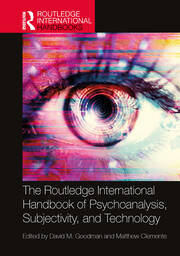
Karastergiou, A. AI and Madness
(2023) In David Goodman, Matthew Clemente (eds) The Routledge International Handbook of Psychoanalysis, Subjectivity, and Technology, Routledge, 2023, pp. 281-292.

DOI: 10.4324/9781003195849-28

Abstract
Are the concepts of “madness” and “normality” applicable to modern AI technologies? In this chapter, we will endeavor on a journey to explore how Foucault’s conception of “madness” along with Canguilhem’s distinction between the “normal and the pathological” can be utilized in an analysis of AI systems. Approaching AI from a philosophical, or even a psychoanalytic perspective, may seem prima facie bizarre or out of place. However, as we shall see AI applications may be considered as peculiar types of machines. Due to their proximity to the human, or shall we say the “man behind the machine,” we believe that some categories of thought which were reserved for organic life are quite relevant here. Canguilhem believed that there is no pathological machine. A machine can only malfunction. However, an organism at the pathological state is not an organism in a chaotic state, but in one with its own set of rules. What if such a set of rules emerges from a deep learning “machine”? Foucault was well aware of how normality is enforced and how madness is institutionalized. Using this as a metaphor, one could expand on how this institutionalization affects the opacity of AI, creating an obscure mechanical “madness.”. © 2024 selection and editorial matter, David M. Goodman and Matthew Clemente; individual chapters, the contributors.

James, K., Elliott, S.
Student-Led Cricket Matches as a Product of Coaching/Mentoring An Autoethnographic Account (2023) Boyhood Studies, 16 (1), pp. 40-64.

DOI: 10.3167/bhs.2023.160104

Abstract
Using a historical, autoethnographic approach in this article, we discuss six student-led cricket matches that we organized in Perth, Australia, from 1979 to 1981. From a Foucauldian perspective, we present these games as a student-led resistance against the normalizing and disciplinary processes of official school and youth cricket. The original scoresheets and match summaries exist both then and now only as subjugated knowledges. As these matches’ two captains, we attribute the positive atmosphere, which encouraged such creative initiatives, as being partly due to one class teacher’s vision and ethos, which contrasted with the toxic hypermasculinity of the other men teachers. Through a look at our student-led cricket matches of 1979–1981, we recall memories of whiteness within a socially conservative and overall pro-British cultural context. © 2023 the Author(s)

Author Keywords
autoethnography; cricket; Foucault; negative effects of coaching; subjugated knowledges; youth sport

Michel Foucault et la théologie politique. Sous la direction de Agustín Colombo, Laval théologique et philosophique, Volume 79, numéro 3, 2023, p. 327-497, Diffusion numérique : 13 novembre 2023

Dossier

Liminaire — Michel Foucault et la théologie politique : un rapport problématique
Agustín Colombo et Jean Leclercq

Théologie politique et pouvoir pastoral : Foucault contre Agamben
Rodrigo Castro Orellana

Oikonomia et regimen : à propos d’une critique de M. Foucault par G. Agamben
Michel Senellart

Foucault, Cassien et le paradoxe monastique
Ostiane Lazrak

La spiritualité comme liberté : à propos du rapport entre expérience et action chez le dernier Foucault
Agustín Colombo

Articles hors thème