Foucault News

News and resources on French thinker Michel Foucault (1926-1984)

Call for Abstracts
Handbook Title: Foucault and Education: Exploring Perspectives and Practices
Publisher: Bloomsbury Publishing

PDF of call for abstracts

We are delighted to announce a call for abstracts for contributions to an upcoming volume titled “Foucault and Education: Exploring Perspectives and Practices,” to be published by Bloomsbury Publishing. This handbook aims to delve into the intricate intersections of power, knowledge, and education through the lens of Michel Foucault’s influential theories.

Description:
This essential guide navigates the profound influence of Michel Foucault on educational theory and practice, offering a nuanced exploration of disciplinary mechanisms, surveillance, and the dynamics of power within educational institutions. Engage with insightful analyses, practical applications, and critical reflections that illuminate Foucauldian concepts and methodological approaches in the context of teaching, learning, and institutional structures. Featuring voices from international scholars, with a particular focus on perspectives from the Global South, this handbook ensures a diverse and inclusive examination of how Foucault’s ideas continue to shape and challenge the landscape of education and educational research. Whether you’re an educator, student, or researcher, this handbook serves as an invaluable resource for fostering a deeper understanding of the global dimensions of Foucault’s impact on education.

Contributors are invited to submit abstracts for chapters that align with the following potential focus areas for the “Handbook on Foucault and Education”, including (but not limited to):

Theoretical Foundations and Methodological Implications:
Introduction to Foucauldian frameworks for educational inquiry; Power/Knowledge dynamics in educational institutions; methodological approaches including archaeology, genealogy, and problematization; Epistemes and educational paradigms; the influence of Foucault on the philosophy of education.

Institutional Dynamics:
Discursive Practices in Education; Shaping Curriculum and Pedagogy; Panopticism and Surveillance in Educational Settings; Discipline and Control; Biopolitics in Education; Governing Populations and Bodies; Governmentality and Educational Policies; Strategies of Control and Management; Spatial Dimensions of Power; Mapping Educational Landscapes; Embodiment and Learning; Examining the Corporeal Aspects of Education; Identity and Subjectivity

Subject Formation and Education:
Becoming and Identity in Schooling; Intersectionality and Foucauldian Analysis; Addressing Diversity in Educational Contexts; Resistance and Counter-Conduct in Educational Spaces; Challenging Norms; Foucault and Critical Race Theory; Intersecting Perspectives on Education, Queer Theory and Education; Unraveling Normativity through a Foucauldian Lens

Activism and Resistance:
Critical Pedagogies and Foucault; Applying Theory to Classroom Practice; Challenges and Debates; Critiques and Extensions of Foucault’s Educational Insights; Resisting Disciplinary Power; Strategies for Empowerment in Education; Education as a Site of Struggle; Foucault and Social Movements; Problematizing Student Resistance; Foucauldian Insights into Educational Activism

Emerging Trends and Global Perspectives:
The Role of Ethics in Foucauldian Educational Practices; Navigating Moral Dimensions, The Dynamics of Knowledge Production; Foucault and Educational Research; Global Perspectives on Foucault in Education; Insights from the Global South; Foucault and Comparative Education; Cross-Cultural Perspectives; Beyond the Classroom; Foucault and Informal Learning Environments; The Future of Foucault in Education; Emerging Trends and New Horizons; Education and Truth in a Post-truth Era

This list is not exclusive, and the editors welcome additional focus areas that contribute to the exploration of Foucault and education. Regarding the process, we are hopeful to use a method of internal peer review, where we invite contributors to provide feedback to other manuscripts in the volume. We hope this creates additional opportunities for collaboration, and addresses the potentially time-consuming process of external peer review.
We particularly welcome:

● Contributions from early career scholars,
● Collaborative work between early career scholars and seasoned authors.
● Contributions from international scholars, authors from the Global South, and multilingual authors.
● Editors extend an invitation to peer review and be a section editor.

Submission Guidelines:
● Abstracts should be no more than 500 words and clearly outline the proposed chapter’s objectives, methodology, and key arguments.
● Please, include authors’ names, titles, affiliations, and contact information.
● Please, indicate the section and specific topic your abstract addresses, if any.
● Please, indicate if you are willing to serve as an internal peer reviewer and/ or section editor.

Abstracts should be submitted via email to ra@humboldt.edu by August 1, 2024.

Important Dates:

● Submission of Abstracts: August 1, 2024
● Invitation to Authors: October 15, 2024
● Full Manuscript Submission: February 15, 2025
● Review Comments Sent to Authors: August 1, 2025
● Submission of Revisions: November 1, 2025
● Release: October 1, 2024

We welcome contributions from scholars, educators, and researchers across disciplines and encourage diverse perspectives and methodologies. This volume provides a platform for rigorous scholarship and critical dialogue on the intersections of Foucault’s theories and educational practices.

Please, contact the editors for inquiries or further information. We look forward to receiving your submissions and to the collective exploration of Foucault’s enduring relevance in education.

Rouhollah Aghasaleh, PhD ra@humboldt.edu
Tristan Gleason, PhD tgg20@humboldt.edu California State Polytechnic University, Humboldt
Jim Burns, PhD jburns@fiu.edu Florida International University

Forthcoming Included in this volume: Johanna Oksala, Foucault and the Task of Philosophy

Johanna Oksala

Coppola, A. « Annette » de Carax : une fantomachie biographique (2023) Modern and Contemporary France,

DOI: 10.1080/09639489.2023.2269396

Abstract
Leos Carax’s film ‘Annette’, screened at the Cannes Film Festival in 2021, left no one indifferent: something important was being said about cinema and, in particular, about French cinema. The thread running through our analysis of the film is that of the author’s self-psychoanalysis, with Carax himself inviting us to do so. What emerges is a tragic personal account, but also a Caraxian ego of a cursed genius of highly mediatised cinema, which the film attempts to mix with a critique of showbiz in general. This criticism is light, but it is illuminated by the notions of Michel Foucault’s regime of veridiction and Jay Martin’s scopic regime. An organisation of seeing-seen and showing-shown haunts both so-called postmodern society and cinema; that of Carax in particular, who tries to announce-denounce it like Jean-Luc Godard by playing with meta-diegetics. This hantology or fantomachy in the manner of Derrida does not, however, achieve a critique of the spectacle that is not a spectacle of critique, as the conditions in which the film was made and broadcast show. © 2023 Association for the Study of Modern and Contemporary France.

A Conversation on Late Fascism
Alberto Toscano and Evan Calder Williams , e-flux, March 15, 2024

This is an edited version of the live event that took place on December 12, 2023 at e-flux in Brooklyn. Alberto Toscano’s Late Fascism: Race, Capitalism, and the Politics of Crisis is published by Verso.

[…]
AT: I remembered reading interviews Michel Foucault did with Cahiers du Cinema and another film magazine, which are not at all well known. In the early to mid-seventies, there is a set of films made by avant-garde or auteur European filmmakers—Cavani, Pasolini, Visconti, and others—that link the emergence of Nazism and fascism to questions of sexuality and gender. This was often done in rather dubious, or as we say today, problematic ways, and it leads to a lot of debate, some really historically curious debates.
[…]

But I think it’s a really interesting moment for a whole set of reasons. And Foucault intervenes in this. Foucault is both quite funny and quite insightful in some of these interviews.

He says that the first problem with these films is that they make us believe—which is both false and in its own way dangerous—that there was an erotic charisma to Nazism. He counters by saying that, at the sexual level, Nazism is like a marriage between an agronomist and a charwoman. (I forget exactly, it was some terrible sentence like that.) His point is that it’s the least sexy thing in the world. That’s what these films don’t get at all, because they’re obsessed with the leather and the boots and all the fetishism.

ECW: Can I read a couple sentences from the interview? Because it’s inimitable and worth hearing: “Nazism was not invented by the great erotic madmen of the twentieth century, but by the most sinister, boring, and disgusting petit bourgeois imaginable. Himmler was a vaguely agricultural type and married a nurse.” (Slightly mean to nurses, I have to say.) “We must understand that the concentration camps were born from the conjoined imagination of a hospital nurse and a chicken farmer, a hospital plus a chicken coop. That’s the phantasm behind the camps.” It’s a pretty remarkable interview.
[…]

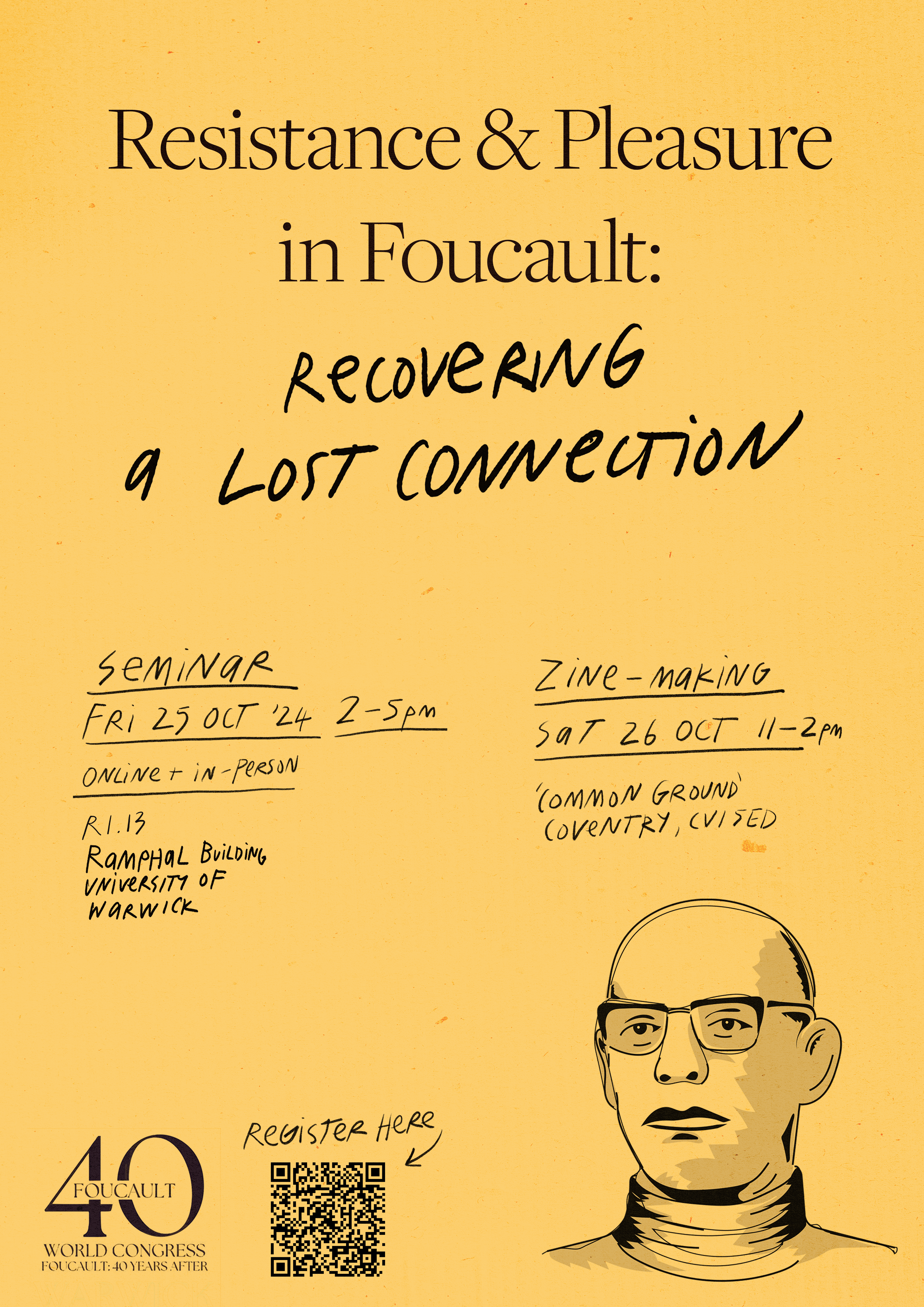
Foucault – 40 Years After
Rethinking Foucault’s Historical Ontology of Ourselves:
Subjects, Subjectivation, Self-Practices

University of Innsbruck, Austria
June 21-22, 2024 (June 21: online)
Abstracts: April 1, 2024

CALL FOR PAPERS

Foucault’s 1984 discussion of Kant’s 1784 “What is Enlightenment?” emphasizes the historical ontology of ourselves as our most noble task. Forty years after Foucault’s death (and 300 years after Kant’s birth), society has changed. Capitalist globalization has slowed, and the forgotten Cold War has been reanimated. Monopolies are increasing, and the neoliberal self-governing of people appears to be undermined by the algorithmization of subtle control techniques.

Accordingly, our meeting invites contributions that discuss the reception of Foucault’s analyses under the lens of recent social change: Did or in how far did the formation of subject positions in discourses, processes of subjectivation in governmental power practices, or the constitution of ourselves as ethical selves in self-technologies change compared to Foucault’s late account of the subject constitution in neoliberal capitalism? We will rethink and work with Foucault on an updated historical ontology of ourselves.

ABSTRACT SUBMISSION

We welcome proposals on any topic regarding the conference theme and request submission of abstracts (between 150-250 words) by April 1, 2024.

Please register an account and submit your abstract here: ABSTRACT SUBMISSION
Notification of acceptance & conference registration: early April
If acceptance notifications are needed prior to the submission deadline, please contact the organizers (Frank Welz, frank.welz@uibk.ac.at)

Sessions will depend on submitted papers. Possible session topics are:
1. Discourse and subject positions
2. Governmentality and subjectivation
3. Self-technologies and ethical selves
4. Historical ontology of ourselves

We expect the conference to begin on Friday morning as an online event. On Saturday morning (or Friday afternoon), it will be continued on-site. The meeting will conclude on Saturday, 6 pm. Presenters will have approximately 30-40 minutes combined for paper presentation and discussion. We look forward to your contribution!

REGISTRATION
Registration for conference attendance will open in April 2024.

Emanuel, T.
“It Is ‘About’ Nothing But Itself”: Tolkienian Theology Beyond the Domination of the Author (2023) Mythlore, 42 (1), pp. 29-53.

Abstract
There is a broad stream of Christian interpretation of J.R.R. Tolkien’s fiction, especially The Lord of the Rings, which views it as the intentionally, essentially Christian work of an intentionally, essentially Christian author. This reductive, exclusivist approach does not do justice to the complex, generative interactivity between Tolkien’s faith, the faith of his readers (or lack thereof), and the text itself. Building on work by Veryln Flieger, Michael Drout, and Robin A. Reid, this paper interrogates how Christian Tolkien scholarship drafts Tolkien the human sub-creator to perform Foucault’s author-function by suppressing his contradictions and painting a figure whose life and works speak with a single, authoritative voice. Then, drawing on progressive Christian and Jewish hermeneutics and Tolkien’s own writings on intent and the freedom of the reader, it proposes a hermeneutics of Tolkienian inspiration that honors Tolkien’s Roman Catholic foundations, the sub-creative integrity of his secondary world, and the religious diversity of the readers who draw such deep wells of meaning from it. In so doing, it intervenes in ongoing conflict in the field of Tolkien Studies and Tolkien fandom more broadly over diverse interpretations of his fiction and the control of Tolkienian meaning. © 2023, The Mythopoeic Society. All rights reserved.

Author Keywords
Eucatastrophe; Foucault, Michel—Literary theories; Hermeneutics; Hermeneutics; Jewish theology; Religion; Theology; Tolkien, J.R.R.—Religious interpretations; Tolkien, J.R.R.—Theology; Tolkien, J.R.R.—Theory of eucatastrophe

Kjærgaard, A., Bergmann, R., Blasco, M., Padan, T., Elliott, C., Callahan, J., Robinson, S., Wall, T.
Subtle activism: Heterotopic principles for unsettling contemporary academia from within (2023) Organization

DOI: 10.1177/13505084231167702

Abstract
Research on academic activism tends to foreground vociferous and explicit forms of activism that pursue predefined political agendas. Against this backdrop, this article proposes that academic activism can take more subtle forms. Writing as an academic activist collective, we unpack what subtle activism might look like within the context of contemporary academia. We use Foucault’s concept of heterotopia to argue that subtle activism can expand the space of what is possible in academia today by experimenting with quietly unsettling norms rather than overtly opposing or rejecting them. We offer a set of principles that might underpin a subtle activist agenda, extrapolated from practices from colleagues and from own activist collective. We hope that these principles may serve to inspire other academics wishing to engage in subtle activism by unsettling everyday practices that discreetly challenge the status quo, thereby contributing to gently shifting the agenda for how it is possible to conduct intellectual work in the contemporary neoliberal university context. © The Author(s) 2023.


Author Keywords

Academic activism; collective action; Foucault; heterotopia; individualization; instrumentalization; intensification; neoliberal university; resistance; subtle activism

Chassagnol, A., Marie, C.
Le musée du futur: imaginaire du musée dans la littérature contemporaine imagée, (2023) Culture et Musees, (41), pp. 119-149.

DOI: 10.4000/culturemusees.9947

Abstract
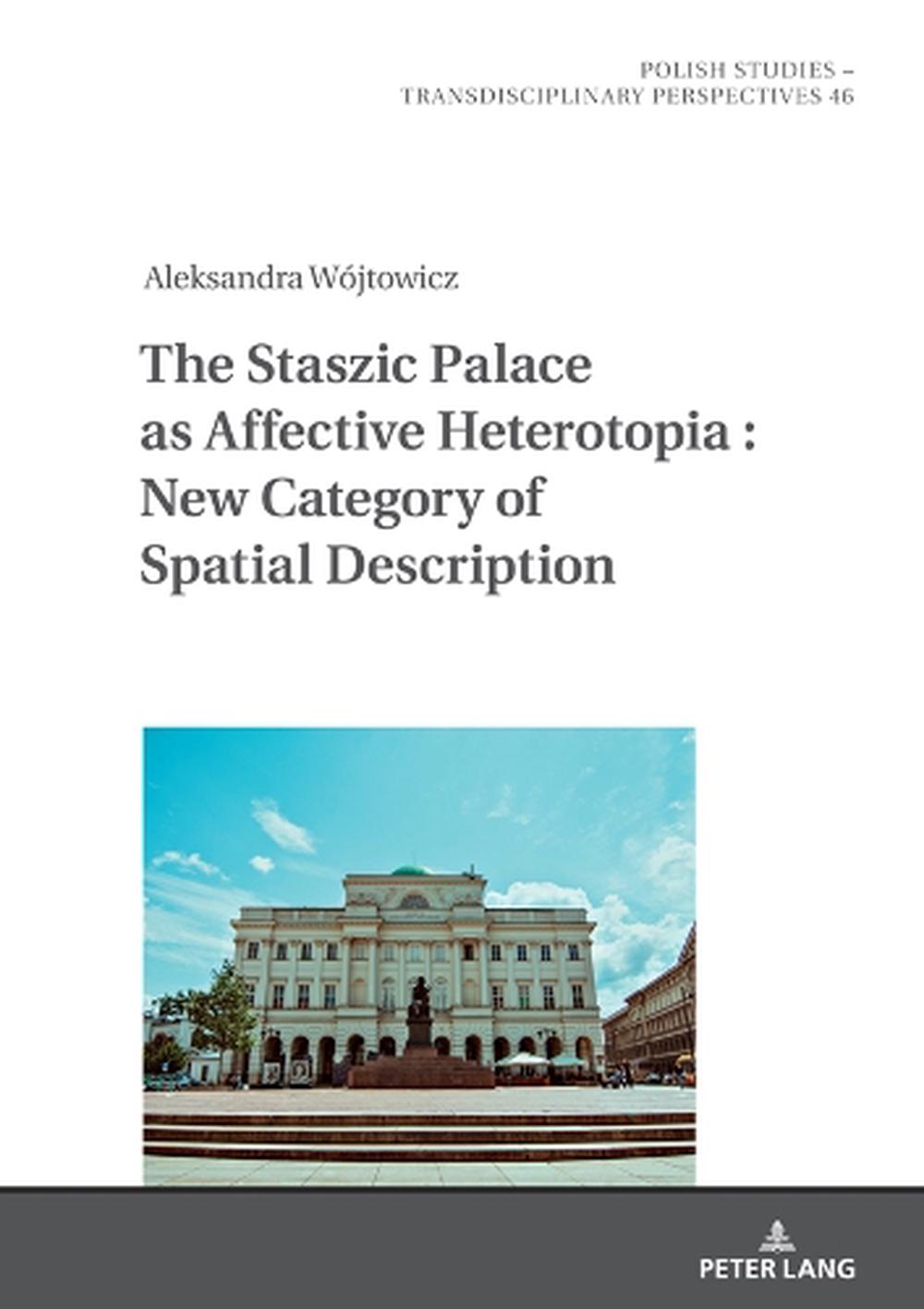
This article elaborates a poetic (in the ancient Greek sense of poesis) description of the future museum on the basis of the portrayal and fictionalization of museums in contemporary illustrated literature. Up until now, the museum in literature has mostly been studied from the perspective of novels. Illustrated literature (picture books, illustrated and graphic novels) has long been neglected despite the fact that it contains original and visionary ideas for how museums exist as institutions, but also as specific markers of space and even time. These images are not simply the fixed visual transcriptions of museums. Their appearance is the result of close collaboration which no longer merely operates between author and illustrator, but directly between museum and illustrator commissioned by them to reflect upon its perceptions, with publishing houses inviting authors and artists (Enki Bilal, Christophe Ono-dit-Biot and Adel Abdessemed) to deliver their vision of a museum by spending a night there. On the basis of a corpus of French and English language works published in the 2000s, this article presents the current trends revealed by these works and how their modelling of the museum of today in fact prefigures that of tomorrow. Illustrated literature seems to reinvent museums on a human scale, as a heterotopia (to use a term from Michel Foucault) of affect, in which it is more important to preserve and question the essence of life as opposed to the essence of the world, museums of people and relations (as Nicolas Bourriaud suggests), museums of self, at once mobile, intimate and humane. © 2023 Avignon University. All rights reserved

Author Keywords
contemporary literature; graphic novels; illustration; museums; novels; picture books

Niesche, Richard. “Educational Leadership as a (Consumer) Culture Industry.” In Educational Leadership and Critical Theory: What Can School Leaders Learn from the Critical Theorists, edited by Charles L. Lowery , Chetanath Gautam , Robert White and Michael E. Hess , 57–74. Educational Leadership: Innovative, Critical and Interdisciplinary Perspectives. London: Bloomsbury Academic, 2024. pp. 57-74.

http://dx.doi.org/10.5040/9781350353459.ch-003

EXTRACT
This chapter brings together into conversation the work of Theodor Adorno, Bernard Stiegler, and Michel Foucault to examine how educational leadership as a field has been seduced by a consumer capitalist industry in the pursuit of “best practice” approaches and “what works” discourses as answers to educational problems and issues. Specifically I explore the notion of the culture industry (Adorno 1991; Horkheimer and Adorno 1979) as an important precursor to what Bernard Stiegler more recently terms a hyper-capitalist consumer industry (Stiegler 2011, 2014), and think how this work can understand and interrogate many current approaches to educational leadership. In addition, I also draw on the ideas of Foucault in concert with Stiegler through the notions of biopower (Foucault 1976) and psychopower (Stiegler 2010). In particular, I argue that there has been a consistent flow of writing in educational leadership that is increasingly designed for ongoing consumption, badged for the purposes of solving many problems in education around the world—with “leadership” as a key driver of such reforms and changes. Thomson et al. (2013) have previously referred to these kinds of discourses as a Transnational Leadership Package (TLP). I argue that these discourses have manifested largely through school effectiveness and improvement research that can also be linked to the rise of gurus, experts, and edupreneurs to form what Kellerman calls a “leadership industry” (2012) but in education….

In Memoriam: Marcelo Otero (1960-2024)
Professor, Department of sociology at the Université du Québec à Montréal (UQAM), member of the Centre de recherche de Montréal sur les inégalités sociales, les discriminations et les pratiques alternatives de citoyenneté (CRÉMIS), and author of Foucault sociologue. Critique de la raison impure (PUQ, 2021)

Specialist in Foucault, whose destabilizing and fruitful thought “renews traditional ways of philosophizing, of thinking about the social, of making history, but above all of problematizing social issues” (2021), Marcelo Otero has been interested throughout his career in the rules of contemporary individuality, or in the articulation between singularities and socialities. His transversal sociological object was what he called “complex social problems”. Seeking to follow the trace of the relationship to normativity, he wondered about what poses a problem, to whom it poses a problem, in what social contexts and for what effects. Mental health and depression, the role of institutions in the construction of these phenomena, drug consumption and its consequences, and social suffering were his favorite subjects.

His passion for debate, his insatiable desire to deconstruct in order to renew and modernize sociological thought is at the center of his approach as a researcher and has favored the dissemination of his thought in many countries.

Hommage à Marcelo Otero – Extraits vidéo, Feb 9, 2024

Table ronde – Penser les sociétés punitives après Foucault, 20 April 2023

With thanks to Sylvain Lafleur for sending this obituary to Foucault News