Foucault News

News and resources on French thinker Michel Foucault (1926-1984)

Navazhylava, K., Peticca Harris, A., Elias, S.R.S.T.A.
YouTube’s Yoga with Adriene as a somametamnemata: Exploring experiences of self-care and wellness in times of crisis (2023) Organization, 30 (3), pp. 573-596.

DOI: 10.1177/13505084221145543

Abstract
Drawing on the Foucauldian technologies of the self, this study explores how individuals re-envision practices of wellbeing outside of traditional organizational contexts during extreme events. Based on a thematic analysis of 7234 comments posted on the Yoga with Adriene YouTube channel in 2020, this study unpacks a technologically mediated practice of self-care, which we conceptualize as somametamnemata. Our findings illustrate three entangled aspects of somametamnemata relating to yoga, a form of bodywork: Caring about self through practicing yoga online; caring about self and others through sharing about yoga in written comments; and caring about self and others through responding to shared verbalizations of yoga. This study distinguishes somametamnemata from known practices of self-care, advancing existing literature on technologies of self by overcoming the dichotomy between negative views of ill-being and positive views of wellbeing. By situating the potentiality of individual wellbeing within ill-being, we shift debates and discussions of “corporate wellness” beyond organizational boundaries. © The Author(s) 2023.

Author Keywords
bodywork; crisis; Foucault; ill-being; self-care; self-writing; technologies of self; technology; wellbeing; yoga

Chicolino, Martín, Las violencias masculinas en la psico-sexo política de Michel Foucault. Brujas, posesas, locas, intersexuales y prostitutas, Nuevo Pensamiento 13 (22). https://p3.usal.edu.ar/index.php/nuevopensamiento/article/view/6829
Open access

Resumen
En torno a la teoría del poder foucaultiana sobrevuela una recriminación, aún vigente: Foucault habría problematizado la sexualidad desde la perspectiva de un sujeto indiferenciado y de género neutro. Dicha ―neutralización sexo-genérica‖ explicaría por qué su teoría del poder ―omite‖ referirse al fenómeno de la caza de brujas (como tecnología patriarcal de disciplinamiento específicamente dirigida contra el cuerpo de las mujeres). El presente trabajo se propone una inversión completa del problema: no nos preguntamos si Foucault caracterizó a las mujeres en tanto que ‗víctimas‘ de las violencias patriarcales, sino que nos preguntamos si (y cómo) caracterizó Foucault a los varones, es decir, a los ‗sujetos‘ activos que ejercieron dichas violencias patriarcales contra las mujeres (creadores de los dispositivos y tecnologías de poder). No nos preguntamos si en sus obras Foucault ―nombra‖ o habla ―acerca de‖ las mujeres, sino si politizó el papel de los varones en el ejercicio psico-sexual del poder, y si politizó el carácter masculino inmanente a todo ejercicio del poder (tanto en la sociedad antigua, moderna, o contemporánea). Este estudio en torno al papel y la función activa que Foucault atribuyó a los varones nos permitirá contrastar si aquellas recriminaciones constituyen (o no) un malentendido. Para ello, reconstruiremos el itinerario foucaultiano en torno a las violencias masculinas (patriarcales) para así hacer visible y audible al mismo tiempo a las fugas femeninas, a las resistencias, luchas y militancias femeninas (las máquinas de guerra amazónicas) en contra de dichos poderes patriarcales de disciplinamiento, normalización, cuerdismo y patologización.

Kurtuluş, G., & Demİrcan Yildirim, P. (2023). Türkiye’de kadin kooperatiflerine siyasi iktidarin gözünden bakmak: feminist postyapisalci bir analiz. Memleket Siyaset Yönetim, 18(40), 441-460.
https://doi.org/10.56524/msydergi.1352548

English title and abstract below

Öz
Türkiye’de yirmi yılı aşkın süredir hem siyasi hem de sivil alanda özellikle kadının güçlendirilmesi retoriği ile ilişkili kadın kooperatiflerine olan ilginin arttığı gözlenmektedir. Kadınların ekonomik ve sosyal olarak potansiyellerinin “kadın kooperatifçiliği” modeli ile görünürlük kazandığı vurgulanmakta; bu model özellikle siyasi iktidar tarafından teşvik edilmektedir. Başarılı örnekler olmakla birlikte, kadın kooperatiflerindeki iç dinamiklerin çoğunlukla ihmali söz konusudur. Kadın kooperatifleri faaliyet alanları, işleyişleri, aldıkları destekler vb. unsurlar aracılığıyla toplumsal yapı tarafından belirlenen normlara bağlı kalması ve sürdürülmesine dolaylı yoldan katkıda bulunma riskini beraberinde getirmektedir. Bu çalışmanın amacı, Foucault’nun neoliberal yönetimsellik kavramı çerçevesinde kadın kooperatifleri ile ilgili yürütülen politik çalışmalara eleştirel bir bakış açısı sunmak ve alternatifleri tartışmaktır. Bu amaçla, Türkiye’de kadın kooperatiflerinin gelişimine dair hedeflerin yer aldığı kamusal dokümanlar feminist postyapısalcı kuram çerçevesinde analiz edilmektedir. Analizde “kadın kooperatifi teşviki”, “kadınların kooperatifler yoluyla güçlendirilmesi”, “yeniden üretim faaliyetleri” olmak üzere üç tema belirlenmiştir. Sonuç olarak bu çalışma, kadın kooperatifi modelinin toplumsal normları yeniden üretme kapasitesi üzerinde düşünmeye zorlamaktadır.

Anahtar Kelimeler
güçlendirme, kadın kooperatifleri, neoliberal yönetimsellik, siyasi iktidar, toplumsal cinsiyet

Looking at women’s co-operatives in Turkey from political power’s point of view: a feminist poststructuralist analysis

Abstract
For more than two decades, there has been a growing interest in women’s co-operatives in Turkey, both as the political and civil, particularly in relation to the rhetoric of women’s empowerment. It is emphasised that women’s economic and social potential gains visibility through the “women’s co-operatives” model, and this model is particularly encouraged by the political power. While there are successful examples, the internal dynamics of women’s co-operatives are often neglected. Women’s co-operatives run the risk of indirectly contributing to the adherence to and maintenance of norms determined by the social structure through their activities, their functioning, the support they receive, and so on. The aim of this study is offer a critical perspective on the political work on women’s co-operatives within the framework of Foucault’s neoliberal governmentality and to discuss alternatives. To this end, public documents containing goals for the development of women’s co-operatives in Turkey are analysed within the framework of feminist poststructuralist theory. Three themes are identified in the analysis: “incentive of women’s co-operatives”, “empowerment of women through co-operatives” and “reproduction activities”. As a result, this study aims to open a discussion on the possibility of women’s cooperatives reinforcing the unequal structure of gender roles.

Keywords: Empowerment, Gender, Neoliberal Governmentality, Political Power, Women’s Cooperatives

Foucault Studies Number 35, December 2023

Special Issue: Biopolitical Tensions after Pandemic Times

Editorial
Sverre Raffnsøe et al.

Special Issue Introduction
Biopolitical Tensions after Pandemic Times
Annika Skoglund, Anindya Sekhar Purakayastha, Fabiana Jardim, David Armstrong

Governmentality, Science and the Media. Examining the “Pandemic Reality” with Foucault, Lyotard and Baudrillard
Jean-Paul Sarrazin, Fabián Aguirre

Securing the Pandemic: Biopolitics, Capital, and COVID-19
Mark G. Kelly

Plague, Foucault, Camus
Adam Herpolsheimer

Fragile Responsibilization: Rights and Risks in the Bulgarian Response to Covid 19
Todor Hristov

A Critique of Pandemic Reason: Towards a Syndemic Noso-Politics
Jorge Vélez Vega, Ricardo Noguera-Solano

Foucault Meets Novel Coronavirus: Biosociality, Excesses of Governmentality and the “Will to Live” of the Pandemicariat
Subhendra Bhowmick, Mursed Alam

Critical Friendship After the Pandemic
Joelle M. Abi-Rached

The Covid-19 Pandemic and the Freedom-Security Tension: Calibrating their Fragile Relationship
Pablo Martín Méndez

Virus as a figure of geontopower or how to practice Foucault now? A conversation with Elizabeth A. Povinelli
Fabiana Jardim, Annika Skoglund, Anindya Sekhar Purakayastha, David Armstrong

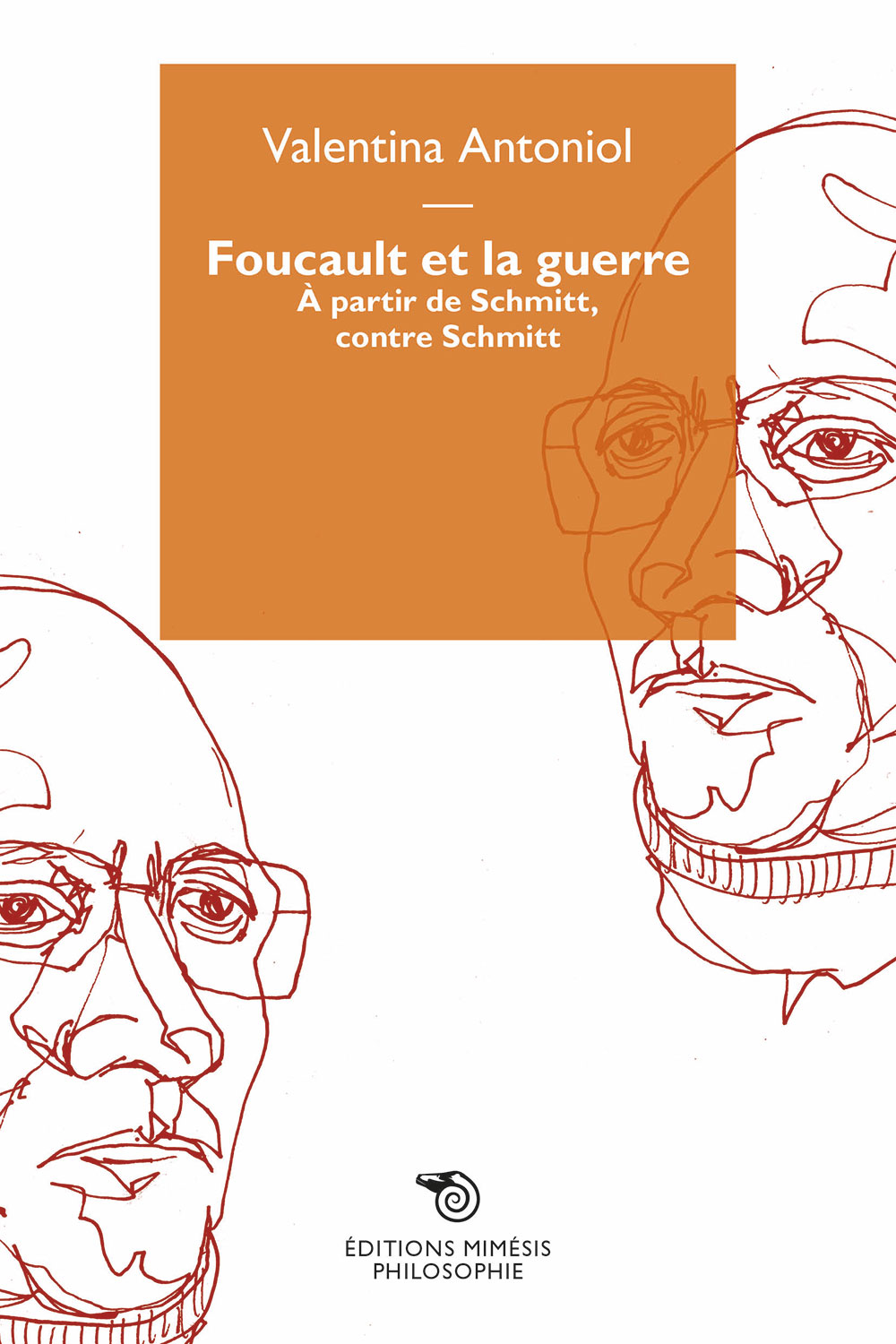
Metamorphosis of Biopolitics. A Foucauldian Ecological Perspective and the Challenge of the Pandemic. A Review Essay of Ottavio Marzocca, Biopolitics for Beginners. Knowledge of Life and Government of People
Valentina Antoniol

Book Reviews
Jussi Backman and Antonio Cimino (ed.), Biopolitics and Ancient Thought. Oxford: Oxford University Press, 2022. Pp. 240. ISBN: 978-0-19-284710-2.
Morten S. Thaning

Post-pandemic South Asian Governmentalities and Foucault: State Power and Ordinary Citizens
Nasima Islam

Bernal Marcos, M.J., Zittoun, T., Gillespie, A.
Diaries as Technologies for Sense-making and Self-transformation in Times of Vulnerability (2023) Integrative Psychological and Behavioral Science

DOI: 10.1007/s12124-023-09765-0

Abstract
Diaries have been generally understood as “windows” on sense-making processes when studying life ruptures. In this article, we draw on Michel Foucault’s conceptualization of self-writing as a “technology of the self” and on sociocultural psychology to propose that diaries are not “windows” but technologies that aid in the sense-making. Concretely, we analyzed three non-exhaustive and non-exclusive uses of diary writing in times of vulnerability: (1) imagination of the future and preparation to encounter difficulties; (2) distancing from one’s own experience; and (3) creating personal commitments. Our longitudinal data comprised three public online diaries written over more than twenty years, belonging to three anonymous individuals selected from a database of more than 400 diaries. We analyzed these three diaries by iterating between qualitative and quantitative analysis. We conclude that: (1) beyond their expressive dimension, diaries are technologies that support the sense-making process, but not without difficulties; (2) diaries form a self-generated space for dialogue with oneself in which the diarist also becomes aware of the social nature of her life story; (3) diaries are not only technologies for the Socratic “know thyself” but also technologies to work on oneself, especially in terms of the personal perspective on the past or the future; and (4) the practice of diary writing goes beyond sense-making towards personal development and the desire to transform one’s life trajectory. © 2023, The Author(s).

Author Keywords
Diaries; Life course; Sense-making; Technologies of the self; Vulnerability

Index Keywords
adult, article, case report, clinical article, female, human, human experiment, imagination, lifespan, quantitative analysis, vulnerability, writing

He, L.
A sociological (Re)construction of the reflexive self: A convergence between Foucault and classical Confucian ethics (2023) Asia Pacific Viewpoint, 64 (2), pp. 279-291.

DOI: 10.1111/apv.12370

Abstract
The emergence of a body of work on ethics since the 1990s with a special interest in the self in the Western academia, inspired by Michel Foucault’s earlier work, resonates with a concomitant renewed scholarly interest in classical Confucian ethics both in China and internationally. An emphasis on culture and the rejection of a Euro-centric universalist self in these bodies of work accompanies the disavowal of the very possibility of a generic reflexive self. This article seeks to critically examine the ontological positions on the self of these bodies of work, of Foucault’s later thoughts, and of classical Confucian ethics.

It is argued that there is a theoretical affinity between Foucault’s later thoughts and classical Confucian ethics, with both philosophers acknowledging reflexivity as a universally inherited nature of self and making a special consideration of cultural equality and commonality. The examination includes advocacy for a more nuanced approach to notions of cultural equality that relies on targeted research and intercultural dialogue to avoid any predetermining of cultural differences, to allow better-informed appreciation of differences, and to develop a more dynamic conceptualization of culture. This article concludes by initiating a discussion about the design of an integrated approach to cultivate reflexivity through training practices that bring together Foucauldian and Confucian ideas. © 2023 Victoria University of Wellington and John Wiley & Sons Australia, Ltd.

Author Keywords
classical Confucianism; cultural particularism; ethics; Foucault; self

Index Keywords
advocacy, conceptual framework, cultural relations, ethics, integrated approach, social construction, theoretical study; China

With all my very best wishes for the festive season and the new year from Foucault News.


(This picture was found some years ago on the Blingee site)

Jiang, N.H.
From Audits to Confessionals: The Influence of Accounting Technology on Medieval Penitential Pedagogy (2023) In Katharine D. Scherff, Lane J. Sobehrad (eds) Media Technologies and the Digital Humanities in Medieval and Early Modern Studies, Routledge, 2023 pp. 13-31.

DOI: 10.4324/9781003295082-3

Abstract
This chapter explores the productive influence of fiscal accounting culture on the literature of vernacular penitential instruction. I define ‘vernacular penitential instruction’ as pastoral texts that taught the laity the basics of penance and confession along with fundamental doctrinal tenets. The fourteenth to early fifteenth centuries were the golden age of vernacular penitential pedagogy that witnessed both the translation of numerous Latin penitential and the creation of new vernacularized material. This period also saw the rise of accounting literacy and technology as European society became increasingly commercialized. Beginning with an examination of medieval accounting technologies, I show that tools of accounting were used to facilitate a collaborative accounting network that generated an ethic of collective responsibility. From there, I illuminate how writers of penitential instruction drew from this collaborative accounting culture to teach confession as a similarly collaborative process that tied sinners to each other in chains of relational accountability. While many have observed, following Foucault, that confession is primarily an expression of interior subjectivity, this pedagogical overlap between accounting and penance demonstrates that confession can also be an important communal practice that fostered layers of new relational responsibilities among confessors, penitents, and their fellow neighbors.

Jubb, D.
‘It was pop that was making the bread’: Accounting and musical space at Abbey Road studios (2023) Accounting History, 28 (2), pp. 285-311.

DOI: 10.1177/10323732231155932

Abstract
This research considers the relationship between accounting and physical space, focusing on the creation of musical recordings within the musical and ‘magical’ space of Abbey Road Studios during the 1960s. Building on prior studies that have utilised the work of Foucault to theorise accounting’s ability to contribute to making space more disciplinary, this study highlights how, at the beginning of the 1960s, accounting was part of a wider regime that rendered the non-disciplinary, musical space of the recording studio visible and controllable in order to standardise musical recording practices. As the period progressed, and against a backdrop of cultural revolution in 1960s Britain, existing rules and procedures were circumvented by musicians, producers and engineers who utilised experimental practices to create non-standardised, ‘magical’, sonic worlds. Control over the musical space of the recording studio waned and so too did accounting’s ability to capture and manage the emergent creative practices. © The Author(s) 2023.

Author Keywords
Abbey Road; accounting practices; disciplinary power; popular music; space

Scholarly Conference: Call for Proposals
Foucault: Art, Histories, and Visuality in the 21st Century

OCAD (Ontario College of Art and Design) University,
Toronto/Tkaronto, Canada
May 29 & 30, 2024
Deadline: January 22, 2024

The French philosopher Michel Foucault’s (1926–84) work has had a major effect on scholars of art and visuality since Les Mots et les choses (1966) appeared in English in 1970 as The Order of Things. His radical ideas galvanized artists and art writers into many different directions: to insert ruptures and incoherence into history; to reimagine the subject, subjectivity, and identity; to politicize the realms of vision, visuality, and visibility; to formulate critical approaches to technology and media; and to scrutinize the inner workings of art institutions, including museums, schools, and archives. The versatility of Foucault’s thought greatly contributed to major shifts across disciplines, including the interventions of the “new art history” in the 1970s, multiculturalism and identity politics in the 1980s, visual and cultural studies in the 1990s, the questions of contemporaneity and globalization in this century. Owing to the posthumous publications of his lectures and the papers deposited at archives internationally, Foucault’s oeuvre continues to shape current discussions on methodological, political, and ethical assumptions regarding visualities and art histories forty years after his death.

Drawing from four decades of research in the arts, humanities, and social sciences, this two-day symposium proposes a critical assessment of the ways that Foucault’s influence intersects with current inquiries into art, visual culture, and their technologies. The organizers invite thirty-minute paper proposals that historicize and challenge the established patterns of Foucault’s reception in art history, archaeology, museology, visual anthropology, philosophy of art, aesthetics, film and media studies, visual culture, art education, and research-creation. We hope to form an eclectic lineup of speakers who have been engaging with the French thinker’s legacies from critical perspectives informed by the urgent issues of today, such as global inequity, decolonization, Indigenous sovereignty, race and ethnicity, post-truth, artificial intelligence, gender identities, environmental crisis, immigration, and diaspora. We will ask: How has Foucault’s thinking—ultimately concerned with human existence in a time of crisis— emerged from and contributed to the visual arts and material culture in the twenty-first century?

The symposium is part of the World Congress “Foucault: 40 Years After,” a global series of events commemorating the fortieth anniversary of the philosopher’s death. In efforts to reduce environmental impact and to prevent duplication with other events, we solicit proposals from researchers and artists based in North America. We welcome proposals that are international in the scope of research as well as those anchored in specific regional contexts, including Canada, for example.

Please send a one-page, single-spaced proposal and a short biography to foucault2024@gmail.com by January 22, 2024. The organizers are working on securing funding, which, if successful, would allow financial support for participants. We thank the peoples of the Mississaugas of the Credit, the Haudenosaunee, the Anishinaabe, and the Huron-Wendat, on whose unceded lands the event will be held.

Organizers:
Anton Lee. Assistant Professor of Art History, Theory, and Philosophy, NSCAD (Nova Scotia College of Art and Design) University

Catherine M. Soussloff. Professor Emerita of Art History, Visual Art, and Theory, University of British Columbia, and History of Art and Visual Culture, University of California, Santa Cruz

Collaborator/Local Host:
Charles Reeve. Professor of Visual and Critical Studies, Associate Dean of Arts and Science, OCAD University

Confirmed Speakers:
Andrew Gayed. Assistant Professor of Art History and Visual Culture, OCAD University

Amelia Jones. Robert A. Day Professor of Art and Design, Vice Dean of Faculty and Research, Roski School of Art and Design, University of Southern California

Louis Kaplan. Professor of History and Theory of Photography and New Media, Graduate Department of Art History, University of Toronto

Tavia Nyong’o. Professor and Chair of Theater and Performance Studies, Professor of American Studies, Professor of African American Studies, Yale University

John Rajchman. Adjunct Professor in Art History and Archaeology, Columbia University T’ai Smith. Associate Professor of Art History, Visual Art, and Theory, University of British Columbia

Kyla Wazana Tompkins. Professor and Chair of Global Gender and Sexuality Studies, State University of New York at Buffalo