
Foucault News

News and resources on French thinker Michel Foucault (1926-1984)

Governing Human Beings in the Age of the Brain: A Symposium with Nikolas Rose

Presented by the Centre for the History of European Discourses at
the University of Queensland, St Lucia, Qld, Australia

Wednesday, November 16 2011
1.30pm to 5.30pm
Social Sciences and Humanities Library Conference Room,
Level 1 Duhig Building (Bldg 2), St Lucia Campus [See Map]

In his recent study, The Politics of Life Itself: Biomedicine, Power and Subjectivity in the Twenty-First Century (2006), Nikolas Rose examines the transformative effects of brain imaging technologies and recent developments in neuroscience on late twentieth and early twenty-first century concepts of the self. “Over the past half century,” he argues, “we human beings have become somatic individuals, people who increasingly come to understand ourselves, speak about ourselves, and act upon ourselves—and others—as beings shaped by our biology.” The papers in this symposium will examine the implications of this newly biologised understanding of subjectivity across the wide range of cultural, clinical and commercial contexts in which it can be found. The symposium will conclude with a public lecture by Nikolas Rose.

Programme
“The Biological Imaginary: Science and the Somaticised Self”
Elizabeth Stephens, ARC Research Fellow
Centre for the History of European Discourses
The University of Queensland

“Avoiding the Seductions of Neurohype in Ethical Analyses of Addiction Neuroscience”
Wayne Hall, NHMRC Australia Fellow
UQ Centre for Clinical Research
The University of Queensland

“Brain Whisperers: New Forms of Consumer Monitoring on the Frontiers of Neuroscience”
Mark Andrejevic, ARC QE II Fellow
Centre for Critical and Cultural Studies
The University of Queensland

“A Neurobiological Complex? Governing Human Beings in the Age of the Brain”
Nikolas Rose, Martin White Professor of Sociology
BIOS Centre for the Study of Bioscience, Biomedicine, Biotechnology and Society
London School of Economics

This symposium is free, but registration is essential for seating and catering purposes. Please RSVP to Elizabeth Stephens: e.stephens@uq.edu.au
From the Verso blog via Stuart Elden

See also The Guardian obituary

Kishani Widyaratna, Dr David Macey 1949—2011, Verso blog, 11 October 2011

It is our sad duty to announce the loss of Dr David Macey, translator and writer. A much respected and admired Verso author and champion of Francophone thought in the English speaking world, he will be greatly missed. His colleague, Professor Diana Holmes of the School of Modern Languages and Cultures at the University of Leeds, has written the following on his passing:

It is with great sadness that the French Subject groups at the Universities of Leeds and Nottingham report the death of Dr David Macey. David had been for many years a highly esteemed research associate at Leeds, and in 2010 was appointed Special Professor at Nottingham. David Macey, born in Sunderland in 1949, studied at University College London and became a highly acclaimed writer and translator particularly in the field of contemporary French philosophy and political thought. Among his numerous and influential publications, many of them widely translated, were Lacan in Contexts (1988), The Lives of Michel Foucault (1993), The Penguin Dictionary of Critical Theory (2000), Frantz Fanon: A Life (2000 – described by the New Statesman as ‘the year’s biographical tour de force’), and Michel Foucault (2004). He translated over sixty books from French, including Michel Foucault’s Society Must be Defended (2003), and more recently Christian Baudelot and Roger Establet, Suicide (2008) Jean-Claude Kauffmann, The Single Woman and the Fairy-Tale Prince (2008), Boris Cyrulnik, Resilience (2009), and Michel Wieviorka, Violence (2009). David was the husband of Professor Margaret Atack (University of Leeds), and the father of Aaron, John and Chantelle.

more…

Sanna Karkulehto, The ‘Greatest Finn’ meets the ‘Gay Marshal’: Foucault’s cycle, national narratives and The Butterfly of the Urals, Journal of Scandinavian Cinema, vol 1, no.2, June 2011
https://doi.org/10.1386/jsca.1.2.177_1

Abstract
The article examines the case of the ‘Gay Marshal’, the late C.G.E. Mannerheim, president of Finland, supreme commander of Finnish military forces during World War II, and often voted the ‘Greatest Finn’ in opinion polls. In the puppet-animation film The Butterfly of the Urals (Katariina Lillqvist, 2008) Mannerheim wears a purple corset and enjoys a relationship with his male servant. The film incited a media war. The article shows how the film’s reception involves Foucault’s cycle, a concept adapted from Michel Foucault’s The History of Sexuality (1984 [1976]): sexuality fascinates and attracts large audiences, but its visibility is viable only under certain conditions, rules and restrictions. Focusing on sexuality also turns out to be a means of closeting the painful, wilfully forgotten Civil War (1918) history, which has divided Finland and remained a problematic topic in Finland’s national narratives.

Keywords
Michel Foucault,nationality,queer,sexuality,media reception,Mannerheim,Finland,animation,

Le Seuil and Gallimard, publishers of the official French editions of Michel Foucault’s lectures at the Collège de France, are looking for copies of audio tape recordings of Foucault’s lecture series on La société punitive at the Collège de France in Winter and Spring 1973.

These lectures were delivered from January to March 1973. If you have any tapes of these lectures or any information leading to the discovery of such tapes, please contact Caroline Pichon at caroline.pichon@seuil.com, tel: +33 1 41 48 83 43.

Bob Robinson, Michel Foucault: Ethics, Internet Encyclopedia of Philosophy

The French philosopher and historian Michel Foucault (1926-1984) does not understand ethics as moral philosophy, the metaphysical and epistemological investigation of ethical concepts (metaethics) and the investigation of the criteria for evaluating actions (normative ethics), as Anglo-American philosophers do. Instead, he defines ethics as a relation of self to itself in terms of its moral agency. More specifically, ethics denotes the intentional work of an individual on itself in order to subject itself to a set of moral recommendations for conduct and, as a result of this self-forming activity or “subjectivation,” constitute its own moral being.

more…

Kim Su Rasmussen, Foucault’s Genealogy of Racism, Theory, Culture & Society September 2011 vol. 28 no. 5 34-51
https://doi.org/10.1177/0263276411410448

Abstract
This paper argues that Foucault’s genealogy of racism deserves appreciation due to the highly original concept of racism as biopolitical government. Modern racism, according to Foucault, is not merely an irrational prejudice, a form of socio-political discrimination, or an ideological motive in a political doctrine; rather, it is a form of government that is designed to manage a population. The paper seeks to advance this argument by reconstructing Foucault’s unfinished project of a genealogy of racism. Initially, the paper situates the genealogy of racism within the context of Foucault’s work. It belongs to a period of transition between the mature and the late part of Foucault’s work, more specifically a period of transition from discipline to governmentality. The paper proceeds by reading closely key passages from the 1976 lectures at Collège de France in which Foucault proposes to rethink racism as a form of biopolitical government. While Foucault’s genealogy of racism remains an incomplete project, lacking for example any substantial treatment of European colonialism, the paper proposes to expand the Foucauldian analysis by linking it to the pan-German discourse between 1890 and 1914. Finally, the paper reflects on some of the implications of the Foucauldian analysis, in particular attempts to understand and counter contemporary forms of racism. Foucault’s genealogy of racism, in short, shows us the constructedness of our racialized world and challenges us to develop new and more effective strategies to change it.

EPTC Incubator Workshop—Philosophy and/as Biopolitics

The Society for Existential and Phenomenological Theory and Culture (EPTC) is looking for submissions for the Second ETPC Incubator. This event will be a collaborative workshop with presentations of work-in-progress as well as paper presentations on this year’s theme: Philosophy and/as Biopolitics.

Some of the most important thinkers from the past century and many of the most innovative philosophers working today have been focused on the rather diffuse question of biopolitics. While the very meaning of this term may remain open to interpretation, it is nevertheless becoming one of the most important philosophical horizons moving into the twenty-first century. What is biopolitics? Looking back on the past century, why is it possible to count so many philosophers as biopolitical thinkers? Which issues and problems can biopolitics address? And what does the turn to biopolitics mean for philosophy as it advances into the next millennium?

Discussion may involve theoretical questions or applied work. Possible figures for consideration include Foucault, Agamben, Arendt, Derrida, Deleuze, Hardt, Negri, Haraway, Nancy, Butler, Schmitt, Rancière, Habermas, Zizek, Grosz, and Nikolas Rose.

This workshop lets presenters bring problems, questions, and concerns about work-in-progress for discussion in a roundtable setting. It is appropriate to bring a project in its nascent stages, specific passages of a work that are causing difficulties or trouble for the author, or work that is at a crossroad and requires more reflection before it can advance. Suitable projects may include journal articles, book chapters, conference papers, lectures, or perhaps doctoral thesis work. Our aim is to incubate and nurture these projects so participants can take them to the next level. The WIP sessions will be bookended by two formal paper presentations to situate and inspire the conversation.

The workshop will be conducted during EPTC’s annual meeting at Canadian Congress of the Humanities and Social Sciences, which will be held May 29 –June 1, 2012 in Waterloo, ON.

We seek two types of work:

i) Work in Progress

– 500-750 word proposal outlining the project you would present at the workshop

– 10-15 minute presentation will be followed by 30-minute roundtable discussion

ii) Conference papers

– 4500 word maximum, plus 150-word abstract

– 30 minute paper will be followed by a brief commentary and 20-minute discussion period

** Please prepare submissions for anonymous review in Word format. On a separate sheet include the title of project, author name, institutional affiliation, and contact information.

Note that the workshop will be open so that all conference delegates can take part. Short précis (approx. 500 words) prepared by participants will be made available on the EPTC/TCEP web site prior to the event. It is preferred that participants discuss their projects extemporaneously so conversation remains colloquial and collegial.

Deadline: January 15, 2012

Submissions and/or questions should be sent to Bronwyn Singleton (bronwynsingleton@gmail.com)

Nielsen, Cynthia R. (2011), Unearthing consonances in Foucault’s accourn of Greco-Roman self-writing and Christian technologies of the self, The Heythrop Journal, pp. 1-15
https://doi.org/10.1111/j.1468-2265.2011.00694.x

Opening paragraphs
Although his critics claim otherwise, Michel Foucault understood his work as consistently focused in one way or another on the genealogy of the subject and the construction of subjectivities.1 In other words, while acknowledging changes, developments, retractions, methodological expansions and the like, Foucault also observed strong lines of continuity unifying his corpus – continuity centered upon and constantly hovering around subject-formation.2 Here perhaps I should say a few words regarding my synonymous employment of the terms ‘subject,’‘subjectivity,’ and ‘self.’ Although some scholars might contest my usage, claiming that it conflates distinct concepts, my riposte is that Foucault himself, or at least the English translators of his work, employ the terms synonymously. For example, in his essay, ‘About the Beginnings of the Hermeneutics of the Self,’3 he describes his work on the institutional practices associated with prisons, hospitals, and asylums as directed towards how ‘subjects became objects of knowledge and at the same time objects of domination.’4 He then describes the next phase of his work – the focus of this essay – as an analysis of ‘those forms of understanding which the subject creates about himself.’5 This attention to an active subject who creates, transforms, or reconstitutes himself, Foucault correlates with what he calls, a ‘technology of the self.’6 Rather than analyze the subject primarily from the perspective of social construction or ‘techniques of domination’– as was the case in Discipline and Punish–, he now examines how subjects constitute themselves via techniques allowing them ‘to effect, by their own means, a certain number of operations on their own bodies, on their own souls, on their own thoughts, on their own conduct, and this in a manner so as to transform themselves, modify themselves.’7 In these passages, as well as others, Foucault uses the terms ‘subject’ and ‘self’ interchangeably, adding qualifiers such as ‘phenomenological’ or ‘transcendental’ to the word ‘subject’ when distinguishing his particular understanding from that of Husserl, Kant, Sartre, or any other philosopher.

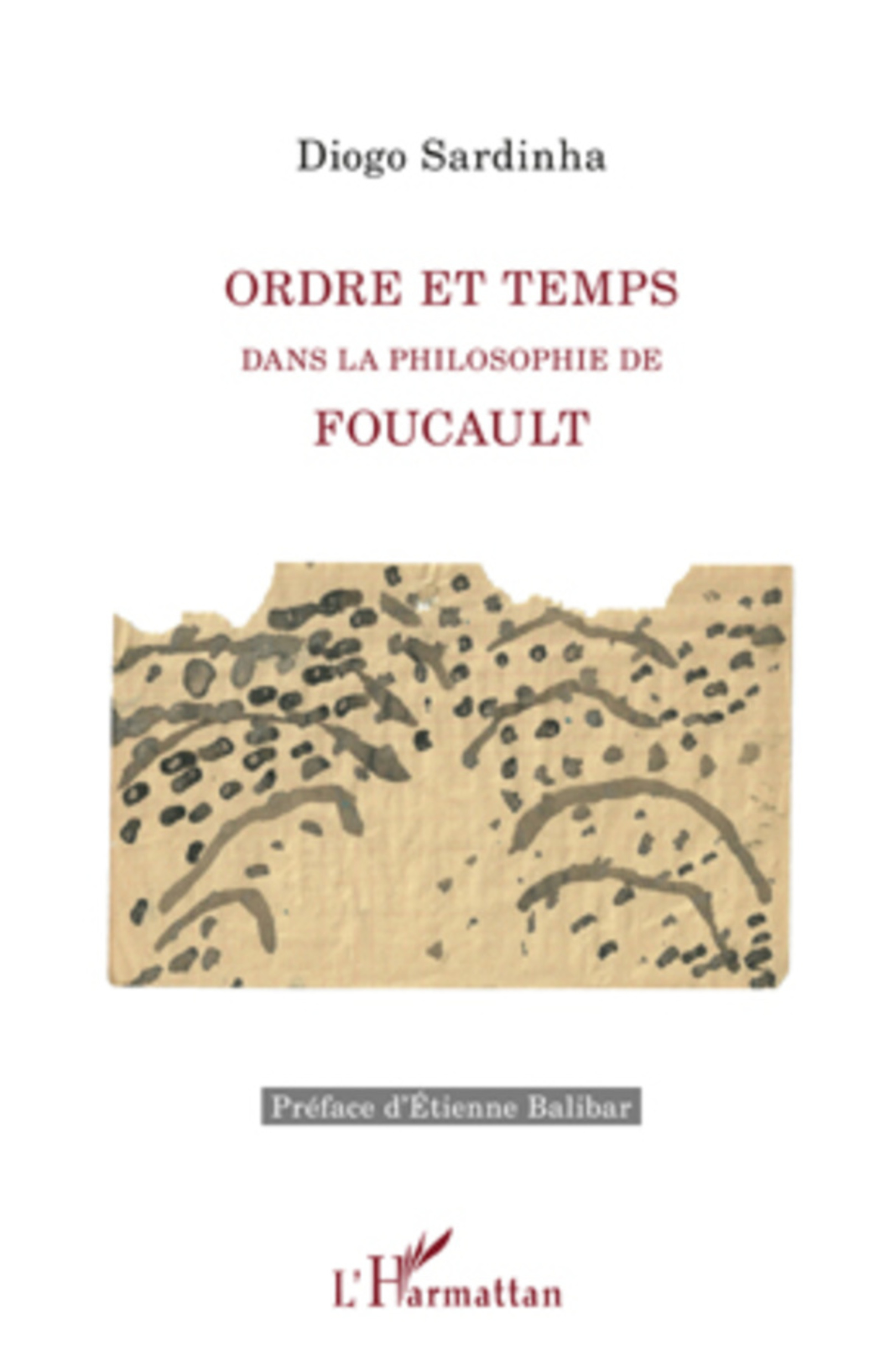
Diogo Sardinha, Ordre et temps dans la philosophie de Foucault, Préface d’Etienne Balibar, L’Harmattan, La philosophie en commun, ISBN : 978-2-296-56327-8 • septembre 2011 • 252 pages. Book available in paperback or ebook

Pdf of further details, cover and table of contents

L’oeuvre de Foucault apparaît comme une succession d’études dispersées, plus que comme un tout cohérent. C’est l’une des raisons pour lesquelles on doute du caractère même d’oeuvre que constitueraient l’ensemble de ses travaux. Ce livre montre, au contraire, que ces travaux sont marqués par une cohérence fondamentale. Celle-ci n’est pas une caractéristique transitoire, mais un trait constant de la recherche de Foucault, à laquelle elle accorde sa valeur proprement philosophique.

Kevin Hetherington, Foucault, the museum and the diagram, The Sociological Review Volume 59, Issue 3, Article first published online: 1 SEP 2011
https://doi.org/10.1111/j.1467-954X.2011.02016.x

Abstract
Foucault’s work on the museum is partial and fragmentary but provides an interesting opportunity through which to explore issues of power, subjectivity and imagination. Following a discussion of Deleuze’s reading of Foucault and his introduction of the issue of diagram as a way of understanding the discursive and visual operation of power, the paper explores some of Foucault’s work from the period around 1967–9 on the non-relation to consider how he engaged with the question of seeing/saying that Deleuze identifies as a key problematic in his work. Through analysis of Foucault’s discussions of the themes of the outside, heterotopia and the work of the painter Manet, in the context of the museum, the paper explores how power operating through the diagram of the museum allows us to understand the space of imagination as one in which subjectivity is constituted.