Foucault News

News and resources on French thinker Michel Foucault (1926-1984)

Trente ans après sa mort, la seconde vie de Michel Foucault

Le 21/06/2014 à 00h00- Mis à jour le 25/06/2014 à 15h35
Juliette CerfTélérama n° 3362

Michel Foucault était depuis l’enfance poursuivi par un étrange cauchemar : « J’ai sous les yeux un texte que je ne peux pas lire, ou dont seule une infime partie m’est déchiffrable ; je fais semblant de le lire, je sais que je l’invente ; puis le texte soudain se brouille entièrement, je ne peux plus rien lire ni même inventer, ma gorge se serre et je me réveille. » Comprendre comment les énoncés apparaissent et disparaissent, voilà à quoi s’emploient tous les livres du philosophe-historien qui a fait de l’« archéologie » – soit la « description » de l’« archive » d’une époque – sa méthode. Dans le champ de la médecine, du pouvoir ou de la sexualité, Michel Foucault s’est employé à mettre au jour ces traces verbales, laissées par les pratiques humaines – institutions, techniques, sciences, moeurs, etc.

With thanks to Colin Gordon for this news

A brief genealogy of governmentality studies: the Foucault effect and its developments. An interview with Colin Gordon by Fabiana Jardim, Educação e Pesquisa, vol.39 no.4 São Paulo Oct./Dec. 2013

http://dx.doi.org/10.1590/S1517-97022013000400016
Full text available from this link

ABSTRACT
This interview approaches the intellectual context within the areas of philosophy and social sciences, in the 1970s United Kingdom, and also looks back to Colin Gordon’s work as a translator and editor of Michel Foucault’s researches on power and politics into English. Finally, it attempts to assess the developments of this strange notion of governmentality within the English-Speaking intellectual world and its relations to present times. The interview has taken place during Colin Gordon’s visit to Brazil for the “International Seminar Max Weber and Michel Foucault: possible convergences” (May, 2013). It aims to revisit the context in which the governmentality studies have appeared as a specific field of interest and research, in order to put in perspective the progressive spread of this field since the appearance, in 2004, of both Foucault’s lectures at Collége de France (Security, Territory, Population and The Birth of Biopolitics) where the notion is introduced. The possibility to know Colin Gordon’s ideas about these themes seemed timely not only because of the range of governmentality studies in education in Brazil (something that can be testified by the number of articles, thematic issues and books that are appearing since the 1990s), but also because of the manner in which the notion of governmentality has been taken by the post-colonial studies. In this sense, the notion still seems to be a very useful tool to confront the task of understanding the problems and problematizations that constitute the specificity of our Brazilian modernity.

Keywords: Governmentality – Governmentality studies – Michel Foucault – Political culture.

vanheuleStijn Vanheule, What we can learn from Michel Foucault on DxSummit.org The Global Summit on Diagnostic Alternatives: An Online Platform for Rethinking Mental Health

Update October 2025. Link above is to the archived page on the Wayback Machine

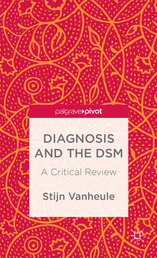
The text below is based on the author’s book: Stijn Vanheule (2014). Diagnosis and the DSM – A critical Review. London & New York: Palgrave Macmillan.

Extract

….

As a consequence, in Foucault’s view madness is not so much a natural kind, i.e., an entity governed by natural laws, but what he calls “a reification of a magical nature.” In his view, psychiatry did not arise because medical doctors had suddenly discovered an underlying biomedical reality that could be linked to the behaviors of the so-called insane. On the contrary, psychiatry came into existence as it brought its own object into being: disciplinary practices first delineated a group of outcasts that were amenable for adaptation to society, and later defined them as proper objects for scientific study: “What we call psychiatric practice is a certain moral tactic contemporary with the end of the eighteenth century, preserved in the rites of asylum life, and overlaid by the myths of positivism”. By qualifying madness as a reification Foucault stresses that the early alienists, just like modern psychiatrists, turned their concept into an object. As a consequence ‘madness’ was no longer treated as an abstraction that can be used to make sense of reality, but as a biological or psychological reality that simply awaits clinical detection and scientific discovery. Such reification is a direct effect of adopting psychiatric discourse. Through the use of specific language, the concept under discussion is materialized, or as Nietzsche put it: “it is enough to create new names and estimations and probabilities in order to create in the long run new ‘things.’”

Meanwhile this notion of reification slowly became recognized as a problem in psychiatry. What is more, DSM-based diagnosis in particular was at last accused of promulgating such reification, thus giving rise to what Steven Hyman, a former president of the US National Institute of Mental Health, calls “an unintended epistemic prison.” Indeed, while the diagnostic categories of the DSM are nothing but conventional groupings of symptoms or “heuristics that have proven extremely useful in clinical practice and research”, people still tend to think of them as real entities. For example, reification is evident when people think of ‘ADHD’ or ‘schizophrenia’ as underlying diseases that give rise to characteristic symptoms, while in fact these labels are nothing but umbrella terms used to designate a collection of symptoms commonly associated with the condition. Reification produces the added problem of the so-called disorders being understood as quasi-material conditions that cause symptoms, while in fact they only indicate that a (certain) minimal number of category-specific symptoms have been observed in an individual. In other words, DSM diagnoses do not explain anything beyond this idle descriptive classification, yet people tend to invest belief in them as real entities, which is clearly absurd.

Read more

Stijn Vanheule, Ph.D., is a clinical psychologist, associate professor at Ghent University (Belgium), and psychoanalyst in private practice (member New Lacanian School for Psychoanalysis). He is the author of the books The Subject of Psychosis: A Lacanian Perspective (2011) and Diagnosis and the DSM: A critical Review (2014), and of multiple papers on Lacanian and Freudian psychoanalysis, psychoanalytic research into psychopathology, and clinical diagnosis.

Alexa Lawrence, See 11 Heady Books Transformed into Ikebana Flower Displays
Posted on Art News, 06/18/14

Camille Henrot channels Japanese zen gardens with an installation of floral odes to her favorite books

The gracefully balanced flower arrangements of Camille Henrot’s installation “Is it possible to be a revolutionary and like flowers” (2012-2014) occupy the second floor of the New Museum, contributing a soothing, zenlike presence to the exhibition of the artist’s recent works. The delicate blossoms and twisting stems of the bouquets, punctuated with thoughtful empty spaces, make for more than happy embellishments. They are floral translations of weighty literary titles, themes, and quotations pulled from the bookshelves of the artist’s personal library.

When Paris-born Henrot moved to New York, temporarily leaving many of her personal belongings behind, she discovered a surrogate for her literary heroes and favorite books in Japanese ikebana flower arrangements. The combination of artistic whimsy and the theory that inspires it parallels the balance between playfulness and obedience intrinsic to ikebana, an ancient but ever-adapting cultural tradition. Each gap in the flora is as specific and important as the vines, leaves, and flowers that create them. The flower names, ranging from Latin-based etymological to nursery-rhyme literal, are listed nearby, offering complimentary verse to the lyricism of the texts they represent.

Read more

Camille Henrot, “The Order of Things,” Michel Foucault, 2014, installation view. COURTESY NEW MUSEUM, NEW YORK. PHOTO: BENOIT PAILLEY.

Camille Henrot, “The Order of Things,” Michel Foucault, 2014, installation view.
COURTESY NEW MUSEUM, NEW YORK. PHOTO: BENOIT PAILLEY.

Inspired by a text more overtly related to Henrot’s interest in taxonomy and philosophy, “The Order of Things,” Michel Foucault, is an explosion of metal odds and ends mixed with anonymous vegetation and a rainbow of paint swatches—a colorful starburst of the playfully arbitrary.

Thinking Historically About Neoliberalism: Nick Gane’s response to Will Davies, Theory, Culture and Society, May 28, 2014

In 1971, Michel Foucault wrote a short polemic, entitled ‘Monstrosities in Criticism’, that took issue with reviews of Madness and Civilization and The Order of Things that had been published by Jean-Marc Pelorson and George Steiner. Foucault opened this piece with the statement that ‘There is criticism to which one responds, other criticism to which one replies’ (1971:57). While Foucault does not expand on this distinction, my own reading of this statement is that there is informed and constructive criticism that merits an engaged response, and ‘bad’ criticism that ‘deforms’ the text in question and for this reason deserves nothing more than a dismissive reply. You do not have to be Foucault or Steiner to feel the effects of these different types of criticism, and given a choice one always wants to be on the receiving end of the former. I am thus grateful to Will Davies for his careful reading of my recent article on the history of neoliberalism. I have learned much from Davies’ own work on this subject, in particular his recent book in the TCS book series, The Limits of Neoliberalism, which addresses many important points that I do not touch upon in my TCS article, including the concepts of sovereignty that underpin neoliberal forms of market governance, and notions of property rights and law that were pioneered by figures such as such as Ronald Coase and Harold Demsetz. My TCS article on Foucault’s lectures on biopolitics, however, had a different set of concerns: first, to consider the relation of neoliberal thought to 19th Century liberalism (i.e. what made it new or ‘neo-’); and second, to situate the emergence of neoliberal reason in the period between the two World Wars – two points of interest that do not feature in existing historical accounts by Mirowski and Plewhe, Peck, and Burgin.

[…]
read more

Patrick Gamez, Ricoeur and Foucault: Between Ontology and Critique, Etudes Ricoeuriennes/ Ricoeur Studies (ERSS), Vol 4, No 2 (2013)

doi: 10.5195/errs.2013.160 Link to full PDF

Abstract
In this paper, I trace some of Ricoeur’s criticisms of Foucault in his major works on historiography, and evaluate them. I find that Ricoeur’s criticisms of Foucault’s archaeological project in Time and Narrative are not particularly worrisome, and that Foucault’s “critical” project actually provides alternatives for enriching and expanding on some of Ricoeur’s later insights in Memory, History, Forgetting and – in particular – for troubling the distinction made between critique and ontology.

Keywords
Foucault, critique, ontology, history, historiography

Semester 2 tutoring vacancy for Habermas/Foucault-based subject at Swinburne

A tutor is needed at Swinburne for a two-hour Friday afternoon Social and Political Philosophy tutorial centred around Habermasian deliberative democracy and Foucauldian power relations, for twelve weeks  starting  8 August next.  Please email a CV and expression of interest, preferably by Monday next, 14 July, to Dr Paul Healy, Convenor, Philosophy and Cultural Inquiry, Swinburne University of Technology; email phealy@swin.edu.au

http://www.swinburne.edu.au/health-arts-design/staff-profiles/view.php?who=phealy


Several items for sale here – framed prints, t-shirts, baby clothes, prints, tank tops, hoodies…

Oh No! A Shirt About A Game About Foucault by Kunzelman

Related to this earlier post on Foucault news

Foucault, Governmentality, Context: Contextualised analysis power (27 – 29 October 2014)
PhD School
PhD School in Organisation and Management Studies

Update October 2025: Link above is to the archived page on the Internet Archive Wayback Machine.

Location
Copenhagen Business School
Porcelænshaven
2000 Frederiksberg
Denmark

Enroll no later than
Monday, 15 september, 2014 – 23:45

Faculty 

Mitchell Dean, Professor of Public Governance, CBS/University of Newcastle, Australia,

Michael Behrent, Assistant Professor, Department of History, Appalachian State University

Kaspar Villadsen, Associate Professor, Department of Management, Politics & Philosophy, CBS, Denmark.

Marius Gudmand-Høyer, Post.Doc. Scholar, Department of Management, Politics & Philosophy, CBS, Denmark.

Mads Peter Karlsen, Post.Doc., Institute of Theology, Copenhagen University.

Course coordinator
Kaspar Villadsen & Mitchell Dean
Prerequisites

Only PhD students can participate in the course.

A precondition for receiving the course diploma is that the student attends the whole course.

Aim 

The course will provide the participants with:

a) An updated introduction to key analytical concepts in the Governmentality literature, and the potentials and weaknesses of these concepts will be discussed.

b) Possibilities for supplementing the governmentality approach with other analytical sources will be discussed.

c) Furthermore, a detailed consideration of the current status of governmentality studies and post-Foucauldian studies will be given, in particular in light of recent claims for a crisis of critique.

d) Finally, suggestions will be presented on how to elaborate or move beyond the framework of governmentality by activating concepts of bio-power and sovereignty, reconsidering the social and notions of society, and focusing on international dimensions of governmentality.

In brief, the course aims to provide participants with a thorough understanding of the governmentality framework, that is, its analytical possibilities, its current status, and its possible directions of development.

Description

Over the last 20 years, post-Foucauldian “governmentality studies” have come to growing prominence. These studies have been effective in critically analysing new types of liberal government, in particular by demonstrating ‘the active side of laissez faire’. They describe how the motto of ‘pulling back the state’ has been accompanied by a series of governmental strategies and technologies aimed at shaping institutions and subjects in particular ways. Perhaps most noticeably, they have presented a diagnosis of a proliferation of regimes of enterprise and accounting in new and surprising places. But a wide range of other domains have been subjected to governmentality analysis spanning from genetic screening and risk calculation, new crime prevention strategies, to health promotion by self-responsibilisation. To be sure, the concepts in governmentality studies continue to constitute effective tools for critical social analysis.

Nevertheless, in recent years critical objections have been raised against the governmentality approach. It has been noted by some observers that the Foucauldian and post-structuralist language, originally used for critical academic purposes, seems to be increasingly appropriated by ‘the powers’ that were the object of such critique. Most notably, this point has been voiced (although in different versions) by Zizek, Boltanski, and Hardt & Negri. These thinkers suggest that a post-structural ’politics of difference’ increasingly seems to be an integral part of the ways, in which institutions and companies organise themselves. If modern liberal government has begun to speak for the dissolution of binary essentials, the destabilisation of rigid power structures, the creation of space for the subject’s self-transforming work upon itself, and so on. In light of this development, we need to think of ways to revitalise the Foucauldian concepts of critique/criticism or to push a critical perspective beyond Foucault. A central theme of the PhD course is the search for effective analytical strategies for critique of power (some perhaps less noticed) in the works of Foucault and other writers within and outside the governmentality tradition.

The course gives importance to the need for contextualizing both the concepts that we use for making analysis, both in terms of being aware of how concepts emerge in a particular historical-political context that shape them. We shall hence discuss how to do intellectual history on recent thinkers, including Foucault himself. Foucault’s most intensive reflection on political questions was in the 1970s.  Given that the key source of his reflections here are lectures and interviews, we should attend to this reflection less as elaborated theory and more as a kind of performance in a definite context with specific interlocutors. A Foucault very different from his Anglo-American decontextualized reception as a theorist of omnipresent micropowers emerges if we do so. There are of contemporary events and political currents: European terrorism, state socialism, French Maoism, the Iranian Revolution, the prospects of a Socialist government in France, etc. But there are specific interlocutors including his assistants (Kreigel, Ewald), seminar participants (Pasquino, Procacci, Rosanvallon), colleagues (Donzelot, Castel, Deleuze), auditors, political fractions such as the Second Left and Italian autonomist Marxists.  If statements should be read in terms of what they do as much as what they mean, then the diverse trajectories of these thinkers are also relevant to reading Foucault’s political thought.

The course requires the submission of a paper that deals with conceptual problems or analytical designs in relation to Foucauldian inspired/governmentality studies. Furthermore, papers that apply Foucauldian concepts to empirical problems in a variety of domains are welcomed. It is also possible to participate on the basis of an abstract stating the theme of the PhD project. An abstract should be approximately 1 page, whereas a paper should be approx. 5 pages. In both cases, the PhD student should state his main analytical challenge/concern at his/her current stage in the project.

Papers/abstracts must be in English. Deadline for submission is 17 October 2014.

Teaching style 

The course will use lectures given by specialists in the field, roundtable discussions, and presentation of papers from PhD students.

Participation in the course requires a paper with an outline of PhD project or parts of the project. See more details above.

Lecture plan

Monday 27 October
10:00-12:30: Kaspar Villadsen: Analytical approaches in governmentality studies

12:30-13:30: Lunch

13:30-16:00: Mitchell Dean: Concepts and signatures of power in Foucualt

16:00-17:00: Kaspar Villadsen & Mitchell Dean: Papers from PhD scholars

Tuesday 28 October
10.00-12.30: Michael Behrent: Foucault and the context for his thought on power.

12:30-13:30: Lunch

13.30-15.00: Kaspar Villadsen: Technologies and organisations in Foucault

15.00-17.00: Kaspar Villadsen, Michael Behrent & Mitchell Dean: Papers from PhD scholars

Wednesday 29 October 
10:00-11:30: Mads P. Karlsen: Foucault’s Maoist militancy

11:00-12:30: Mitchell Dean: Foucault and neoliberalism

12.30-13.30: Lunch

13:30-15:00: Marius Gudmand-Høyer: Dispositive analysis: the key concept in Foucault?

15.00-16.00: Kaspar Villadsen, Mitchell Dean, Michael Behrent: Papers from PhD scholars

16:00-17:00: Kaspar Villadsen & Mitchell Dean: Concluding discussion and evaluation

Course literature 

Behrent, M. (2009) “Liberalism Without Humanism: Foucault and the Free Market Creed”, Modern Intellectual History, 6: 539-568.

Behrent, M. (2010) “Accidents happens: François Ewald, the ‘antirevolutionary Foucault”, and the intellectual politics of the French welfare state”, Journal of Modern History 82 (3): 585-624.

Dean, M. (2013) The Signature of Power: sovereignty, governmentality and biopolitics. Sage: London, chapters 2.3.4.

Dean, M. (2014) “Rethinking neoliberalism”, Journal of Sociology 50 (2): 150-163.

Dean, M. (2010) Governmentality: Power and Rule in Modern Societies (2nd edition). London: Sage (especially Introduction to Second Edition and chapter 1).

Foucault, M. (2007) Security, Territory, Population. New York: Palgrave Macmillan (especially lecture 1 & 5).

Foucault, M. (2008) The Birth of Biopolitics. New York: Palgrave Macmillan (especially lecture 12).

Deleuze, G. (1990) “Postscript on Control Societies”, in: G. Deleuze: Negotiations 1972-1990. New York: Columbia University Press

Karlsen, M.P. & Villadsen, K. & (2008) “Who Should Do the Talking? The proliferation of dialogue as governmental technology”, Culture & Organization, 14(4).

Karlsen, M.P. & Villadsen, K. (2014) “Investigate ‘The Intolerable’: Foucault’s Maoist inspirations”, New Political Science (forthcoming).

Mirowski, P. (2012) Never Let a Serious Crisis Go to Waste: how neoliberalism survived the financial meltdown. London: Verso, chs 2, 3.

Raffnsøe, S. & Gudmand-Høyer, M. The Dispositive, Unpublished article.

Villadsen, K. (2011) “Modern Welfare and ‘Good Old’ Philanthropy”, Public Management Review, 13(8): 1057–1075.

MF_HSL’Usage des plaisirs et Le Souci de soi de Michel Foucault. Regards critiques 1984-1987
coédition PUC – IMEC, Juillet 2014
Dossier coordonné par Luca Paltrinieri.

Textes choisis et présentés par Philippe Artières, Jean-François Bert, Sandra Boehringer, Philippe Chevallier, Frédéric Gros, Luca Paltrinieri, Judith Revel.

Collection Regards critiques.

Avec L’Usage des plaisirs et Le Souci de soi, Michel Foucault reprend, après huit ans de silence, le fil interrompu d’une histoire de la sexualité. Entre-temps, toutefois, le projet a changé profondément : il ne s’agit plus seulement d’étudier les concepts et les normes qui règlent la sexualité, mais aussi les formes et les modalités du rapport à soi par lesquelles les individus se constituent et se reconnaissent comme sujets. La première réception des deux ouvrages témoigne ainsi d’un double étonnement : la découverte d’un nouveau registre de la pensée foucaldienne qui se tisse autour de la subjectivation et l’inexistence, dans les sociétés anciennes, d’une « sexualité » comme ensemble de pratiques humaines définissant l’identité homosexuelle ou hétérosexuelle.