Foucault News

News and resources on French thinker Michel Foucault (1926-1984)

Catarina Dutilh Novaes, Conceptual genealogy for analytic philosophy – Part II.4: Foucault on archeology and genealogy, New APPS: Art, Politics, Philosophy, Science, 13 January 2015

Extract
I am now back to working on my conceptual genealogy project; this post is the fifth installment of a series of posts on the project.  Part I is herePart II.1 is herePart II.2 is here; Part II.3 is here; a tentative abstract of 2 years ago, detailing the motivation for the project, is here.

In this section, I pitch genealogy against its close cousin archeology in order to argue that genealogy really is what is needed for the general project of historically informed analyses of philosophical concepts that I am articulating. And naturally, this leads me to Foucault. As always, comments welcome! (This is the first time in like 20 years that I do anything remotely serious with Foucault’s ideas: why did it take me so long? Lots of good stuff there.)

—————————————–

I hope to have argued more or less convincingly by now that, given the specific historicist conception of philosophical concepts I’ve just sketched, genealogy is a particularly suitable method for historically informed philosophical analysis. In the next section, a few specific examples will be provided. However, and as mentioned above, I take genealogy to be one among other such historical methods, so there are options. Why is genealogy a better option than the alternatives? In order to address this question, in this section I pitch genealogy against one of its main ‘competitors’ as a method for historical analysis: archeology. Naturally, this confrontation leads me directly to Foucault.

As is well known, early in his career Foucault developed and applied the archeological method in a number of works, which then received a more explicit methodological reflection in The Archaeology of Knowledge (1969).

An “archaeology of knowledge” is an investigation that examines artifacts unearthed in an excavation, but the kind of artifact is not bone, pottery, or metalwork, it is what people said and wrote in the past: their “statements” (in French, énoncé: what has been enunciated or expressed). (Packer 2010, 345)


Read more

SEMINAIRE FOUCAULT
Animé par Jean-François Braunstein

Samedi 24 janvier
Philippe Sabot (Université Lille III)
Relire Les Mots et les choses à la lumière des archives

Samedi 24 janvier 2015, 10 h 30 – 12 h 30

Université Paris 1 Panthéon-Sorbonne
UFR de philosophie
17 rue de la Sorbonne, Escalier C, 1er étage droite, salle Lalande
Université Paris 1 Panthéon-Sorbonne
EA3562 PhiCo – Centre de philosophie contemporaine de la Sorbonne – EXeCO

SEMINAIRE FOUCAULT
Animé par Jean-François Braunstein
Programme 2014-2015

Samedi 24 janvier
Philippe Sabot (Université Lille III)
Relire Les Mots et les choses à la lumière des archives

Samedi 21 février
Jose Luis Moreno Pestaña (Université de Cadix)
Relire Le Pouvoir psychiatrique pour faire de la sociologie de la maladie mentale

Samedi 21 mars
Bernard Harcourt (Columbia Law School)
Le contre-positivisme critique de Foucault

Samedi 18 avril
Judith Revel (Université Paris-Ouest Nanterre)
Foucault avec Merleau-Ponty : une ontologie politique

Vendredi 22 mai – Samedi 23 mai
Journées d’études organisées par Ivan Moya Diez et Matteo Vagelli (Université Paris 1- Centre de philosophie contemporaine de la Sorbonne)
Epistémologie historique. Commencements et enjeux actuels

Les séances ont lieu de 10 h 30 à 12 h 30 à l’UFR de philosophie de la Sorbonne, escalier C, premier étage droite, salle Lalande.

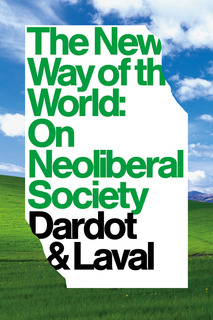
dardotPierre Dardot and Christian Laval, The New Way of the World: On Neoliberal Society, Verso 2014

Publisher’s page

Exploring the genesis of neoliberalism, and the political and economic circumstances of its deployment, Pierre Dardot and Christian Laval dispel numerous common misconceptions. Neoliberalism is neither a return to classical liberalism nor the restoration of “pure” capitalism. To misinterpret neoliberalism is to fail to understand what is new about it: far from viewing the market as a natural given that limits state action, neoliberalism seeks to construct the market and make the firm a model for governments. Only once this is grasped will its opponents be able to meet the unprecedented political and intellectual challenge it poses.

See e-flux for an edited extract from the book

Reviews

  • The New Way of the World is the best modern realization of Foucault’s pioneering approach to the history of neoliberalism. It wonderfully explores the European roots and branches of the neoliberal thought collective over the twentieth century, and warns that unthinking misrepresentations of its political project as espousing ‘laissez-faire’ has had the effect of allowing the Left to submit to its siren song.”
  • “To understand these debates [on neoliberalism], the book by Christian Laval and Pierre Dardot on the ‘neoliberal society’ offers us analytical keys. This monument of scholarship draws on the history of ideas, philosophy and sociology.”
  • “Extremely scholarly, this book is an insistent invitation to push theoretical and social critique of the present order beyond the standard analyses.”


With thanks to Colin Gordon for this news

Michel Foucault, Wrong-Doing, Truth-Telling: The Function of Avowal in Justice, Fabienne Brion and Bernard E. Harcourt (eds.), Stephen W. Sawyer (tr.), University of Chicago Press, 2014, 344pp., $35.00 (hbk), ISBN 9780226257709.

Reviewed by Todd May, Clemson University, Notre Dame Philosophical Reviews, 13 January 2015

This volume consists of six lectures, preceded by an inaugural lecture and followed by three interviews, that Michel Foucault delivered in 1981 at the Catholic University of Louvain in Belgium at the request of its School of Criminology. That fact has bearing on the lectures themselves. In these lectures (six of which were transcribed from videotapes, and the inaugural lecture from the manuscript), Foucault offers a rough genealogy of practices of what in French is called aveu, and is translated here as avowal.[1] Near the end of the final lecture, Foucault considers the role of avowal in recent penal practices, and it is clear that his interest is in good part giving an account of how avowal came to have the place it does in those practices.

For those who have read the recently released Collège de France lectures On the Government of the Living, some of the material will be familiar. Other parts harken back to Foucault’s first Collège de France presentations, Lectures on the Will to Know. However, the structure of these lectures is, to my mind, unique in Foucault’s corpus. Rather than focusing on a period of several hundred years, as was his normal practice, he covers a broad sweep from Homeric Greece to the present. In that sense, the Louvain lectures are not a genealogy in the sense many of us have come to identify in Foucault’s work. Rather than showing how the intersection of particular practices give rise to something that had not previously existed (madness, sexuality, the normal, etc.), the lectures trace changes over nearly three millenia in the way subjectivity was constituted in particular practices through the changing nature of avowal. As with his standard genealogies, Foucault is interested here in the relation of subjectivity and truth. Moreover, that interest is focused on the way certain forms of subjectivity are constituted by certain practices of truth. However, whereas in other works the focus is on the emergence of those forms of subjectivity as historical novelties, here the focus is on the changing nature of a particular type of practice: that of avowing. To put the point another way, whereas in the genealogies the focus is on new emergences, in the Louvain lectures it is on the evolving character of a particular practice.

[1] The editors note that they prefer the term avowal to the more commonly used confession, since the former has a wider use, which better reflects the variety of uses in the lectures.


Read more

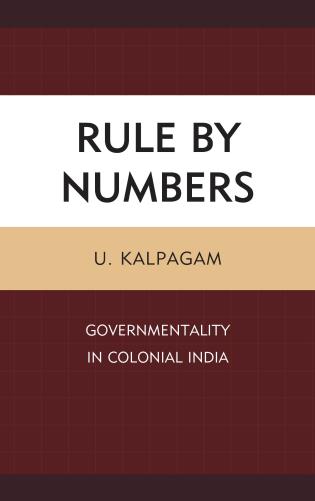
indiaU. Kalpagam, Rule by Numbers: Governmentality in Colonial India. Bloomsbury, Lexington Books imprint, 2014

Description
This book examines aspects of the production of statistical knowledge as part of colonial governance in India using Foucault’s ideas of “governmentality.” The modern state is distinctive for its bureaucratic organization, official procedures, and accountability that in the colonial context of governing at a distance instituted a vast system of recordation bearing semblance to and yet differing markedly from the Victorian administrative state. The colonial rule of difference that shaped liberal governmentality introduced new categories of rule that were nested in the procedures and records and could be unraveled from the archive of colonial governance. Such an exercise is attempted here for certain key epistemic categories such as space, time, measurement, classification and causality that have enabled the constitution of modern knowledge and the social scientific discourses of “economy,” “society,” and “history.” The different chapters engage with how enumerative technologies of rule led to proliferating measurements and classifications as fields and objects came within the purview of modern governance rendering both statistical knowledge and also new ways of acting on objects and new discourses of governance and the nation. The postcolonial implications of colonial governmentality are examined with respect to both planning techniques for attainment of justice and the role of information in the constitution of neoliberal subjects.

With thanks to Chathan Vemuri  and Colin Gordon for this news

Colin Gordon has recently set up a profile on Academia.edu and is gradually uploading his collected works to this site. There are currently 20 items on this site with more to come. Most of these works are on Foucault. Some of the uploaded items include material which was not included in the published versions. For example:

Introduction (uncut version) to Michel Foucault, The Essential Works 3: Power, ed. James D Faubion. New Press, 2000

Thursday, 5 February 2015, 5-7 p.m.

Second meeting of the 2014-2015 Workshop “Actualités Foucault” (org. Frédéric Gros, Daniele Lorenzini, Ariane Revel, Arianna Sforzini)

David LAPOUJADE (Paris 1) : Deleuze, les mouvements aberrants

Sciences Po, 199 boulevard Saint-Germain, 75007 Paris (3e étage)


stuartelden's avatarProgressive Geographies

Thanks to a reader who wishes to remain anonymous for sending me these details of an interview with Foucault about Iran conducted in August 1979, which was first published in French in 2013.

PHOTO 3 N3DI’ve stumbled upon an interview with Foucault from this era that has up until recently remained completely uncommented by Foucault scholarship, unreferenced even in Afary-Anderson [Foucault and the Iran Revolution – SE]. I have no doubt that you will find it interesting. The interview was conducted in August ’79 with Farès Sassine from the Paris paper An-Nahar al-`Arabi wa‘d-Duwali, in which extracts were published in ’79. translated into Arabic from the French. The original article, in Arabic, can be found here. It wasn’t until last year, however, that a full transcription of the interview in French was published in the somewhat obscure Revue Rodéo (no. 2) with an accompanying piece by Farès…

View original post 234 more words

Via Stuart Elden’s blog Progressive Geographies

A Foucault News exclusive.

Colin Gordon, Foucault, neoliberalism etc.

Full PDF of article

 First two pages

The recent online debate triggered by the Ballast interview (translated in Jacobin) with Daniel Zamora will no doubt have helped to publicise Zamora’s book and its forthcoming translation. As publicity for the French and English editions of the book, the interview seems to have been remarkably successful. I noticed the original report in Foucault News partly, I must confess, because it mentioned me and purported to report my views. I have been surprised by the amount of attention the piece has received, which seems to be disproportionate to its merits. The content of the interview, apparently summarising the content of the book, gives the impression that it consists of a mixture of old news and falsification. The old news is that Foucault was not a Marxist or a supporter of any existing model of revolutionary socialism, and was hostile to the USSR and the political influence of the French Communist Party. The falsification is the claim that Foucault ‘endorsed’ or ’embraced’ some or all forms of liberalism and neoliberalism. This combination of the already known and the false is in turn packaged in the attention-seeking claim that Foucault’s thought has become the unassailable, hegemonic discourse of our time, while its Marxist critics are now reduced to marginality within the neoliberal academy. The first part of this claim has already been met with deserved ridicule. As far as the second is concerned, the quality of this intervention does not tend to inspire regret at the decline in influence of the particular style of political culture it represents. Zamora, unborn at the time when Foucault was lecturing, appears, on the evidence of this interview and its successor interventions, to have put together an anthology of recycled old new left slurs on Foucault’s work and politics, spiced up with one or two new confabulations of his own, plus a supplement of misinformation issuing from a rather different ideological source. I limit myself in the following notes to comment on some salient points in the online discussion.

I: My comments on Foucault and Blair

Zamora says in his interview: “Even Colin Gordon, one of Foucault’s principal translators and commentators in the Anglo-Saxon world, has no trouble saying that he sees in Foucault a sort of precursor to the Blairite Third Way, incorporating neoliberal strategy within the social-democratic corpus”, adding subsequently, “Foucault, then, doesn’t advocate neoliberalism, but he adopts all of its critiques of the welfare state. He attacks the supposed “dependency” it produces, the very notion of “rights,” and its negative effect on the poor. His objective is thus not to move towards a totally neoliberal society, but to incorporate within the socialist corpus some of the decisive elements of the neoliberal critique of the state. It’s precisely in this sense that Colin Gordon sees him as a sort of precursor to Blairism”. Zamora does not provide a reference to my remarks, which occur in my discussion with Jacques Donzelot (Esprit and Foucault Studies).

What I actually wrote (in 2007) was a little more nuanced and qualified than Zamora suggests:

 I am not aware that Blair ever read Foucault. Anthony Giddens, for a time the Blair‐Clinton court philosopher, usually includes a caricatural account of Foucault only as a marginal item in his doctrinal digests. But I think parts of the formulae of Clinton and Blair for a ’third way’ may have effectively carried out a form of the operation which Foucault might have been taken as challenging the socialists to contemplate – the selective incorporation, in an updated and corrected social democracy, of certain elements of neoliberal analysis and strategy. In some ways, it is the continuation of a trend initiated in the 70s by Schmidt in Germany, Giscard in France and Healey in Britain, and in her different way by Thatcher – the truth‐telling role of government, in a world of global economic uncertainty and competition, as moral tutor of citizens in an ethic of enterprise and responsibility. The success of this formula in Britain seemed for a long time to be limited only by the irritability of citizens and the claims of the fourth estate, the media, to make and unmake governmental power (both of these reactions being severely aggravated, of course, by Blair’s extension of his governmental agenda to include the neoconservative enterprise of civilisational confrontation and global war on terror).

The comment on “irritability of citizens” was an allusion to the emerging public perception in these years of a “political class” separate from the rest of society, a perception itself no doubt generated in large part by the contradictory effects of neoliberalism itself – the new strident leadership style combined with the hollowing out of democratic political authority.

I stand by these comments, which clearly fell some way short of representing Blairism as a fulfilment of Foucault’s political dreams. The New Labour project was, however partially, incompletely and inadequately, an attempt to devise and apply a form of centre-left governmentality – drawing both on ideas from the triangulating New Democrats in the USA, and from policies of social inclusion developed under Socialist governments in France. One thoughtful paper by William Davies (an intelligent reader of Foucault’s work albeit not a card-carrying practitioner of governmentality studies) offered what seems to have been an isolated attempt, drawing on work by Rose and Miller among others, to analyse this project, and some of its difficulties, in these terms. [1] Some more work of this kind would, I suggest, still be useful.

[1]            William Davies, “The Governmentality of New Labour”, Public Policy Research 13, 4 (2006). http://potlatch.typepad.com/weblog/files/ppr_dec06.doc

Read more