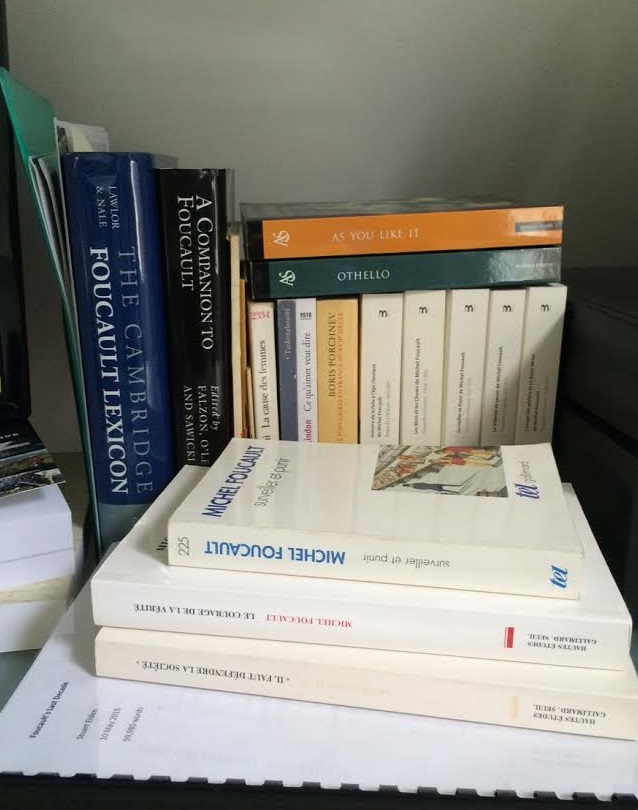
Gibson, K.E., Dempsey, S.E.
Make good choices, kid: biopolitics of children’s bodies and school lunch reform in Jamie Oliver’s Food Revolution
(2015) Children’s Geographies, 13 (1), pp. 44-58.
Abstract
In recent debates surrounding childhood nutrition and US school lunch reforms, the child’s body serves as a contested battleground in a destructive politics of blame over obesity and diabetes. Scalar discourses of the body play a significant role in constructing food-related problems and their solutions. We illustrate our claims through a critical analysis of Jamie Oliver’s Food Revolution; a celebrated national television program centered on chef Oliver’s attempts to address childhood nutrition through school lunch reform. Informed by Foucault’s biopolitics, our analysis highlights how moralizing scalar discourses of the body frames nutrition as an individual problem of personal choice. Food politics, when played out at the scale of young bodies, masks class divisions, marginalities, and governmental policies that structure access to nutritious food in the US school lunch system. Increased attention to biopower, scalar politics, and the political economy of childhood nutrition in the space of US public schooling challenges naturalized ideologies of food choice that regulate and delimit change to the scale of the body.
Keywords
biopower; childhood nutrition; media discourse; scalar politics; school lunch reform
Michel Foucault. Genealogie del presente, Con un’intervista a Michel Foucault e un’intervista a Daniel Defert
Saggi di Laura Cremonesi, Daniele Lorenzini, Orazio Irrera, Martina Tazzioli, Paolo B. Vernaglione
Manifestolibri, 2015
L’occasione di questa pubblicazione è stato il trentennale della scomparsa di Michel Foucault. Nel 2014 in tutto il mondo convegni e libri hanno reso testimonianza dell’opera di chi, a ragione, può essere considerato tra i grandi della storia del pensiero. Ma l’occasione non ha fatto e non può fare di Foucault un “classico” della filosofia, o dell’epistemologia, tantomeno la sua vasta produzione può essere circoscritta nell’area accademica – benchè ormai università e centri di formazione, luoghi di produzione e condivisione del sapere e imprese editoriali abbiano moltiplicato l’interesse per l’autore dei corsi al College de France. La figura di Foucault infatti, come accade a quei filosofi che da una posizione decentrata riscrivono categorie e forme del sapere, vive in questi anni di un paradosso: un pensiero del fuori e una cultura della marginalità sono stati indagati e compresi a partire dalle scansioni temporali che filosofi, storici ed epistemologi hanno assegnato ai grandi eventi e ai passaggi d’epoca, l’antichità, l’epoca classica, la modernità. Con Foucault infatti la pratica della storia ha aperto il pensiero, infrangendo le barriere disciplinari e gli specialismi, per catturare un’ontologia del presente di cui l’attualità chiede la restituzione.
Del resto il paradosso di un archeologo non può che essere questo. D’altra parte produrre discorso nell’orizzonte di una critica radicale del sapere, dei rapporti di potere e delle forme di soggettivazione comporta una reazione forte di quella modernità che è stata criticata e messa in scacco con i suoi stessi strumenti concettuali.
Da questa particolare postura, assunta nell’elaborazione di un metodo genealogico, a partire dagli scorsi anni Sessanta, si stacca la problematizzazione dello strutturalismo e della fenomenologia, e deriva quello sguardo trasversale sul sapere e la storia che ha molto in comune con il gesto sovversivo di Nietzsche nei confronti della metafisica. L’”uso” che è stato e continuerà ad essere fatto del pensiero di Foucualt costituisce, non solo per questi motivi, il lascito più importante e produttivo per le generazioni a venire. Infatti movimenti di contestazione, comunità gay, teorici politici radicali, nonchè quei rari filosofi che assumono l’archeologia dei saperi e del linguaggio come orizzonte complessivo di ricerca, e la genealogia come metodo analitico, hanno continuato l’opera foucauldiana, rendendo esplicito l’intreccio inestricabile di pensiero e prassi e sgombrando in via definitiva il campo sia dall’ideologia dell’intellettuale come figura separata dalla società, ideologia resistente fino a Sartre, sia dall’idea che la militanza politica escluda la riflessione e sia l’orizzonte esclusivo dei conflitti.
D’altra parte la ricerca e il dibattito intorno alla follia, all’organizzazione discorsiva dei saperi, ai dispositivi disciplinari e alle forme di soggettivazione vivono nella contraddizione che si è aperta tra ricezione del pensiero di Foucault e la rilettura più o meno filologica della sua opera. Ricerca e confronto che hanno impegnato almeno tre generazioni di studiosi, militanti e ricercatori, prima di acquisire il rango di tematiche del presente, con l’inevitabile genericità che comporta l’adattamento ad un’attualità che le respinge, di questioni inscritte nella carne viva di esistenze compromesse. Così, mentre negli anni Sessanta il metodo inaugurato da Le parole e le cose e L‘ Archeologia del sapere si scontrava con la tradizione storicista e lo strutturalismo, risultando di difficile penetrazione anzitutto in Francia, negli anni Settanta la stagione dei conflitti operai e studenteschi produceva un controeffetto sul lavoro che Foucault sviluppava sulle istituzioni disciplinari e la microfisica del potere, annodando riflessione e pratica politica, teoria e analisi delle contraddizioni del capitalismo nel confronto con il pensiero di Marx, letto a sua volta per la prima volta fuori e contro i “marxismi”.
Laddove poi la modernità assumeva l’abito e il ritmo della “modernizzazione”, negli anni Ottanta, la grande riflessione di Foucault sulle pratiche di soggettivazione, la parresia, la cura di sè e il governo dei viventi, rendevano esplicito il rapporto essenziale tra l’ “inattualità” del metodo archivistico e la registrazione del presente, dotando il pensiero di un formidabile strumento di penetrazione di una realtà considerata debole perchè postideologica. Ciò che è successo dopo, con la pubblicazione progressiva dei Corsi, dell’impressionante mole dei Dits et Ecrits e con la progressiva pubblicazione delle conferenze e degli interventi degli anni Ottanta, di cui abbiamo anche parziale testimonianaza on line con le registrazioni audio e video, ha contribuito in larga misura a rendere popolare la ricezione e l’ascolto di Foucault, aprendo quel piano concettuale che va sotto il nome di “biopolitica”. Questo rimane a tutt’oggi il luogo più discusso e rielaborato del suo pensiero.
La prochaine séance du séminaire Actualités Foucault aura lieu le jeudi 19 mars 2015, de 16h à 18h, à l’Université Paris-Est Créteil, bâtiment i, 2e étage, salle 233 (métro ligne 8, Créteil Université).
La séance sera consacrée à la présentation du livre de Judith Revel (Paris 10) : Foucault avec Merleau-Ponty (Vrin, 2015), avec la participation de l’auteur.
Thursday, 19 March 2015, 6-8 p.m.
Third meeting of the 2014-2015 Workshop “Actualités Foucault”
(org. Frédéric Gros, Daniele Lorenzini, Ariane Revel, Arianna Sforzini)
Judith REVEL (Université Paris Ouest Nanterre La Défense) : Foucault avec Merleau-Ponty
Université Paris-Est Créteil, bâtiment i, 2e étage, salle 233 (métro ligne 8, Créteil-Université)
Abstract:
The review highlights how the new book by Pierre Dardot and Christian Laval can be interpreted as a twofold contribution. On the one hand, it represents much-needed commentary to the lectures delivered by Michel Foucault at the Collège de France in 1978/1979, entitled Birth of Biopolitics. On the other one, it provides a compelling analysis of neoliberal governmentality in the era of capitalist financialization – which is also the epoch of a fully deployed crisis of Fordism. Whereas in the first part the authors elaborate a multifaceted and plural image of liberalism and a convincing reading of the emergence of neoliberal rationality, the second section assembles a critical genealogy of ‘entrepreneural governance’. This latter refers to a ‘neo-subject’ which functions according to a regime of ‘jouissance of oneself’ – whose deployment accounts for the incorporation of the shareholder logic and for the self-entrepreneur’s socio-clinical pathologies.
Especialistas que han confirmado su asistencia Dr. Alejandro J. Alagia (UBA), Dr. Ignacio Anitua (Instituto de Investigaciones Jurídicas y Sociales “Ambrosio L. Gioja” – UBA), Dr. Nicolás Dallorso (UBA –IIGG-CONICET), Dra. Gabriela Seghezzo (UBA-IIGG – CONICET), Dra Karina Mouzo (UBA -IIGG– CONICET), Dr. Marcelo Raffin (UBA- IIGG– CONICET), Dra. Senda Sferco (IIGG-CONICET), Dra. Cristina López (UNSAM), Profesora Felisa Santos (UBA), Dra. Esther Díaz (UNLa), Dra. Susana Murillo (UBA-IIGG), Prof. Alejandro Kaufman (UBA-IIGG- UNQUI), Dr. Pedro Cerruti (UBA -IIGG-CONICET).
Presentación de ponencias Áreas temáticas: – Ciencias sociales y humanas y las relaciones saber-poder – Dogmática penal, tecnologías punitivas y análisis jurídico-penal – Seguridad y gubernamentalidad – Filosofía y biopolítica.
Plazos: Abstract (hasta 300 palabras): 30 de abril. Ponencias (hasta 8000 palabras: 15 de junio
Abstracts y ponencias: Times New Roman 12, interlineado 1,5 y con citas APA. Se prevé la publicación de las ponencias
Organizadores: Proyecto 33B122 “Neoliberalismo y subjetividades “deseables/indeseables”. Un análisis del modo en que los discursos mediáticos y jurídicos gobiernan poblaciones produciendo y regulando sus miedos e inseguridades”(Programación científica: 2014-2015).Secretaría de Ciencia y Técnica de la Universidad Nacional de Lanús (UNLa).
Proyecto UBACyT 20020130200045BA“Derecho Penal y Ciencias Humanas: Articulaciones entre el saber penal, las Ciencias Sociales y la Economía”(Programación científica: 2014-2016), Instituto de Investigaciones “Ambrosio L. Gioja”, Facultad de Derecho (UBA).
Auspician: Departamento de Planificación y Políticas Públicas – UNLa Instituto de Investigaciones jurídicas y sociales “Ambrosio L. Gioja” – Facultad de Derecho – UBA
According to philosopher Michel Foucault, the ‘history of the present’ should constitute the starting point for any enquiry into the past and a critical ontology of ourselves. This book comprises a series of essays all centring on the question of the present or, rather, multiple presents which compose contemporary experience. The collection brings together philosophical readings of Foucault which try to rework his thought in light of our present, together with practical analyses of our own moment which draw on his methodological approaches to questions of power, knowledge and subjectivity. Covering a range of topics including freedom, politics, ethics, security, war, migration, incarceration, the sociology and political economy of new media, Marxism and activism, Foucault and the History of Our Present features essays from Tiziana Terranova, Alberto Toscano, Judith Revel, Sanjay Seth, Saul Newman, Mark Neocleous and William Walters.
Introduction; Martina Tazzioli, Sophie Fuggle, and Yari Lanci
PART I: HISTORIES OF THE PRESENT
1. ‘What Are We at the Present Time?’ Foucault and the Question of the Present; Judith Revel
2. What is Capitalist Power? Reflections on ‘Truth and Juridical Forms’; Alberto Toscano
3. Foucault in India; Sanjay Seth
4. ‘Critique Will Be the Art of Voluntary Inservitude’: Foucault, La Boétie and the Problem of Freedom; Saul Newman
PART II: SPACES OF GOVERNMENTALITY
5. The Other Space of Police Power; or, Foucault and the No-Fly Zone; Mark Neocleous
6. On the Road with Michel Foucault: Migration, Deportation and Viapolitics; William Walters
7. Securing the Social: Foucault and Social Networks; Tiziana Terranova
PART III: TROUBLING SUBJECTIVITIES
8. Human Pastorate and ‘la vie bête’; Alain Brossat
9. Beyond Slogans and Snapshots: The Story of the Groupe d’Information sur les Prisons; Sophie Fuggle
10. Troubling Mobilities. Foucault and the Hold’s over ‘Unruly’ Movements and Life Time; Martina Tazzioli
PART IV: POLITICS OF TRUTH
11. Environmentality and Colonial Biopolitics. Toward a Postcolonial Genealogy of Environmental Subjectivities; Orazio Irrera
12. Pierre Hadot and Michel Foucault on Spiritual Exercises: Transforming the Self, Transforming the Present; Laura Cremonesi
13. A Decolonizing Alethurgy. Foucault after Fanon; Matthieu Renault
14. Ethics as Politics. Foucault, Hadot, Cavell and the Critique of Our Present; Daniele Lorenzini
15. Interview with Judith Butler: Resistance and Vulnerability; Federica Sossi and Martina Tazzioli
Excerpt from the interview (Discontinuity and exclusion):
MB Did Foucault’s criticism of universal concepts deny differences (in charm, intellect, morality)?
MM Foucault does not deny differences, only questions conditions of their possibility. The differences transfer in our responses to judgements whose basis is however neither natural nor stable. It emerged in certain historical moment whose circumstances reveal interest to exclude those who differ.
MB Fools?
MM There were times when the higher truth notifying the future was revealed through a mouth of a fool. How happened, that since Enlightenment a fool had been classified as a folly and got into enclosed institution? This question lead to the Foucault’s first great book: History of Madness (1961). He will ask such questions during whole of his life. Why is an idea once a deep knowledge, marked as a blunder?
MB Is historical, social, cultural, science evolution illusionary?
MM Foucault doubted the progress of Western society that should be guaranteed by acquired privileges as scientific advance, humanistic base of law, progressive education. He was not the first critique. Psychologist Jean Piaget noticed similarity between Foucault’s The words and the things (1966) and Kuhn’s The Structure of Scientific Revolutions (1962).
MB What was Foucault’s contribution?
MM He particularized steps and processes of preconditions. Episteme, the principle of power structure, notifies in an indefinite form, and then transforms itself to theory. The norm to supervise and punish had only gradually resembled a prison or school. These motions don’t need to be overlapped by a story of unstoppable progress of modern society.
MB What’s a message of Foucault’s book This is not a pipe with a pipe’s image?
MM Foucault thought that Magritte’s painting of a pipe entitled This is not a pipe, deviated from imitation that long dominated western art. Plato called such images – without predetermined pattern, simulacra and condemned their creators as producers of delusions. Simulacra can explain many phenomena of our contemporary visual culture.
MB According to Foucault, the power defines the “author” and its role, while the invention is secondary, irrelevant or an obstacle (e.g. Galileo). How was Foucault as an “author” defined?
MM Foucault challenged the idea of „author”, as a source of hidden abilities and inspirations. Likewise Russian formalists or art historian Wölfflin thought that creator’s great secret was an illusion. So Foucault’s position belongs here too.
MB What was Foucault’s contribution?
MM He was dismantling this illusion being a challenge for a thorough historical analysis of assumptions. The author should be decomposed and reconstructed according to different social orders, by relevant archived texts. As we see the result of study in archives, we can see Foucault closer.
MB He – himself authority – viewed the authority a power tool. Isn’t it a paradox?
MM Foucault taught us that history of thought of 19 century can be written without emphasis on the most recognized philosophers: Hegel, Marx. He didn’t claim that power only represses us, and so we must release ourselves. He rejected the concept of punitive power, and understood its function to repress as well as create us. He just refused its innocent appearance. Power affects relation of teacher-student, which does not imply to remove the teacher. Understanding history of such relations transfers their character.
Abstract
Post-structuralists argue that personal identity is a function of societal power dynamics. This becomes especially problematic for persons recruited into problem-saturated identities. In this paper, inspired by Foucault’s call for us to ‘create ourselves as a work of art’ (p. 262), I explore the therapeutic value of an aesthetic approach to identity. Instead of orienting to the client as one to be known and understood, we might envisage his or her life as an open-ended, never quite finalised oeuvre. Identity is therefore conceptualised not as something one ‘is’, but as a creative performance. A therapeutic case is presented to highlight some of the possibilities and challenges associated with such an approach.
Keywords
aesthetics of experience; Foucault; multiplicity; narrative therapy; therapy; values
Rutherford, V., Conway, P.F., Murphy, R.
Looking like a teacher: fashioning an embodied identity through dressage
(2015) Teaching Education, 15 p. Article in Press.
Abstract
This article makes a case for bringing in the body from the margins of research on teacher education. In doing so, it considers the personal and socio cultural issues reported by seventeen pre-service teachers (PSTs), who are part of a one-year post graduate diploma in post-primary teaching, when learning to embody and fashion teacher identity. The article focuses on embodiment drawing on qualitative interview data from a large-scale government-funded study on initial teacher education. Drawing on Foucault’s general theory of dressage, at the center of which reigns the notion of disciplining and applying the methodology of critical discourse analysis, this article presents three themes tethered to the analysable and manipulable teacher body, namely dressage as compliance, dressage as discipline and dressage as performance. For PSTs, ‘looking like a teacher’ and dressage as a practice of power is a significant part of the fabric of their professional school life.
Abstract
Purpose: The purpose of this paper is to study circulating power and in/visibility. In the unfolding Maltese education scenario of decentralization and school networking, suffused with entrenched power, with added layers of leadership and more subtle levels of accountability, this paper explores the underlying power relations among the top educational leaders, namely, the College Principal and Heads of School, and among the Heads of School themselves.
Design/methodology/approach: Foucault’s theories of power, governmentality and subjectivation are used as “scaffoldings” for the exploration of power relations. This case study research exploring one “college” is carried out through in-depth semi-structured interviews, participant observation of Council of Heads (CoH) meetings, as well as documentary analysis of the policy mandating this reform, explored through narrative analysis.
Findings: Analysis shows that layers of hierarchical leadership do translate into layers of “visibility”, with the Principal being rendered the most “visible” actor according to role designation and policy rhetoric. Struggles in the dynamics between tiers of leaders are a reality. Despite a deeply felt presence of the circulation of power, it is the Principal who has the final say.
Originality/value: This is expected to contribute to educational leadership literature with regards to the relationship among top educational leaders. Through its provision of a diverse reading of leadership, it is deemed to be of particular relevance to professional work and learning in areas of leadership, of interest to budding scholars, seasoned Foucauldians and practicing educational leaders.
Keywords
Distributed leadership; Foucault; In/visible power relations; Professional identities; School network; Tensions