Foucault News

News and resources on French thinker Michel Foucault (1926-1984)

PHILOSOPHY – Michel Foucault
The School of Life

Published on 3 Jul 2015

Michel Foucault was a philosophical historian who questioned many of our assumptions about how much better the world is today compared with the past. When he looked at the treatment of the mad, at the medical profession and at sexuality, he didn’t see the progress that’s routinely assumed. Please help us to make films by subscribing here: http://tinyurl.com/o28mut7
Brought to you by http://www.theschooloflife.com

Produced in collaboration with Mad Adam
http://www.madadamfilms.co.uk

Editorial comment: This sounds like Alain de Botton’s voice. Some of the material in this video should perhaps be taken with a grain of salt. Stuart Elden also suggests that ‘the script could have used some serious work’. For more commentary on this video see Open Culture.


Manan, S.A., David, M.K., Dumanig, F.P.
Language management: a snapshot of governmentality within the private schools in Quetta, Pakistan
(2014) Language Policy, 24 p. Article in Press.

DOI: 10.1007/s10993-014-9343-x

Abstract
Pakistan is a multilingual and multiethnic country; however, this diversity stands unrecognized in the formal language-in-education policies. Estimates suggest that about 90 % of children who speak over 60 indigenous languages do not have access to education in their mother tongues. Linguists estimate that exclusive teaching of Urdu and English subjects the indigenous languages to physical endangerment as well as negative perceived vitality. This study investigated the language management techniques, practices and discourses of the school authorities about indigenous languages and linguistic diversity, and its effects on perceptions of the students. The study used the theoretical framework of governmentality as introduced by Foucault in The Foucault effect: studies in governmentality with two lectures by and an interview with Michel Foucault, Harvester Wheatsheaf, London, (1991), which not only focuses on the direct acts of the governing of the state apparatuses, but also addresses the indirect acts of governance that shape individual behaviors. Deploying a mixed methodology that used students of high secondary level, teachers and school principals as sampling in 11 low-fee English-medium private schools in Quetta, Pakistan, the findings suggest that school authorities exercise stringent techniques such as notices, wall paintings, penalties and occasional punishment to suppress the use of languages other than Urdu or English. Mostly, the students also show compliance to the top-down policies. Most of participants perceive indigenous languages as worthless because of their lesser role in professional development and social mobility. The study concludes that the governance methods displace the indigenous languages both physically as well as perceptually. The prevailing orientations look upon languages as commodities, profoundly downgrading the cultural, literary, aesthetic and sociolinguistic dynamics of the indigenous languages.

Author Keywords
English; Governmentality; Indigenous languages; Language management; Pakistan; Urdu

Lopes, E., Carter, D., Street, J.
Power relations and contrasting conceptions of evidence in patient-involvement processes used to inform health funding decisions in Australia
(2015) Social Science and Medicine, 135, pp. 84-91.

DOI: 10.1016/j.socscimed.2015.04.021

Abstract
We collected and analysed views of key stakeholders on the processes used to involve patient organisations in health care funding decision making in Australia. We conducted 12 semi-structured interviews with patient organisation representatives and members of Advisory Committees that provide advice to the Australian Department of Health and employ Health Technology Assessment (HTA) as an evaluation framework. Using two theoretical frameworks, we analysed structural and contextual elements pertaining to the involvement processes.

The findings reported in this article relate to interviewees’ perspectives on contextual elements, analysed using a Foucauldian lens. These elements include: the perspectives of marginalised voices; the diversity of views on what ought to be considered valid evidence in a HTA setting; and the relationships between stakeholders, along with how these relationships impact on involvement processes and the outcomes of those processes. The findings demonstrate that the involvement processes currently used are deemed inadequate by both patient organisation representatives and Advisory Committee members, but for different reasons connected to how different stakeholders conceptualise evidence. Advisory Committee members viewed evidence as encompassing clinical outcomes and patient preferences, whereas patient organisation representatives tended to view evidence as encompassing aspects not directly related to a disease entity, such as the social and emotional aspects of patients’ experiences in living with illness. Patient organisation representatives reported interacting with other stakeholders (especially industry) to increase the influence of their conception of evidence on decision making. The use of this strategy by interviewees illustrates how power struggles occur in government decision-making processes which involve both medical expertise and patients’ accounts. Such struggles, and the power differentials they reflect, need to be considered by those responsible for designing and implementing meaningful public- and patient-involvement processes. © 2015 Elsevier Ltd.

Author Keywords
Australia; Health funding; Health policy; Health Technology Assessment; Participation; Patient and public involvement; Patient organisations; Power relations

Index Keywords
decision making, health care, health expenditure, health policy, power relations, stakeholder; advisory committee, Article, attitude to illness, Australia, funding, health care policy, health service, human, patient attitude, patient decision making, patient participation, patient preference, semi structured interview; Australia

Hanna, P.
Reconceptualizing subjectivity in critical social psychology: Turning to Foucault
(2013) Theory and Psychology, 23 (5), pp. 657-674.

DOI: 10.1177/0959354313493152

Abstract
This article focuses on a reading of Foucault which draws on “technologies of the self,” as opposed to “technologies of subjectivity,” and examines the relevance of this work for critical psychology. The article draws on consumerism to highlight the ways in which contemporary individuals understand, and are understood, through a desire to “know oneself.” Attention then turns to Foucault’s understanding of the precept “care for the self” to explore the ways in which this enables a reconceptualization of contemporary consumers as both positioned and capable of agency. The article argues that psychology could usefully benefit from an understanding of subjectivity that acknowledges existing power knowledge structures, whilst also looking for moments of resistance via individual techniques such as critical self-reflection, reciprocal relationships, and ultimately a “care of the self.” This article attempts to advance the interpretation of Foucault within critical psychology and suggest an alternative for theorizing subjectivity. © The Author(s) 2013.

Author Keywords
Foucault; philosophy; social psychology; subjectivity; theory

Voyce, M.
From Ethics to Aesthetics: A Reconsideration of Buddhist Monastic Rules in the Light of Michel Foucault’s Work on Ethics
(2015) Contemporary Buddhism, 31 p. Article in Press.

DOI: 10.1080/14639947.2015.1020735

Abstract
This article considers the recent debate over the nature of Buddhist ethics largely conducted by scholars who have argued in different ways that Buddhist ethics may be assimilated to or may correspond with different forms of western ethical theory. I argue that the interpretation of Buddhist texts, and in particular the Vinaya, in light of western ethical theory creates misunderstanding. I argue that in each case of a supposed ethical dilemma, Buddhist ethics should be seen as empirical, since the ultimate point of reference for the choices involved in a proposed action lies in the purity and wholesomeness of each individual action. My approach follows Foucault’s argument for scepticism with regard to the notions of a universal nature or of a universal rationality. I argue that it is not instructive to read Buddhist texts against generalized standards. Rather, it is more productive to regard ethics as creating a space for the ethical, not in a normative sense but one arising from personal practice as related to individual circumstances. At the same time, this article outlines the role of beauty and its role in ethical formation. I suggest that one interpretation of Theravada Buddhism has regarded beauty as a form of sensuous pleasure, which is seen as a danger for someone on the spiritual path. However, an alternative reading of such texts is more sympathetic to the educative role of beauty. © 2015 Taylor & Francis

Julian Vigo, Biopower and Security, Counterpunch, May 05, 2015

Full text online

In The History of Sexuality: The Will to Knowledge (L’histoire de la sexualité, La volonté de savoir), Michel Foucault defines biopower as the practices engaged by the modern state to effect an “an explosion of numerous and diverse techniques for achieving the subjugations of bodies and the control of populations” (184). Developing his notion of biopower through the many exegeses of disciplinary power he studies throughout his career, Foucault focuses his interpretations of biopower on various styles of governments which have historically devised myriad controls of the body—be it in the areas of public health creation and regulation, heath crises and quarantine, military education, the creation of the mental hospital, the structure of the modern prison or the public policies which evolve discourses of the body and discourses of power onto the body:

[I]t is focused on the species body, the body imbued with the mechanics of life and serving as the basis of the biological processes: propagation, births and mortality, the level of health, life expectancy and longevity, with all the conditions that can cause these to vary. Their supervision was effected through an entire series of interventions and regulatory controls: a biopolitics of the population. (1976, 183)

Foucault suggests that the somatic, the individual body, is controlled as a means to dominating the general population. Maintaining that biopolitics were developed in the second half of the 18th century and were centered entirely on the body—its health, mortality and continuance—Foucault details this newly born power which has not replaced disciplinary power, but that was instead simply grafted onto disciplinary power, as he writes in “Society Must Be Defended” (Il faut défendre la société):

These are the phenomena that begin to be taken into account at the end of the eighteenth century, and they result in the development of a medicine whose main function will now be public hygiene, with institutions to coordinate medical care, centralize power, and normalize knowledge. And which also takes the form of campaigns to teach hygiene and to medicalize the population (1997,217).

This distinction between biopower and disciplinary power is imperative to understand in moving forward through his various readings of power: Foucault reads disciplinary power as that which focusses upon people as individuals—subjects to train, teach, punish, surveil and utilize—whereas bio-power focuses on individuals as people—as a “species” to conglomerate, regulate, characterize, and ultimately forecast. Where disciplinary power focuses on particular individuals, Foucault sees biopower as that which focuses upon an extrapolated individual who can be serialized to the point of being interchangeable, repeatable and disappearable.

read more

Gourlay, L.
Open education as a ‘heterotopia of desire’
(2015) Learning, Media and Technology, 18 p. Article in Press.

DOI: 10.1080/17439884.2015.1029941

Abstract
The movement towards ‘openness’ in education has tended to position itself as inherently democratising, radical, egalitarian and critical of powerful gatekeepers to learning. While ‘openness’ is often positioned as a critique, I will argue that its mainstream discourses – while appearing to oppose large-scale operations of power – in fact reinforce a fantasy of an all-powerful, panoptic institutional apparatus. The human subject is idealised as capable of generating higher order knowledge without recourse to expertise, a canon of knowledge or scaffolded development. This highlights an inherent contradiction between this movement and critical educational theory which opposes narratives of potential utopian futures, offering theoretical counterpositions and data which reveal diversity and complexity and resisting attempts at definition, typology and fixity. This argument will be advanced by referring to a one-year longitudinal qualitative multimodal journaling and interview study of student day-to-day entanglements with technologies in higher education, which was combined with a shorter study focused on academic staff engagement [Gourlay, L., and M. Oliver. 2013. “Beyond ‘The Social’: Digital Literacies as Sociomaterial Practice.” In Literacy in the Digital University: Learning as Social Practice in a Digital World, edited by M. Lea and R. Goodfellow. London: Routledge/SRHE]. Drawing on sociomaterial perspectives [e.g., Fenwick, T., R. Edwards, and P. Sawchuck. 2011. Emerging Approaches to Educational Research: Tracing the Sociomaterial. London: Routledge], I will conclude that allegedly ‘radical’ claims of the ‘openness’ movement in education may in fact serve to reinforce rather than challenge utopic thinking, fantasies of the human, and monolithic social categories, fixity and power, and as such may be seen as indicative of a ‘heterotopia of desire’. © 2015 Taylor & Francis

Author Keywords
Foucault; heterotopias; Latour; OERs; sociomateriality

stuartelden's avatarProgressive Geographies

unnamedThis has been the period between submitting the Foucault’s Last Decade manuscript and waiting for reader reports. I’ve largely been doing other things – talks on terrain and urban territory; editing a Lefebvre translation and writing its introduction; writing a response to a review forum on The Birth of Territory; a review of David Farrell Krell’s The Phantom of the Other for Derrida Today; short pieces on ‘Theory and Other Languages’ and ‘Writing by Accumulation’ (a little more here) – and not fully embarking on Foucault: The Birth of Power just yet. But this isn’t to say I haven’t done anything concerning Foucault.

I became particularly interested in Foucault’s 1983 seminar at Berkeley, which ran alongside the parrēsia lectures that became Fearless Speech. I’ve previously shared a “who’s who” of the people in the well-known ‘cowboy hat’ photograph. As a result I spoke to Keith Gandal…

View original post 632 more words

O’Neill, A.-M.
The New Zealand experiment: assessment-driven curriculum – managing standards, competition and performance to strengthen governmentality
(2015) Journal of Education Policy, 24 p. Article in Press.

DOI: 10.1080/02680939.2015.1033766

Abstract
Following the Tomorrow’s Schools administrative restructuring, a second wave of educational change installed globalised discourses as governmentality policies in Aotearoa New Zealand. Drawing on Foucault’s ‘toolkit’, this genealogical policy chronology traces the transformation of curriculum and assessment into a specific political rationality, unsupported by national standards (NS) or testing. Its inscription into students and teachers through technical-managerial and business-market discourses, sought to remake them as enterprising, industrious and governable within an Enterprise Culture. The paper traces the microphysics of the institution of this rationality, through the fusion of curriculum, assessment and economic policy, and the imposition of a NS accountability framework onto curriculum. Learning discourses encouraged teachers to locally breakdown objectives and activate them as NS to initiate governance by outcomes, targets and results. Reinforcing market relations, this installed the basis of performativity and measurement. By 1995, the failure to attain reliable, comparable data, calculate productivity gains and leverage standards, resulted in the government’s review and audit agency declaring standards non-existent and the framework unworkable. This paper demonstrates the centrality of curriculum assessment, even with ostensibly failing purposes, to the construction of malleable human capital and the embedding of a calculative governmentality for future population knowledge, management and control. © 2015 Taylor & Francis

Author Keywords

curriculum assessment; economisation; education policy; governmentality; rationality; standards

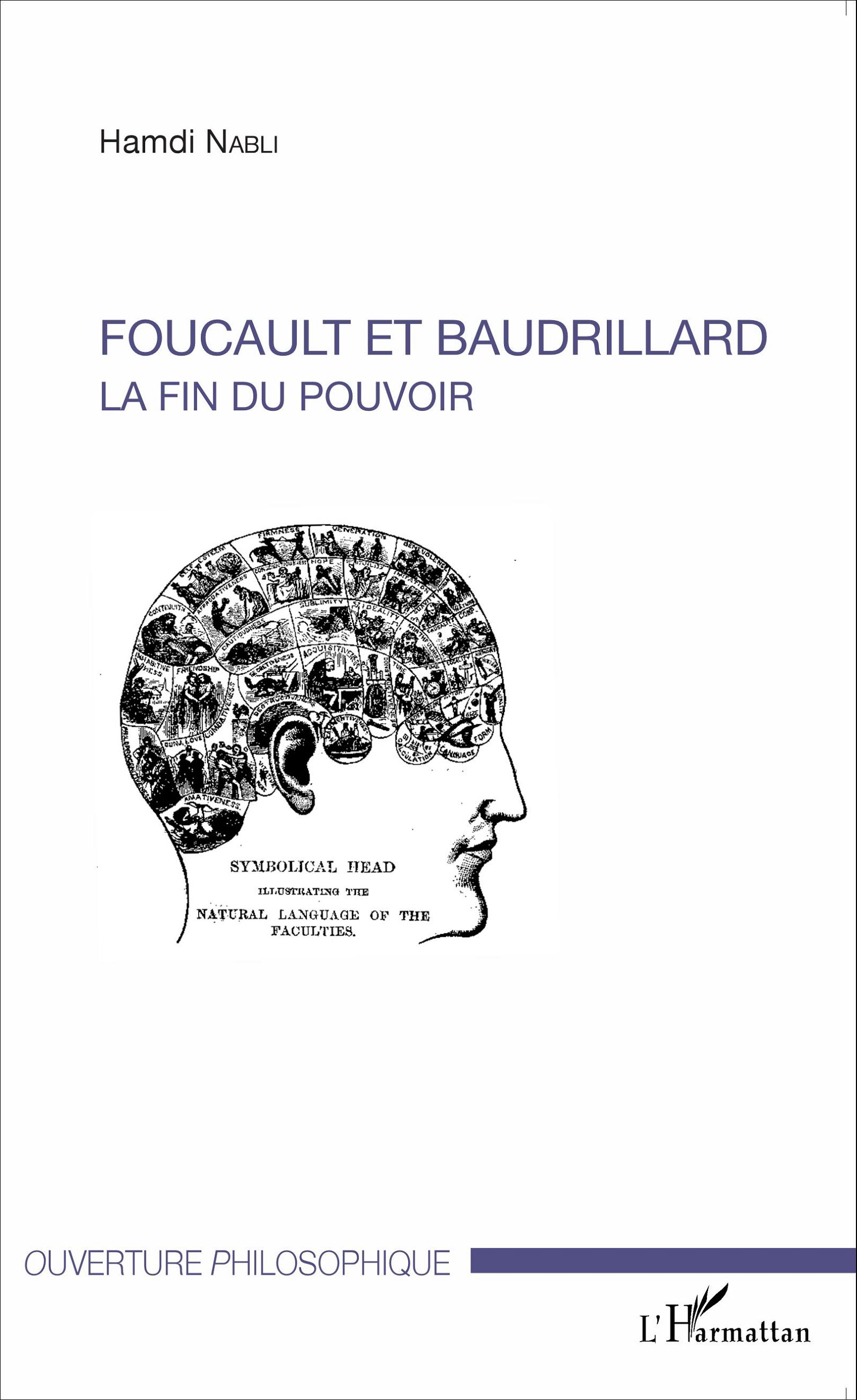
nabliHamdi Nabli, Foucault et Baudrillard: La fin du pouvoir, L’Harmattan, 2015
ISBN : 978-2-343-05754-5 • 1 juin 2015 • 214 pages

Foucault, dans son Histoire de la sexualité, esquissa une anthropologie du plaisir dans l’Antiquité gréco-romaine. Ce travail avait constitué un virage, car depuis Mai 68, l’intellectuel avait fait de l’engagement le vecteur des résistances modernes. Dans son Oublier Foucault, Baudrillard reprochait au philosophe de garder intacte l’instance du pouvoir comme grille d’intelligibilité ultime. Dès lors, la façon dont Foucault a orienté sa recherche, en se focalisant sur la subjectivité, l’éthique de soi, l’esthétique de l’existence et le style de vie, ne serait-elle pas une manière de concéder à la critique de Baudrillard une part de vérité ?

Les mouvements de libération avaient provoqué chez Foucault l’espoir d’un agencement fructueux entre une sexualité renouvelée et une nouvelle culture. Or, l’évolution des sociétés a montré une adéquation entre cette nouvelle culture socio-sexuelle et la société de consommation. Cette culture n’est-elle pas devenue un modèle d’intégration à la société postmoderne, une matrice du « nouvel esprit du capitalisme », et le garant d’un nouvel ordre établi ?

HAMDI NABLI est né à Paris, en 1981. Diplômé de sciences politiques à La Sorbonne, il est enseignant chargé de cours à l’université Paris-3 Sorbonne Nouvelle et consultant chargé de mission au Collège des Bernardins. Il a publié La Fraternité aryenne. L’esprit du terrorisme au cœur de l’Amérique blanche (Connaissances et Savoirs, 2012) et L’inégalité politique en démocratie (Fondation Jean-Jaurès, 2013).

Table des matières
Introduction : Traiter des passions en histoire des idées

PREMIÈRE PARTIE : OUBLIS ET RÉMINISCENCES

L’oubli de soi. De la folie au savoir : la connaissance tragique.
Le pouvoir et son contraire
Le souci de soi. La subjectivité, l’absence de moi

DEUXIÈME PARTIE : GÉNÉALOGIES ET NÉCROLOGIES
Vers la singularité.
Les rapports ambigus à Nietzsche
Traditionalisme et postmodernisme

TROISIÈME PARTIE : SOUCIS DES AUTRES ET FAUSSES SINGULARITÉS

Les ambivalences du souci.
L’homosexualisme : de la communauté contreculturelle au ‘‘pouvoir’’ gay
L’idéologie du care contre le souci de soi.
L’éthique du souci et l’esprit du néocapitalisme
Échapper à la règle (du jeu)
Bibliographie