Foucault News

News and resources on French thinker Michel Foucault (1926-1984)

Antipode Editorial Office's avatarAntipodeFoundation.org

Introduction: The Making Visible of Carceral Politics

Marijn Nieuwenhuis, University of Warwick

This symposium contains a rich collection of contributions based on the screening of the French documentary film Sur les Toits (“On the Roofs”). On a Wednesday in May 2016 I invited the film’s independent maker, Nicolas Drolc, and a number of academics from across Warwick’s humanities and social sciences to the screening of the movie. The result was a friendly and productive discussion on an important, but sometimes forgotten, episode in the history of incarceration (see, however, Zurn and Dilts 2016). The essays presented here comprise an interview with the director and a series of original reflections (from Dominique Moran, Sophie Fuggle, Anastasia Chamberlen, Oliver Davis and Stuart Elden) on both the film and its subject of investigation.

Sur les Toits (a title taken from a protest song of the French punk band…

View original post 1,584 more words

[Editor] A note to say how much I enjoyed attending the Foucault @ 90 conference in Ayr in Scotland over the last two days and listening to all the interesting work being done. Thank you to Professor Donald Gillies and to Caroline Sisi for all their hard work organising the conference.

Note from the editor

I will be taking a break from Foucault News for about a month while I attend the Foucault @ 90 conference in Scotland and take a short holiday. Posts will be sporadic until mid to late July.

You might be interested to know that the volume of Foucault related activity is always increasing and that there is considerably more material now than when I initially started this blog in September 2010. I currently already have quite a large backlog of material ready to post when I return.

Please don’t hesitate to send news on to me in the meantime. I will post it up as I can. Could I also take the opportunity to ask you to send me messages to my email address rather than via Facebook as I tend not to check Facebook as often.

Clare O’Farrell

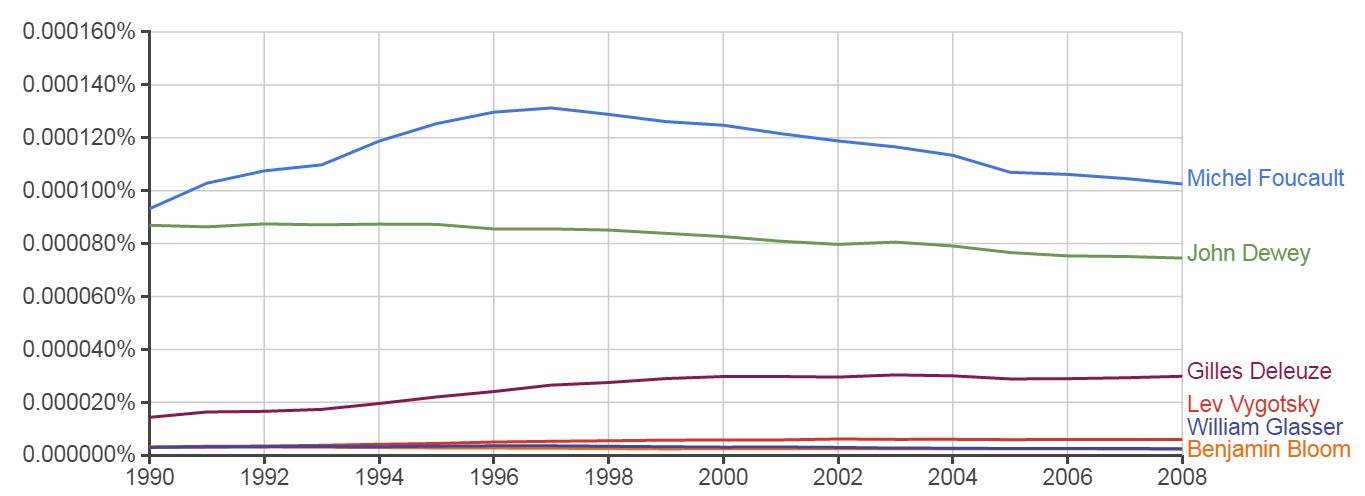
This is a Google ngram which even if it only measures up to 2008, demonstrates the rate of citation of Foucault’s work against a number of other thinkers who are popular in the discipline of education.

foucault-ngram

postmortemPascal Hintermeyer (dir.), Foucault post mortem en Europe, Presses universitaires de Strasbourg, 2015

Michel Foucault continue à marquer des pans entiers de la pensée contemporaine en apparaissant comme un penseur à multiples facettes, qui se joue des frontières, bouscule les clivages établis, évolue sans cesse, surgit là où on ne l’attendait pas, ouvrant ainsi de nouvelles perspectives.

Depuis sa mort, en 1984, son influence épistémologique, géographique et culturelle n’a cessé de croître. Pour expliquer son rayonnement international, on insiste souvent sur son succès aux États-Unis. Nous nous intéressons ici à sa réception dans plusieurs aires culturelles européennes et au positionnement de son œuvre par rapport à divers auteurs (Lacan, Habermas, Weber, etc.).

L’influence exercée par Foucault post mortem à travers la diffusion de toute une terminologie issue de ses travaux est un signe de cette empreinte durable: assujettissement, panoptisme, dispositifs, biopolitique.

Ainsi se dessine un portrait de Foucault à la fois cohérent et divers. Cohérent dans son refus des essentialismes et des téléologies, dans sa volonté de transcender les divisions instituées. Divers dans ses talents, ses combats, ses initiatives.

What are you rebelling against, Johnny ?

initié par le collectif F71 et le Centre Pénitentiaire de Fresnes – SPIP 94.

Cette présentation est l’aboutissement d’ateliers menés par le collectif F71 avec un groupe de détenus du Centre Pénitentiaire de Fresnes et des élèves de théâtre du Conservatoire Municipal – Gabriel Fauré. Sur scène, ils évoquent ensemble la naissance du Rock’n’roll aux
Etats-Unis, dans le climat ségrégationniste des années 50.

Après une date en détention et une au Conservatoire du 5e arrondissement de Paris, la dernière restitution publique aura lieu :

le mercredi 15 juin 2016 à 19h à La Maison des Métallos dans le cadre de “Fin de Chantier”

94 rue Jean-Pierre Timbaud – Paris – 11e arr.

L’entrée est libre mais la réservation est conseillée, merci donc de nous informer de votre présence par retour de mail ou par téléphone au 06 22 13 06 82 ou directement auprès de la Maison des Métallos les après midi au 01 47 00 25 20 ou par mail à reservation@maisondesmetallos.org

What are you rebelling against, Johnny ?
Texte : Stéphanie Farison et Lucie Nicolas
Intervenants : Stéphanie Farison, Jane Joyet, Siegfried Mandacé et Lucie Nicolas.
Régie Générale : Frank Condat

Production : Le collectif F71 – La concordance des temps, avec le soutien de la Permanence Artistique et Culturelle de la Région Ile-de-France et la DRAC Île de France dans le cadre du dispositif “Culture et Justice” – Le Centre Pénitentiaire de Fresnes – Le Service Pénitentiaire d’Insertion et de Probation du Val-de-Marne (SPIP 94) et son coordinateur culturel (Romain Dutter) – Le CMA 5 de Paris, Hacène Larbi – directeur et le BEAPA ainsi que la Maison des Métallos, Etablissement culturel de la Ville de Paris.

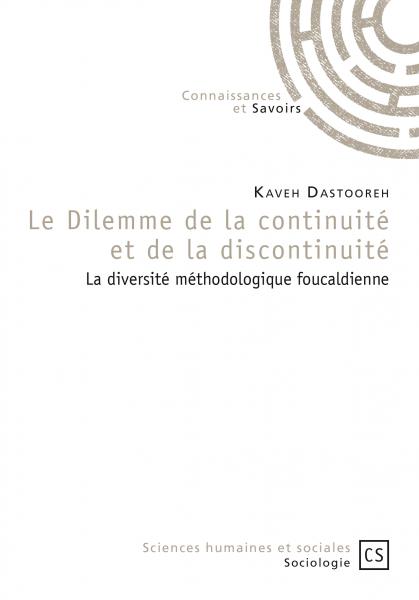
dastoorehKaveh Dastooreh, Le dilemme de la continuite et de la discontinuite. La diversite methodologique foucaldienne, Connaissances et savoirs, 2016

Sociologie – 62 pages – 140×200
ISBN : 9782753903319

La pensée de Michel Foucault est souvent présentée comme une pensée discontinuitiviste, comme si la discontinuité était le seul thème administrant son travail. En étudiant ce que Foucault, lui-même, pouvait commenter à ce propos et en examinant de près son travail, nous pouvons constater que la discontinuité n’est pas le seul thème administrateur de son travail, et nous pouvons y trouver en abondance des images de continuité temporelle. Bien que, parfois, Foucault accorde un privilège à la discontinuité temporelle, ces images ne reflètent en aucun cas une quelconque opposition aux continuités, qui se trouvent par ailleurs de manière récurrente dans son entreprise. Cette recherche montre donc en premier lieu que ces deux thèmes relèvent d’une complexité méthodologique dans la pensée de Foucault. Nous montrons comment ces thèmes sont engagés par Foucault, dans un rapport loin d’être négatif ou paradoxal mais qui instaure leur complémentarité et qui les amène à cohabiter dans son œuvre. Pour ce faire, et dans un second temps, nous revenons alors sur la conception foucaldienne de l’histoire au sein de laquelle nous contextualisons ces deux thèmes dans leurs propres places théoriques et méthodologiques. Au final, nous verrons que ces conceptions de continuité, de discontinuité et ainsi sa définition de l’histoire ne sont pas possibles que par une lecture que Foucault a faite de Nietzsche pour bâtir une pensée de « singularité » et éviter à tout prix ne pas fonder ces recherches sur une théorie de la connaissance.

L’AUTEUR
Kaveh Dastooreh a obtenu en 2011 son diplôme de doctorat en sociologie à l’Université Paris V – René Descartes – Sorbonne. Il a des expériences d’enseignements dans des universités françaises comme Université de Paris Descartes et Université d’Évry Val d’Essonne, ainsi qu’à l’étranger. Il a publié un ouvrage en 2015 chez L’Harmattan intitulé : “Vers une sociologie foucaldienne”. Il a également traduit la série de livres de “L’Histoire de la sexualité de Michel Foucault”, du français au kurde. Il est membre de l’Association internationale des sociologues.

Thanasis Lagios, “Foucauldian Genealogy and Maoism.” Le foucaldien 2, no. 1 (2016): 1–20.
https://doi.org/10.16995/lefou.12 [Note: In 2022, Le foucaldien relaunched as Genealogy+Critique.]

Abstract
If we look at the historical and social presuppositions of Foucault’s methodology, we find out that Nietzsche’s work cannot be the only root of the shift from archaeology to genealogy. In fact, a whole range of political activist practices after May ’68 until the dissolution of the Groupe d’information sur les prisons (GIP) played an important role in inciting a politicization-in-motion that clearly left its traces in Foucault’s thought and work.

Keywords: genealogy, leftism, maoism, politics, Foucault, Nietzsche

leshemDotan Leshem, The Origins of Neoliberalism: Modeling the Economy from Jesus to Foucault, Columbia University Press, 2016

Dotan Leshem recasts the history of the West from an economic perspective, bringing politics, philosophy, and economics closer together and revealing the significant role of Christian theology in shaping economic and political thought. He begins with early Christianity’s engagement with economic knowledge and the influence of this interaction on politics and philosophy. He then follows the secularization of economics in liberal and neoliberal theory, showing it to be a perversion of earlier communitarian tradition. Only by radically relocating the origins of modernity in late antiquity, Leshem argues, can we confront neoliberalism.

Introduction: Economy Before Christ
1. From Oikos to Ecclesia
2. Modeling the Economy
3. Economy and Philosophy
4. Economy and Politics
5. Economy and the Legal Framework
6. From Ecclesiastical to Market Economy

ABOUT THE AUTHOR
Dotan Leshem is senior lecturer in the department of government and political theory at the School of Political Sciences, University of Haifa.

The 16th annual meetings of the Foucault Circle
June 29-July 2, 2016

University of New South Wales
Sydney, Australia

All sessions in Lecture Room G02 in the Law School Building.
Registration is on-site only. On the first morning, registration will be open in the foyer of the Ground Floor of the Law Building, adjacent to Room G02.
Registration Fee: $30.00 AUD (cash only), payable on the morning of the first day.
This schedule allows 40 minutes total per paper, inclusive of reading and discussion.
It is expected that roundtable participants’ opening remarks will be brief (5-8 min.)

Program Overview

Wednesday, June 29

10:00-10:40 Morning Tea and Registration

10:40-12:00 SESSION #1 (2 papers)

12:00-13:30 Lunch

13:30-15:30 SESSION #2 (3 papers)

15:30-16:00 Afternoon Tea

16:00-17:20 SESSION #3 (2 papers)

17:30- Drinks reception

Thursday, June 30

08:30-09:50 SESSION #4 (2 papers)

09:50-10:20 Morning Tea

10:20-12:00 ROUNDTABLE #1

12:00-13:30 Lunch

13:30-15:30 SESSION #5 (3 papers)

15:30-15:45 Afternoon Tea

15:45-17:05 SESSION #6 (2 papers)

17:15-18:00 BUSINESS MEETING

Evening Local dinner
Friday, July 1

08:30-09:50 SESSION #7 (2 papers)

9:50-10.20: Morning Tea

10:20-12:00 ROUNDTABLE #2

12:00-13:30 Lunch

13:30-15:30 SESSION #8 (3 papers)

15:30-16:00 Afternoon Tea

16:00-18:00 WORKSHOP/SEMINAR

Evening Local dinner

Saturday, July 2

09:00-10:20 SESSION #9 (2 papers)

10:30-12:30 SESSION #10 (3 papers)

Program Detail

Wednesday, June 29

10:00-10:40 Registration and Morning Tea

10:40-12:00 SESSION #1: ANATOMICAL ABNORMALITIES

Moderated by Ben Golder (University of New South Wales, Australia)

Benjamin Kunkler (University of Melbourne, Australia)

The Archaeology of Anatomical Knowledge

Matthew Chrulew (Curtin University, Australia)

Abnormal Animals: The Problematisation of Captivity in Hediger and Meyer-Holzapfel

12:00-13:30 Lunch

13:30-15:30 SESSION #2: CYNICAL GOVERNMENTALITY

Moderated by Daniel McLoughlin (University of New South Wales, Australia)

Miguel Vatter (University of New South Wales, Australia)

Foucault and Strauss on Socratic Natural Right

Özge Yalta Yandaş, (Independent Researcher, Turkey)

Constructing a Neoliberal Art of Government: Urban Regeneration Processes of Istanbul in 2000s

Terry Flew (Queensland University of Technology, Australia)

Weberian Themes in Michel Foucault’s The Birth of Biopolitics lectures

15:30-16:00 Afternoon Tea

16:00-17:20 SESSION #3: DIALOGUES WITH AGAMBEN

Moderated by Paul Patton (University of New South Wales, Australia)

Vanessa Lemm (University of New South Wales, Australia)

Agamben as a Reader of Foucault

Daniel McLoughlin (University of New South Wales, Australia)

Killing in the Name of Life: Foucault and Agamben on Nazism and Biopolitical Sovereignty
17:30- Drinks Reception

Thursday, June 30

08:30-09:50 SESSION #4: FOUCAULDIAN APPROACHES TO SOCIAL WORK

Moderated by Ben Golder (University of New South Wales, Australia)

Sharon Alexander (Monash University, Melbourne, Australia)

What does Theorising with Foucault Contribute to Social Worker’s Understanding of Perinatal Mental Health?

Uschi Bay (Monash University, Melbourne, Australia)

Working with Foucault’s theorising to elaborate on reflexivity in social work practice

10:20-12:00 ROUNDTABLE #1: FOUCAULT’S CRITIQUE OF NEOLIBERALISM?

Moderated by Mark G E Kelly (Western Sydney University, Australia)

Organized by Paul Patton

Ben Golder (University of New South Wales, Australia)

Paul Patton (University of New South Wales, Australia)

Miguel Vatter (University of New South Wales, Australia)

Terry Flew (Queensland University of Technology, Australia)

12:00-13:30 Lunch

13:30-15:30 SESSION #5: ANCIENT ENGAGEMENTS

Moderated by Miguel Vatter (University of New South Wales, Australia)

Michael Ure (Monash University, Australia)

Foucault and Nietzsche: Two Philosophical Physicians?

Federico Testa (Monash University, Australia)

Is There a Politics of the Care of the Self in Michel Foucault?

Charles Barbour (Western Sydney University, Australia)

Dismantling the City State: Foucault, Classicism, and Politics in the Ancient World

15:45-17:05 SESSION #6: UNFOLDING EVENTUALITIES

Moderated by Lynne Huffer (Emory, USA)

Farzaneh Haghighi (University of Auckland, New Zealand)

Eventualisation: Multiplying the faces of a polyhedron

Elliot Patsoura (The University of Melbourne, Australia)

Buggering the Fold: Deleuze reads The Order of Things

17:15-18:00 BUSINESS MEETING

Friday, July 1

08:30-09:50 SESSION #7: EPISTEMOLOGICAL AUTONOMY

Moderated by Ben Golder (University of New South Wales, Australia)

Chari Larsson (University of Queensland, Australia)

The Archaeological Art Historian: Didi-Huberman’s Epistemological Debt

Katherine Filbert (Villanova University, USA)

De-Spatializing Critical Agency: Freedom without Autonomy in Foucault and Benjamin

10:20-12:00 ROUNDTABLE #2: FOUCAULT AS A CRITICAL THEORIST: THE ‘CARE OF THE SELF’ AND THE POLITICISATION OF LIFE

Moderated by Charles Barbour (Western Sydney University, Australia)

Organized by Michael Ure (Monash University, Australia)

Michael Ure (Monash University, Australia)

Irene Dal Poz (Monash University, Australia)

Sam O’Brien (Monash University, Australia)

Federico Testa (Monash University, Australia)

12:00-13:30 Lunch

13:30-15:30 SESSION #8: INJUSTICE IN THE STREETS

Moderated by Michael Cowen (Alliance Manchester Business School, UAE)

Sylvain Lafleur (Université de Montréal, Montréal, Canada)

Foucault’s justice fonctionnelle and its relationship to legislators and popular illegalism

Joanna Crosby (Morgan State University, USA)

The 2015 Baltimore Protests: A Neoliberal Love Child

Falguni A. Sheth (Emory University, USA)

State Racism, Biopower, and the Mass Migration Problem

16:00-18:00 WORKSHOP ON FOUCAULT AND THE ANTHROPOCENE: reading a new translation of “The Situation of Cuvier in the History of Biology” (DE#077, 1970)

Group discussion facilitated by Lynne Huffer (Emory University, USA)

An English translation of this text will be distributed by PDF in early June.

Saturday, July 2

09:00-10:20 SESSION #9: HETEROTOPIAS

Moderated by Steven Ogden (Charles Sturt University, Australia)

Margaret A. McLaren (Rollins College, USA)

Harems (Brothels) and Hammams as Heterotopias

Charles Villet (Monash South Africa, Johannesburg, South Africa)

Oscar Pistorius and the white heterotopia: The suburban laager in post-Apartheid South Africa

10:30-12:30 SESSION #10: POLITICS OF THE NORMATIVE

Moderated by Ben Golder (University of New South Wales, Australia)

Erik Zimmerman (The New School for Social Research, USA)

Resistance and Rupture: Foucault and the Cynicism of Otherness

Mark G E Kelly (Western Sydney University, Australia)

A Sketch for a Genealogy of Normativity

Dianna Taylor (John Carroll University, USA)

The Self-relation, Anti-normalization, and Prospects for Enduring Peace: The Case of Northern Ireland

obs-capPubblicato online l’e.book:
Moneta, rivoluzione e filosofia dell’avvenire. Nietzsche e la politica accelerazionista in Deleuze, Foucault, Klossowski, Guattari (Obsolete Capitalism Free Press – Rizosfera, 2016).
Link at Variazioni foucaultiane

L’antologia a cura di Obsolete Capitalism è scaricabile online gratuitamente.

Autori e autrici: Algorithmic Committee, Sara Baranzoni, Edmund Berger, Lapo Berti, Paolo Davoli, Network Ensemble, Letizia Rustichelli, Obsolete Capitalism, Obsolete Capitalism Sound System, Francesco Tacchini, Paolo Vignola.

Moneta, rivoluzione e filosofia dell’avvenire
a cura di Obsolete Capitalism

Siamo proiettati a velocità fotonica nella comunicazione istantanea e nel controllo continuo mentre le forme di dominio rapido appaiono inarrestabili. Il museo delle ideologie si riempie di concetti in via di esaurimento quali capitalismo, neoliberismo, marxismo, keynesismo. Ora, con più esattezza, il sistema modula i vari flussi che innervano il pianeta: Moneta, Ricerca, Controllo, Informazione, Circuito sono i vecchi nomi che attraverso una nuova velocità producono potere. Maggiore è l’immanenza del Mercato, maggiore è la probabilità che al conflitto si sostituisca l’interruzione, il virus, la fuga di notizie, l’invisibilità, il fuori-circuito, la biforcazione. Uno squarcio nella «zona grigia» dell’egemonia.

Gli autori del libro Moneta, rivoluzione e filosofia dell’avvenire indagano alcune aree poco battute di politica accelerazionista attraverso linee teoriche contagiate dalle filosofie più visionarie: Nietzsche, Klossowski, Deleuze, Guattari, Foucault. Più che analizzare la grande trasformazione culturale in atto, la presente antologia evidenzia i pericoli in cui incorre il pensiero del futuro quando ancora mantiene pratiche, schemi e linguaggi di un’epoca industriale e post-industriale che mostra in tutti i suoi aspetti una crisi perpetua. Siamo tutti coinvolti nel duro intreccio di liberazioni insperate e nuovi asservimenti che ci prospetta la presentificazione del futuro da parte della tecnologia a linguaggio numerico, ma – come afferma Deleuze – «non è il caso né di avere paura, né di sperare, bisogna cercare nuove armi». Sperimentare è dunque il primo impegno politico e filosofico per un futuro differente.