Foucault News

News and resources on French thinker Michel Foucault (1926-1984)

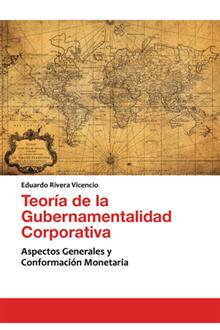
vincencioEduardo Rivera Vicencio, Teoría de la Gubernamentalidad CorporativaAspectos Generales y Conformación Monetaria, Megustaescribir, 2016

“Teoría de la gubernamentalidad corporativa” es recomendable para todo tipo de público interesado en conocer la realidad de la economía y sus crisis, es imprescindible para todas las personas que trabajan en el sector público y en la política, y es fundamental para los empresarios de la economía real, directivos y los profesionales del área económica. La primera parte corresponde al respaldo teórico para aquellos que quieran profundizar en el tema, la segunda parte describe los aspectos generales de esta teoría y en la tercera parte se hace una descripción histórica y económica de la conformación monetaria, que ha permitido la concentración de la riqueza, la apropiación de las rentas y de sus rendimientos. Esta teoría tiene como hilo conductor la metodología de Michel Foucault histórica y filosófica (arqueológica y genealógica), con la argumentación y respaldo teórico económico, junto a las manifestaciones de las relaciones de poder, como el discurso, la disciplina, la ética y la gubernamentalidad. Este libro describe la conformación del “homo economicus”, de la empresa y de los primeros bancos centrales, hasta el sistema de dinero-deuda actual, como herramientas de dominación.

Eduardo Rivera Vicencio nació en Santiago de Chile en 1959, es profesor de la Universitat Autònoma de Barcelona, miembro del Consejo Editorial de International Journal of Critical Accounting, miembro del Consejo Editorial de African Journal of Accounting, Auditing and Finance, miembro de Global Center for Corporate Governance y presidente para Sudamérica de la Research Section of the Critical Accounting Society.

Pierre Macherey, 10 – Foucault lecteur de Roussel : la littérature comme philosophie, Pierre Macherey À quoi pense la littérature ?, Presses Universitaires de France, 1990, édition numérique (2016)

Premières lignes
Dans son travail, Foucault a réservé une place exceptionnelle à la littérature, à laquelle il a reconnu le statut d’un révélateur théorique : Les mots et les choses, dont le titre évoque directement les problèmes de la littérature, en témoignent particulièrement. Foucault a fait plus que réfléchir sur la littérature, il a travaillé avec la littérature : ce qui le préoccupait, c’était d’en faire un…

New Issue of Pléyade: Biopolítica, number 17, launched in June 2016

Full PDF of issue available

Pléyade is an international peer reviewed journal dedicated to the Humanities and Social Sciences funded the year 2008 by the Centre for Political Analysis and Research in Santiago, Chile. The journal is an independent publication since 2016. This publication encourages intellectual and academic discussion of political phenomena, from a variety of disciplinary and interdisciplinary perspectives including political science, sociology, philosophy, and cultural studies. Pléyade is aimed at an international scientific audience and receives contributions such as articles, book reviews, interviews and interventions, written in Spanish or English. The journal is published biannually (June-December) in print and electronic versions.

Edición especial
Biopolitica

Vanessa Lemm Introducción

Artículos
Ottavio Marzocca Vida desnuda, multitud y carne del mundo: la biopolitica como destino
Bare Life, Multitude, Flesh of the World: The Biopolitics as Destiny

Carlo Salzani Nudity: Agamben and Life
Desnudez: Agamben y la vida

Paula Fleisner La vida entre estética y política. En busca de las posibles herencias nietzscheanas en el pensamiento de Giorgio Agamben
“Life” between Aesthetics and Politics. In Search of a Possible Nietzschean Inheritance in Giorgio Agamben’s Thought

Fabián Ludueña
La biopolítica moderna y el legado del Marqués de Sade. Una lectura teológico-política
Modern Biopolitics and the Marquis de Sade’s Legacy. A Theological-Political Reading

Luciano Carniglia Gobernar la vida. Hacia una concepción no económica de la verdad
Governing Life. Towards a Non-economical Notion of Truth

Matias Saidel La fábrica de la subjetividad neoliberal: del empresario de sí al hombre endeudado
The Making of Neoliberal Subjectivity: From the Entrepreneur of the Self to the Indebted Man

Andrea Fagioli Política y vida. Perspectivas posoperaístas
Politics and Life. Postoperaist Perspectives

Julián Ferreyra Deleuze y la biopolítica como rostro del capitalismo
Deleuze and Biopolitics as the Face of Capitalism

Emmanuel Biset Deconstrucción de la biopolítica
Deconstruction of Biopolitics

Jorge Vélez Vega Biopolítica. Las implicaciones del pos y el trashumanismo
Biopolitics: The Post and Transhumanism Implications

Reseñas
Ely Orrego, Miguel Vatter. The Republic of the Living. Biopolitics and the Critique of Civil Society. Nueva York: Fordham University Press, 2014

Ivana Peric, Rodrigo Karmy. Políticas de la excarnación. Para una genealogía teológica de la biopolítica. Buenos Aires: Editorial Universitaria, 2014

kime_artie_2001_01_l204Sous la direction de Philippe Artières, Emmanuel Da Silva, Michel, Foucault et la médecine – Lectures et usages, Editions Kimé, 2001, édition numérique (2016)

Présentation
Michel Foucault n’a cessé tout au long de son œuvre d’interroger la médecine et sa pratique; ce questionnement constant que le philosophe a exercé non seulement sur l’histoire de la médecine mais aussi sur la place du médical dans nos sociétés contemporaines, offre 15 ans après la disparition de son auteur, des outils précieux pour penser aujourd’hui la médecine. L’absence de publication en France sur ce domaine a encouragé les auteurs à imaginer un volume rassemblant les analyses de chercheurs d’horizons très différents.

María Alejandra Energici Sprovera, Reseña: El self emprendedor. Sociología de una forma de subjetivación Ulrich Bröckling (2015). Santiago: Ediciones Universidad Alberto Hurtado. Revista Persona y Sociedad, Vol. XXIX / Nº 3 septiembre-diciembre 2015 / 131-136
https://revistaschilenas.uchile.cl/handle/2250/158012

La pregunta por el sujeto ha tomado especial relevancia en los últimos años, principalmente porque permite pensar la complejidad en las sociedades contemporáneas, es decir, preguntarse por el sujeto es una manera de abrir preguntas, más que de dar respuestas. Asimismo, esta obra abre interrogantes sobre los modos en que nos relacionamos con nosotros mismos y sobre la forma en que dicha relación es mediada socialmente.

Este libro aborda precisamente los procesos de subjetivación, y en especial una forma particular de subjetivarse, en tanto self emprendedor: Deber y querer ser emprendedor es también un modo de concebirse y de orientarse a sí mismo y a los otros: es decir, se trata de una forma de subjetivación. El actuar emprendedor designa menos un estado de cosas que un campo de fuerza: es una meta a la que apuntan los individuos, una medida según la cual juzgan su actividad, un ejercicio cotidiano que cultivan y un generador de verdad, ante el cual se reconocen. (p. 13)

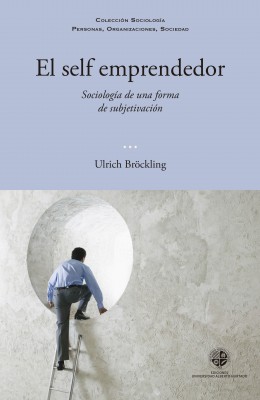
el-self-emprendedor-260x400Ulrich Bröckling, El self emprendedor. Sociología de una forma de subjetivación Santiago: Ediciones Universidad Alberto Hurtado, 2015.

Descripción
El hecho de que las empresas tengan un alma es “una de las noticias más terribles del mundo”, clamaba el filósofo francés Gilles Deleuze a principios de los años noventa. Esto solo es superado por la exigencia de que cada uno debe arreglárselas para convertirse, hasta en el último rincón de su alma, en un empresario de sí mismo; tal cual lo predican innumerables gurúes de la motivación y entrenadores de la gestión de uno mismo, pero también economistas, expertos en educación, investigadores de tendencias y políticos de (casi) todas las tendencias. Este libro trata justamente de esta exigencia, de la demanda social que genera y del campo de fuerza que se estructura en torno a ella. El self emprendedor, su título, es sinónimo de un abanico de esquemas interpretativos con los cuales hoy en día los seres humanos se entienden a sí mismos y a sus modos de existencia, los requisitos normativos y oferta de roles con los que orientan sus acciones y sus omisiones, como también los arreglos institucionales y las tecnologías sociales y del yo que deberían regular su conducta. Dicho de otro modo y tomando un término de moda del mundo empresarial: el self emprendedor es un ideal.

El presente estudio se centra en el funcionamiento de este campo de fuerza, en las energías que se encuentran y desatan dentro del mismo, en la orientación, o bien, en las orientaciones contradictorias a las que somete a los individuos y, de no menor importancia, de cómo cada uno estructura sus movimientos en concordancia a las exigencias a las que es sometido por esta fuerza de succión.

El self emprendedor fue premiado en 2013 por la Asociación de Libreros Alemanes y por el Ministerio de Relaciones Exteriores de Alemania, y ha sido traducido al inglés y al coreano.

AUTOR

ULRICH BRÖCKLING
ALEMANIA

Sociólogo y director del Instituto de Sociología de la Universidad de Freiburg/Alemania. Estudió Sociología, Historia Moderna y Filosofía; se doctoró y habilitó en Sociología en la Universidad de Freiburg, donde es…

brocklingUlrich Bröckling, The Entrepreneurial Self.Fabricating a New Type of Subject, SAGE, 2015

“This is a book about who we are today, and how we have become who we are. It is about the engineers of the modern soul, the entrepreneurial self. It is essential reading for all those who care about the incessant demands placed on us to become more than we are, to become entrepreneurs of our selves, to maximise and optimise our capacities in ways that align personal identity and political responsibility.”
– Professor Peter Miller, London School of Economics & Political Science

Ulrich Bröckling claims that the imperative to act like an entrepreneur has turned ubiquitous. In Western society there is a drive to orient your thinking and behaviour on the objective of market success which dictates the private and professional spheres. Life is now ruled by competition for power, money, fitness, and youth. The self is driven to constantly improve, change and adapt to a society only capable of producing winners and losers.

The Entrepreneurial Self explores the series of juxtapositions within the self, created by this call for entrepreneurship. Whereas it can expose unknown potential, it also leads to over-challenging. It may strengthen self-confidence but it also exacerbates the feeling of powerlessness. It may set free creativity but it also generates unbounded anger. Competition is driven by the promise that only the capable will reap success, but no amount of effort can remove the risk of failure. The individual has no choice but to balance out the contradiction between the hope of rising and the fear of decline.

Ulrich Bröckling is Professor of Cultural Sociology at the Albert-Ludwigs-University Freiburg, Germany.

Contents

Genealogy of Subjectification
Tracing the Contours of the Entrepreneurial Self
The Rationality of the Entrepreneurial Self
The Truth about the Market: variants of neo-liberalism
The Four Functions of the Entrepreneur
The Contractual World
Strategies and Programmes
Creativity
Empowerment
Quality Projects
Conclusion: Lines of flight – the art of being different differently

dunod_drie_2013_01_l204Dominique Beynier MICHEL FOUCAULT, « Le monde correctionnaire » , in Histoire de la folie à l’âge classique (1961), Gallimard, 1974, 92-123

In Didier Drieu (ed) 46 commentaires de textes en clinique institutionnelle – Dunod, 2013

Premières lignes

Michel Foucault (1926-1984), entre en 1946 à l’École normale supérieure. Il obtient en Sorbonne une licence de philosophie et de psychologie. Son itinéraire intellectuel de l’époque s’effectue sous l’enseignement de Ludwig Biswanger et Louis Althusser. En 1951, il est reçu à l’agrégation de philosophie. De 1953 à 1954, il occupe un poste d’assistant à l’université de Lille. En 1954, il publie son premier…

Plan de l’article

1. Présentation de l’auteur
2. Synthèse du texte
3. Concepts fondamentaux
4. Filiation et prolongements

Macias, T. (2012). In the World: Toward a Foucauldian Ethics of Reading in Social Work. Intersectionalities: A Global Journal Of Social Work Analysis, Research, Polity, And Practice, 1, 1-19.

Full text available

ABSTRACT
Teaching and learning critical and anti-oppressive frameworks pose many challenges within social work as a profession invested in notions of practice, competency, helping, and benevolence. Course content that generally interrogates social works helping role and social workers identity as helpers is at times met with dismissal that it does not teach practice skills. At other times, learners paradoxically argue that material that challenges the making of the profession and their identity in fact confirms and reaffirms their professional roles. These reactions suggest that a number of actions and negotiations take place in the apparently mundane relationship between reader and text, actions that cannot solely be attributed to texts. This paper uses a Foucauldian approach to ethics to render the relationship between reader and text thinkable and problematic and to explore processes of subject formation being negotiated by readers in their contextual relationships with texts. The central argument of this paper is that by rendering the reader-text relationship thinkable, we can explore transformative and critical reading ethics that account for how power and knowledge regimes interconnect with processes of subject formation in reader-text relationships in social work.

KEYWORDS
social work education, subjectivity, Foucault, reading, poststructuralism

dapsac_66_hbPaul Bruce Mcilvenny, Julia Zhukova Klausen, Laura Bang Lindegaard, (Eds.) (2016). Studies of Discourse and Governmentality: New Perspectives and Methods. Amsterdam: John Benjamins.

This volume brings together analyses of governmentality from different angles in order to explore the multiple forms, practices, modes, programmes and rationalities of the ‘conduct of conduct’ today. Following the publication of Foucault’s annual lecture series at the Collège de France, scholars have attempted to critically rethink Foucault’s ideas. This is the first volume that attempts to revisit and expand studies of governmentality by connecting it to the theories and methods of discourse analysis. The volume draws on different theoretical stances and methodological approaches including critical discourse analysis, conversation analysis, dialogic analysis, multimodal discourse analysis, the discourse-historical approach, corpus analysis and French discourse analysis. The volume is relevant to students and scholars in the fields of critical discourse studies, conversation analysis, international studies, environmental studies, political science, public policy and organisation studies.

Table of Contents

1. New perspectives on discourse and governmentality
Paul McIlvenny, Julia Zhukova Klausen and Laura Bang Lindegaard

Part I: Intersecting governmentalities in public discourse

2. Governing citizen engagement: A discourse studies perspective
Inger Lassen and Anders Horsbøl

3. The discursive intersection of the government of others and the government of self in the face of climate change
Laura Bang Lindegaard

4. The art of not governing too much in vocational rehabilitation encounters
Janne Solberg

5. Governing governments?: Discursive contestations of governmentality in the transparency dispositif
Sun-Ha Hong and François Allard-Huver

PART II: Discourse, practice and prefigurative governmentalities

6. Governing safe operations at a distance: Enacting responsible risk communication at work
Joel Rasmussen

7. Dialogue and governmentality-in-action: A discourse analysis of a leadership forum
Ann Starbæk Bager, Kenneth Mølbjerg Jørgensen and Pirkko Raudaskoski

8. Diagnosing transnationality: Therapy discourse and psy practices in the ethicalisation of transnational living
Julia Zhukova Klausen

9. Governmentality, counter-conduct and prefigurative demonstrations: Interactional and categorial practices in the strange case of the United Nathans weapons inspectors
Paul McIlvenny

PART III: Discourse, policy and governmentality

10. Governmentality through intertextuality: Strategic planning discourse in the administration of tertiary education
Derek Wallace

11. Exploring the intersections between governmentality studies and critical discourse analysis: A case study on urban security discourses and practices
Monica Colombo and Fabio Quassoli

12. Revealing the governmentality of demographic change in Germany with the manifold discourse-analytical ‘toolbox’ of Foucault
Reinhard Messerschmidt