Foucault News

News and resources on French thinker Michel Foucault (1926-1984)

Krylova, A.
Foucault, Post-structuralism, and the Fixed “Openness of History” (2024) Modern Intellectual History

DOI: 10.1017/S1479244324000088

Abstract
Today, it seems impossible to discuss historians’ encounter with post-structuralist theory, the ensuing triumphant surge of the cultural turn, and the establishment of what scholars have recently called the postcultural historiography without the help of such paramount concepts of post-structuralist analysis as contingency, variability, instability, open-endedness, and so on. Having defined the last forty years of theoretical and methodological developments in history, these nowadays conventional tools of critique and interpretation have grown to become synonymous with the post-structuralist conceptual promise and outcome. This article questions this standard and exceptionally generous account. What if, the article asks, we start our account not with the resolute assertion of the radical contingency and variability of the post-structuralist view of history, but with something more fundamental to it – its own fixed and totalizing presuppositions? To show how an intellectual agenda opposed to fixed and totalizing reasoning can end up operating with fixed and totalizing logics of its own, the essay turns to Michel Foucault and his momentous career, to be traced from the 1960s to the 1980s. Copyright © The Author(s), 2024. Published by Cambridge University Press.

Special Issue: Hannah Arendt and Michel Foucault: A Comparison of their Historical Methodologies, ed. Edmund Neill, Journal of the Philosophy of History, Volume 18 (2024): Issue 3 (Nov 2024)

Free access
Introduction: the Challenge of Arendt and Foucault on History
Author: Edmund Neill

Restricted Access
Reason to Hope? Arendt, Foucault, and the Escape from Politics into History
Author: Peter Conroy

Politics, History, Freedom: Arendt, Foucault and the Politics of Genealogy
Author: David Owen

Hannah Arendt and Michel Foucault on History, Tradition, and Modernity
Author: Edmund Neill

Open Access
Technology, Modernity, and the Possibility of Historical Understanding
Author: Caroline Ashcroft

Restricted Access
Training the Philosopher King: Ancient Models of Political Action in Hannah Arendt and Michel Foucault
Author: William Tilleczek

The Politics of Method: Arendt and Foucault on Hobbes
Author: Dawn Herrera Helphand

Labor as an Overlooked Entry Point into the Modern Age in the Works of Arendt and Foucault
Author: Jurgita Imbrasaite

Scelsa, J.A.
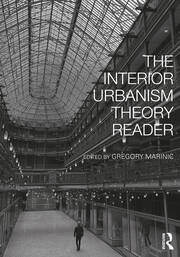
The museum: An urban threshold (2024) In Gregory Marinic (ed), The Interior Urbanism Theory Reader, Routledge, pp. 108-115.

DOI: 10.4324/9780429443091-15

Abstract
The evolution of the museum is a story of the functional problems of designing spaces for display within a larger framework. The museum has been identified by Michel Foucault as an ‘otherspace,’ a world outside of our own. Foucalt described this condition in ‘the collection museum,’ as an example of heterotopia, a place of reflection on our own society’s preferences and ideals in the arrangement of objects in our own world. The agency of the architect in this sense is to create an identity and outer shell that links these worlds, while simultaneously allowing for their autonomy as rooms nested within a larger whole. This nested reality, coupled with the continuing growth of the museum within the modern city so that it occupies massive territory, encourages us to reconsider the interior of the museum as a city within the city.

Serene Richards, Biopolitics as a System of Thought, Bloomsbury, 2024

Description

Our contemporary mode of life is characterised by what Serene Richards in Biopolitics as a System of Thought calls: Smart Being.

Smart Being believes in the solutions of techno-capital where living is always at stake and directed to survival. Armed with this concept, this book examines how we arrived at this mode of being and asks how it could be that, while the material conditions of our lives have increasingly worsened, our capacities for effective political action, understood as the capacity for transforming our existing social relations, appear to be diminishing.

Drawing from jurists and philosophers such as Pierre Legendre, Yan Thomas, Giorgio Agamben, Michel Foucault and Gilles Deleuze, Richards argues that biopolitics intervenes at the most minute level of our everyday lives. She argues that there are conceptual truths presupposed in the mode of biopolitics’ functioning, for instance that life can be assigned a value for the purpose of intervention, abandonment, or death, which have implications for our politics. In exciting engagements with political movements such as the post-May 1968 Mouvement des travailleurs Arabes (MTA), Richards shows how demands to transform our system of social relations are undermined by institutional models that proffer to offer rights protection while simultaneously annihilating the living altogether. Through a reappraisal of law, governance and capital, Richards seeks to reconceptualise our collectivity of thought, arguing for a politics of destitution that could form the basis of a communism to come.

Serene Richards is a Lecturer in law at New York University London, UK, and affiliated researcher at the École Pratique des Hautes Études, France.

Naz, Z.
‘Tick boxes are just tick boxes’: Problematising evidence-based teaching and exploring the space of the possible through a complexity lens (2024) Policy Futures in Education, .

DOI: 10.1177/14782103241240542

Abstract

This article seeks to provide a new paradigm for questioning how quality and excellence in teaching practices are understood and evaluated. By combining ideas from complexity theory and Michel Foucault’s conception of polymorphous correlations, I argue that a shift away from the forms of thought that engender reductionist evaluations can become a starting point to redefine the efficacy of teaching practices. By examining teaching practices through data obtained from interviews and classroom observations at a further education college, this article justifies disrupting our current common sense by which quality is defined in the landscape of educational policies and research. It is necessary, first, to try to unsettle the so-called discourse of evidence-based teaching, resulting in the production and dissemination of universalised pedagogical forms. By exploring how ecological factors affect institutional hierarchies and influence teaching practices, I challenge the notion that power relations in education are solely one-directional and oppressive. Insights from theory and teaching practices suggest that there are new forms of power at play, drawing attention to the concept I refer to as ‘transphenomenal awareness’, and offering a more profound understanding of the significance of transcending the confines of pedagogical determinism that presently guides educational policymaking. © The Author(s) 2024.

Author Keywords
Complexity; education and power; Foucault; further education; transversality

Isegoría Núm. 70 (2024)

Ejemplaridad y moralidad.
Desafección política y nuevos vínculos sociales
Michel Foucault y la religión
DOI: https://doi.org/10.3989/isegoria.2024.i70
Publicado: 2024-06-30

Michel Foucault y la religión

Presentación. Pensar la religión con Michel Foucault
Martín Bernales Odino, Agustín Colombo

[es] Arqueología y experiencia en la Historia de la sexualidad de Michel Foucault
Juan Vicente Cortés Cuadra

[es] La carne, entre “estructuralismo” y literatura
Agustin Colombo

[es] Genealogía de la conversión: de la epistrophe platónica a la metanoia cristiana en la obra de M. Foucault
Jorge Expósito Serrano

[es] Asir la serpiente: riqueza, expiación y transformación de sí
Martín Bernales Odino

[es] La línea de unión entre el cuerpo y el alma. Notas sobre la cuestión de la carne en el proyecto de una Historia de la sexualidad
Tuillang Yuing-Alfaro, Juan Pablo Arancibia Carrizo

[es] Más allá de la ley. La virginidad en la genealogía del liberalismo
Rafael Martínez Rivas

[es] Michel Foucault y el “cinismo cristiano”. Un proyecto en ciernes
Juan Horacio de Freitas de Sousa

[es] El cristianismo entre ascética y mística en Las confesiones de la carne. Reflexiones de un patrólogo
Xavier Morales

[es] La tensión entre la estructura (episteme) y el acontecimiento. Michel de Certeau: lector furtivo de Michel Foucault
Carlos Alvarez

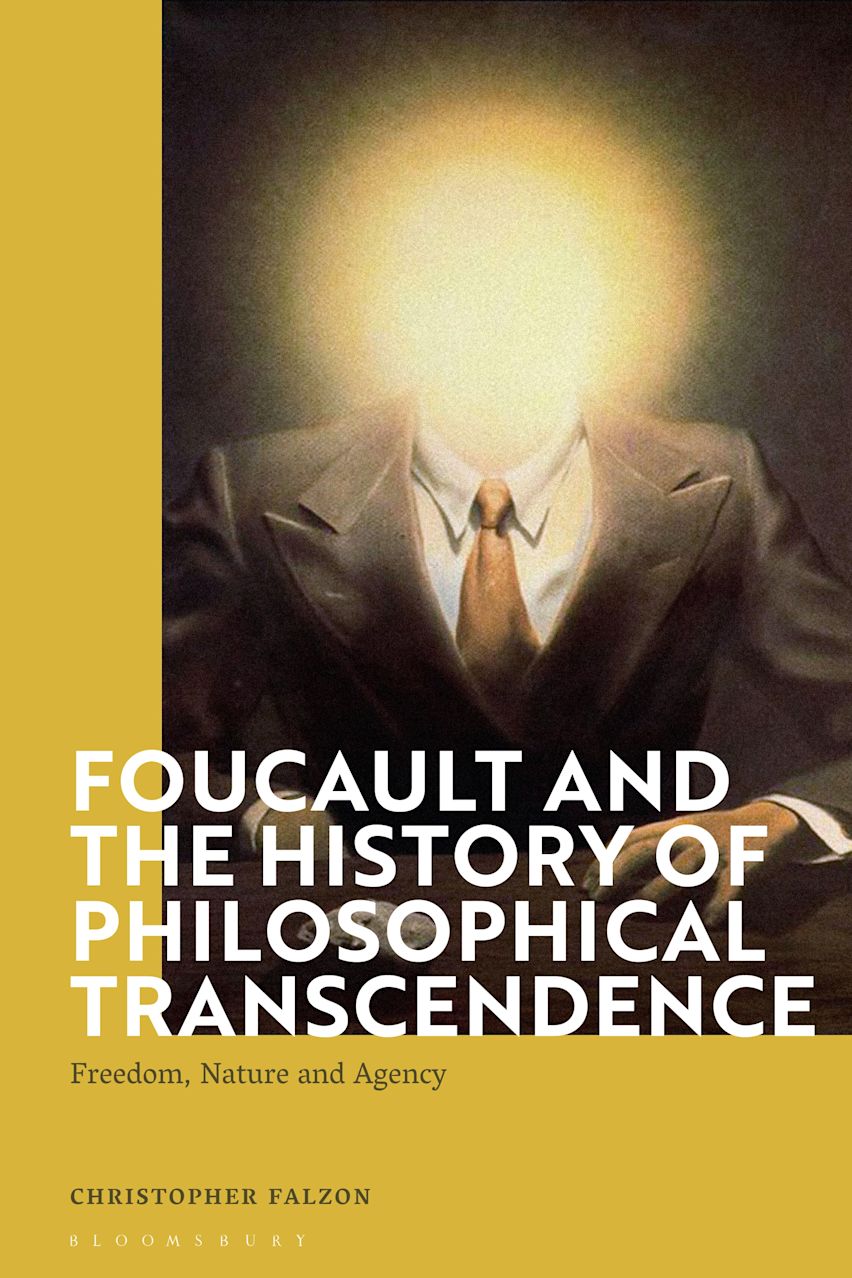
Christopher Falzon, Foucault and the History of Philosophical Transcendence. Freedom, Nature and Agency, Bloomsbury, 2024

Description

In an original approach to Foucault’s philosophy, Christopher Falzon argues for a reading of Foucault as a philosopher of finite transcendence, and explores its implications for ethics.

In order to distinguish Foucault’s position, Falzon charts the historical trajectory of transcendence as a philosophical concept, starting with the radical notion of transcendence that was introduced by Plato, and which reappears in various forms in subsequent thinkers from the Stoics to Descartes, and from Kant to Sartre. He argues that Foucault’s critique of the transcendent subject of humanism is a rejection not of transcendence per se but of radical transcendence in its distinctively modern form. As such, he shows how Foucault’s conceptualisation of transcendence as finite enables a picture of the human being as neither fully determined nor a creature of infinite possibilities, but as both subject and object, affected by but also able to affect the world.

With the notion of finite transcendence Falzon captures the essence of Foucault’s unique philosophy and provides a new insight into his contribution to ethics. Demonstrating its contemporary relevance, Foucault and the History of Philosophical Transcendence further explores the potential application of Foucault’s approach to the current ecological crisis.

Table of Contents
Introduction: The Importance of Being Finite

1. Foucault and Finite Transcendence
2. Self-transcendence
3. Transcendence, History and Critique
4.The Work of Freedom
5. Individual and Society
6.Life and Death

Bloch, S., Olivares-Pelayo, E.A.
Prison geographies: Nine disciplinary approaches (2024) Geography Compass, 18 (3)

DOI: 10.1111/gec3.12742

Abstract

Motivated by a critical concern for state-sanctioned coercion, control, and containment across “free society,” geographers have extended Foucault’s concept of “the carceral” to more and increasingly diffuse spaces and processes. In this paper, however, we aim to re-center the prison in the carceral geographies literature, reasserting it as the sine qua non of the subfield. In doing so, we organize geographers’ analysis of prisons into nine conceptual categories based on this journal’s areas of geographical exploration: cultural, development, economic, environment, geographic information systems & quantitative, historical, political, social, and urban. In addition to providing a review of existing prison research in geography, we illustrate the diversity of disciplinary approaches to that most “complete and austere” of institutions. © 2024 John Wiley & Sons Ltd.

Author Keywords
carceral geography; geographical subfields; prison; prison geographies

Index Keywords
human geography, interdisciplinary approach

Call for Abstracts: Michel Foucault and Phenomenology
The Southern Journal of Philosophy Workshop March 27-28, 2025,

The University of Memphis

PDF of call for abstracts

Keynote Speakers: Philippe Sabot, Elisabetta Basso, Christophe Bouton

How is Michel Foucault’s thought related to the tradition of phenomenology? Studies addressing this question have been overshadowed by scholarship that considers Foucault’s work in relation to other movements in continental philosophy such as critical theory, Marxism, structuralism, and post-structuralism. When the question has been broached, scholars have straightaway had to confront Foucault’s sometimes dismissive, if not hostile, attitude towards phenomenological approaches. For instance, in a 1967 interview (“Who are you, Professor Foucault?”), Foucault describes phenomenology as a totalizing method whose universalist claims seek to account for meaning and knowledge formation through an analysis limited to the lived experience of the transcendent subject. Later, he describes his method of archaeology as aiming “to free history from the grip of phenomenology” (The Archaeology of Knowledge [1969]). However, the basis for well-founded replies to the question has very recently been significantly augmented by the publication of three early Foucault texts. These works represent Foucault’s richest engagement with this tradition and demonstrate a remarkable depth and precision to his early study of phenomenology that were not apparent from his previously published work:

Binswanger et l’analyse existentielle (Binswanger and Existential Analysis), edited by Elisabetta Basso, Seuil/Gallimard, May 2021;

Phénoménologie et psychologie, 1953-1954 (Phenomenology and Psychology, 1953-1954), edited by Philippe Sabot, Seuil/Gallimard, November 2021;

La constitution d’un transcendantal historique dans la Phénoménologie de l’esprit de Hegel. Mémoire du diplôme d’études supérieures de philosophie (The Constitution of a Historical Transcendental in Hegel’s Phenomenology of Spirit. Graduate Degree Philosophy Thesis), edited by Christophe Bouton, Vrin, February 2024.

These texts are crucial sources for re-evaluating Foucault’s relation to phenomenology. Our hope is that an event which examines these writings, with keynote addresses from the editors of these three volumes, will help to cultivate exchanges and dialogues that may have previously been stymied by the prominence of Foucault’s more pointed objections to phenomenological approaches.

The Southern Journal of Philosophy workshop aims to provide a timely forum to take the measure of Foucault’s thought on phenomenology, broadly speaking, and to expand and develop a dialogue between Foucault’s philosophy and phenomenology that is both retrospective and prospective. We invite papers that focus on the three recent publications listed above, or on the relationship between Foucault’s thought and phenomenology in general. Papers delivered at the conference will also be published in a peer-reviewed special issue of The Southern Journal of Philosophy (see below for details).

Workshop Directors: Daniel J. Smith, Mary Beth Mader, Caner Yildirim

Suggested themes for submissions include, but are not limited to: 

-Foucault’s reading of eidetic and transcendental methods in phenomenology

-Foucault on existentialist and phenomenological analyses of psychopathology

-Foucault’s reading of phenomenological accounts of psychologism, temporality, intersubjectivity, language, spatiality, affectivity, flesh, lived experience, lifeworld and the world

-Historicity and the archive

-Epokhē and problematization

-Critiques of the cogito in Foucault and phenomenology

-Critiques of representation in Foucault and phenomenology

-Receptions of Kant, Nietzsche and Hegel by Foucault and phenomenology

-Foucault’s readings of Freud and Husserl

Author Submission Instructions

Updated Submission deadline: December 15, 2024

Selection will be based on long-form abstracts. Abstracts should include a paper title and be between 750-1000 words, prepared for anonymous review. Bibliographic material may be placed at the end and does not count toward the word count. A separate document with the author’s name, university affiliation, department, contact information, and paper title should be included with every submission. The document should indicate whether the author is a faculty member, post-doctoral researcher, doctoral student, or independent scholar.

Email both documents (either as doc. or pdf. files) to The Southern Journal of Philosophy Managing Editor, Ms. Cathy Wilhelm, at cwilhelm@memphis.edu. The subject line of this email should read, “2025 SJP Workshop Submission.”

Submission indicates your intention to include the final version of your paper in the published proceedings. Acceptance to the workshop does not guarantee publication as final work must pass external review. Travel support may become available, depending on the budget. Participants will be notified as needed.

Please direct inquiries to the Editor, Mary Beth Mader, at mmader@memphis.edu