Foucault News

News and resources on French thinker Michel Foucault (1926-1984)

Gary Gutting, What Philosophy Can Do, W.W. Norton, 2016

“A brilliant demonstration of what philosophy can do and how it is essential to human integrity and identity.”—Simon Critchley, coeditor of The Stone Reader

How can we have meaningful debates with political opponents?
How can we distinguish reliable science from over-hyped media reports?
How can we talk sensibly about God?

In What Philosophy Can Do, Gary Gutting takes a philosopher’s scalpel to modern life’s biggest questions and the most powerful forces in our society—politics, science, religion, education, and capitalism—to show how we can improve our discussions of contentious contemporary issues.

Gutting introduces readers to powerful analytic tools in the philosopher’s arsenal that they can use to make new sense of current debates. One such tool is a crucial distinction between inductive and deductive reasoning that explains why both sides on a disputed issue often are sure they have compelling cases for their views. Another is the Principle of Charity, which requires opposing parties to present each other’s arguments in their strongest forms—a tool that would make critiques both more respectful and more effective. Gutting also shows how concepts introduced by philosophers from Plato and Aristotle to Michel Foucault and John Rawls can clarify public discussions about morality, the economy, and medicine.

From informed assessments of scientific claims to careful analyses of arguments for and against religious belief, Gutting brings a calm, clear-headed approach to some of the most divisive issues on the table today. He scrutinizes our relationship to work and freedom in capitalism; our modern understanding of happiness and the good life; the value of liberal arts education and the humanities; the role of science and politics in shaping public policy today; and the value of art and popular culture. Perhaps most meaningfully, Gutting shows how we can talk about our own deepest beliefs clearly and directly, while listening to what others have to say to us. What Philosophy Can Do makes a powerful case for philosophy’s importance to public discussions, and shows us that this ancient tradition of inquiry may yet have much to say about our future.
Clive Barnett, On Problematization Elaborations on a Theme in “Late Foucault” Nonsite.org, Issue 16, June 22, 2015

1. What is a “Foucault”?

For at least four decades now, the ideas of Michel Foucault have resonated across a wide range of academic fields in the English-speaking academy. While this influence is perhaps most clearly felt in the humanities, Foucault has also provided a frame of reference in social science disciplines, including sociology, cultural studies, human geography and anthropology, amongst others.1 Foucault’s work is often used to bring a darker image of power relations to social theory, and to recommend that social scientists should develop an historical imagination towards their objects of analysis.2 In these and other uses, the authority of “Foucault” is most often deployed to support models of critical social science, understood as a set of procedures for revealing the operations of power in the routines of everyday and organisational life.

read more

Violaine Morin, Quand la CIA s’intéressait de près à Foucault, Derrida et Althusser. Le Monde, 23.03.2017

En 1985, les espions américains se félicitaient de la décomposition de la gauche intellectuelle française. Et passaient complètement à côté de la popularité croissante de ces mêmes philosophes dans leur pays.

Les espions lisent de la philosophie. Ce n’est d’ailleurs pas un secret, pendant la guerre froide, la CIA a mené une « guerre culturelle » en surveillant la vie intellectuelle et en finançant des projets culturels. Un rapport de recherche, déclassifié en 2011, vient apporter un éclairage étonnant sur ces pratiques.

Ce document, livré en 1985 par les agents américains basés à Paris, montre un certain intérêt pour les grandes figures du structuralisme, qu’on appellerait bientôt, outre-Atlantique, la « French theory ». Comme le résume Gabriel Rockhill, philosophe franco-américain qui a étudié le rapport pour la Los Angeles Review of Books, « la CIA a consacré des moyens importants à l’étude, par un groupe d’agents secrets, du corpus théorique considéré par certains comme le plus abscons et le plus alambiqué jamais produit ».

read more

Anthony Alessandrini, “Rescuing the Revolution from Its Outcomes”, Journal of the Society for Contemporary Thought and the Islamicate World, March 23 2017

Part of a Book Symposium on Behrooz Ghamari-Tabrizi’s Foucault in Iran: Islamic Revolution after the Enlightenment, University of Minnesota Press, 2016, 272 pp., $27.00 US (pbk), ISBN 9780816699490.

Full PDF

Behrooz Ghamari-Tabrizi’s Foucault in Iran: Islamic Revolution after the Enlightenment is an exemplary book in a number of ways, but perhaps first and foremost because of what the book does not do. While it represents the most extensive and sympathetic consideration in English of Michel Foucault’s writings on the events leading up to and culminating in the Iranian Revolution, Ghamari-Tabrizi does not fall into the commonplace critical practice of arguing whether Foucault was “right” or “wrong” about the revolution and its aftermath. More admirably, Foucault in Iran is not satisfied with performing the subtler but still ultimately familiar work of simply asking what Foucault’s writings on Iran can do for us in analyzing our contemporary context. Instead, the book performs Ghamari-Tabrizi’s scrupulous allegiance to what he finds most valuable in Foucault’s work: his insistence upon recognizing “the singularity of the revolution” and the concomitant need “to liberate it from the constraints of universalist narratives” (75). By doing so, he manages to contribute not only a new and significant understanding of Foucault’s late work on ethics, but also an important re-historicizing of the Iranian Revolution for an audience that very likely needs this re-telling. It is on this notion of singularity as Ghamari-Tabrizi reads it out of Foucault’s work, as well as out of the revolution itself, that I will thus focus on in my contribution to this roundtable

In the Shadow of Dictatorship: Foucault in Brazil

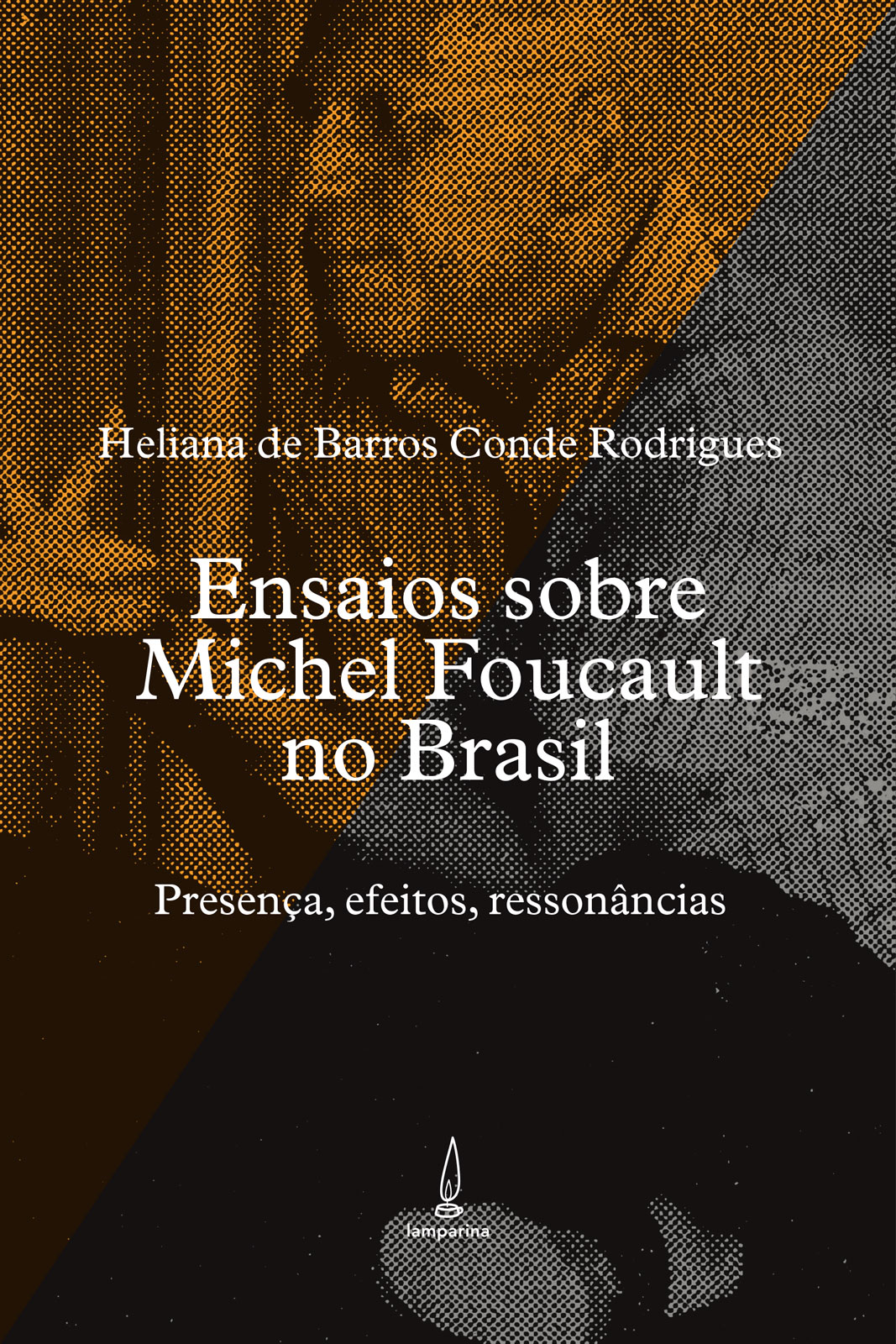
Review of Heliana de Barros Conde Rodrigues, Ensaios sobre Michel Foucault no Brasil: Presença, efeitos, ressonâncias  (Lamparina 2016), 176 pages

Reviewed by Marcelo Hoffman, Theory Culture and Society, 22 March 2017

Open access

Abstract:
Michel Foucault visited Brazil five times from 1965 to 1976 yet the details of his overall presence in the country have remained largely unexplored even in Brazil. Heliana Conde’s Ensaios sobre Michel Foucault no Brasil has the great merit of introducing readers to these details through a reliance on wide range of sources, including interviews with his interlocutors and the archives of the former secret police. While her book covers various aspects of Foucault in Brazil up to his effects and resonances in our present, she compellingly illuminates how the military dictatorship cast a long and ominous shadow over each of his visits to the country.

Keywords:
Foucault, Brazil, dictatorship, oral history, militancy, power, resistance

Michel Foucault, Dire vrai sur soi-même Conférences prononcées à l’Université Victoria de Toronto

Vrin – Philosophie du présent
296 pages – 12,5 × 18 cm
ISBN 978-2-7116-2749-3 – mars 2017

À la fin du premier semestre 1982, Michel Foucault prononce à l’Université Victoria de Toronto un cycle de conférences intitulé Dire vrai sur soi-même. Le thème de ces conférences, s’inscrivant dans le cadre du projet d’une généalogie du sujet occidental moderne, est la formation historique de l’herméneutique de soi. Après avoir analysé le type très particulier de connaissance de soi et de rapport à soi qui caractérise l’askêsis gréco-romaine, où il s’agit pour le sujet d’établir avec lui-même une relation de possession et de souveraineté, Foucault étudie le renversement qui conduit, aux premiers siècles du christianisme, et tout particulièrement dans les communautés monastiques, à la naissance d’une herméneutique de soi conçue comme l’exploration et le déchiffrement par le sujet de sa propre intériorité. Pour définir ce renversement, Foucault introduit ici une distinction inédite entre deux formes d’ascèse, l’une tournée vers la vérité, l’autre tournée vers la réalité. Parallèlement aux conférences, Foucault conduit à Toronto un séminaire consacré à l’étude détaillée de textes des auteurs anciens sur lesquels s’appuient ses analyses de la culture de soi antique. Il y présente également une esquisse des différentes significations de la notion de parrêsia dans l’Antiquité, qui allait devenir le thème principal de ses derniers travaux. Ces conférences et ce séminaire sont publiés ici pour la première fois, dans une édition critique.

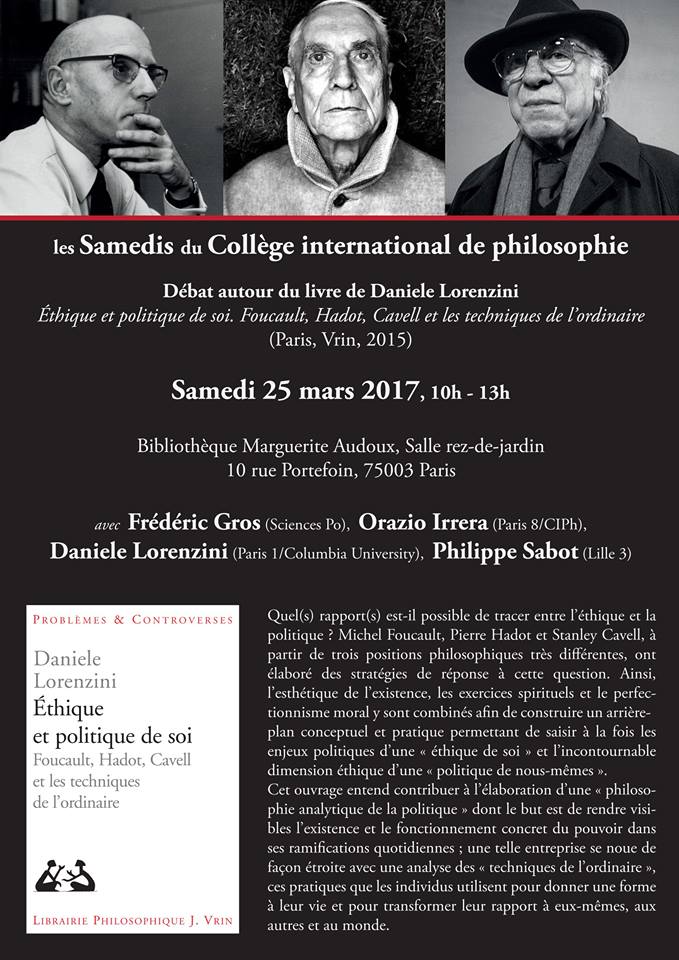
Les Samedis du Collège international de philosophie
Débat autour du livre de Daniele Lorenzini
“Éthique et politique de soi. Foucault, Hadot, Cavell et les techniques de l’ordinaire” (Paris, Vrin, 2015)

avec Frédéric Gros (Sciences Po), Orazio Irrera (Paris 8/CIPh),
Daniele Lorenzini (Paris 1/Columbia University), Philippe Sabot (Lille 3)

Samedi 25 mars 2017, 10h-13h
Bibliothèque Marguerite Audoux, Salle rez-de-jardin (10 rue Portefoin, 75003 Paris)

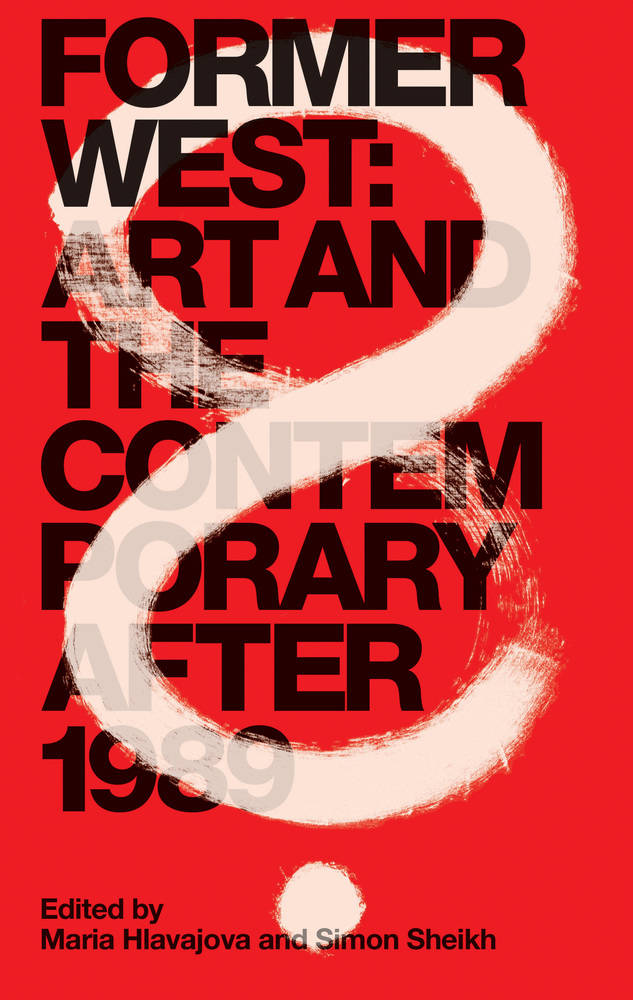
Matteo Pasquinelli “Arcana Mathematica Imperii: The Evolution of Western Computational Norms”, in: Maria Hlavajova et al. (eds) Former West. Art and the Contemporary After 1989. MIT Press, 2017.

Etymologically, statistics is knowledge of the state, of the forces and resources that characterize a state at a given moment . . . this was an explicit part of raison d’État called the arcana Imperii, the secrets of power, and for a long time statistics in particular were considered as secrets of power not to be divulged.
— Michel Foucault, Security, Territory, and Population, 1978.

In the nonspace of the matrix, the interior of a given data construct possessed unlimited subjective dimension.
— William Gibson, Neuromancer, 1984.

Abstract
The essay follows the metamorphosis of the symbolic form of Western power in the age of global datacenters and machine learning algorithms. Three cases studies of numerical governance (or algorithmic governance) are discussed: Compstat — a system of crime record visualization developed by the New York Police Department since 80s; SkyNet — a NSA classified program for metadata analysis of communication networks in the ‘war on terror’; Ayasdi — a company sponsored by DARPA (the research agency of the US Department of Defense) that has developed sophisticated techniques for topological data analysis.

Colin Koopman, The power thinker, Aeon, 15 March 2017

Imagine you are asked to compose an ultra-short history of philosophy. Perhaps you’ve been challenged to squeeze the impossibly sprawling diversity of philosophy itself into just a few tweets. You could do worse than to search for the single word that best captures the ideas of every important philosopher. Plato had his ‘forms’. René Descartes had his ‘mind’ and John Locke his ‘ideas’. John Stuart Mill later had his ‘liberty’. In more recent philosophy, Jacques Derrida’s word was ‘text’, John Rawls’s was ‘justice’, and Judith Butler’s remains ‘gender’. Michel Foucault’s word, according to this innocent little parlour game, would certainly be ‘power’.

read more

Colin Koopman is the author of a book on Foucault and numerous essays in The New York Times, Critical Inquiry, and elsewhere. He is currently writing a genealogy of the politics of data. He teaches philosophy at the University of Oregon.

Tea Torbenfeldt Bengtsson, & Lars Fynbo (2017). Analysing the significance of silence in qualitative interviewing: questioning and shifting power relations. Qualitative Research, February
https://doi.org/10.1177/1468794117694220

Abstract
In this article we analyse the significance of silence in qualitative interviews with 36 individuals interviewed about high-risk, illegal activities. We describe how silence expresses a dynamic power relationship between interviewer and interviewee. In the analysis, we focus on two different types of silence: ‘silence of the interviewee’ and ‘silence of the interviewer’. We analyse how silence functions as an interviewee’s resistance against being categorized as ‘social deviant’, how an interviewer may use silence strategically, and how silence stemming from an interviewer’s perplexity constructs significant data. We conclude that silence constitutes possibilities for interviewees and interviewers to handle the complex power at play in qualitative interviewing either by maintaining or by losing control of the situation.