Foucault News

News and resources on French thinker Michel Foucault (1926-1984)

‘Now the critique of knowledge I would propose does not in fact consist in denouncing what is continually – I was going to say monotonously – oppressive under reason, for after all, believe me, insanity (déraison) is just as oppressive. Nor would this political critique of knowledge consist in flushing out the presumption of power in every truth affirmed, for again, believe me, there is just as much abuse of power in the lie or error. The critique I propose consists in determining under what conditions and with what effects a veridiction is exercised, that is to say, once again, a type of formulation falling under particular rules of verification and falsification.’

Michel Foucault, (2008) [2004]. The Birth of Biopolitics. Lectures at the Collège de France, 1978- 1979. Tr. Graham Burchell. Houndmills and New York: Palgrave Macmillan, p. 36

stuartelden's avatarProgressive Geographies

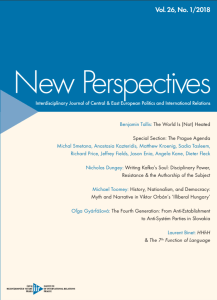
12018-740x1024New Perspectives Issue 1/2018

Editorial

  1. The World Is (Not) Heated

Benjamin Tallis

Special Section

  1. The Prague Agenda

Michal Smetana, Anastasia Kazteridis, Matthew Kroenig, Sadia Tasleem, Richard Price, Jeffrey Fields, Jason Enia, Angela Kane, Dieter Fleck

Research articles

  1. Writing Kafka’s Soul: Disciplinary Power, Resistance & the Authorship of the Subject

Nicholas Dungey

  1. History, Nationalism, and Democracy: Myth and Narrative in Viktor Orbán’s ‘Illiberal Hungary’

Michael Toomey

  1. The Fourth Generation: From Anti-Establishment to Anti-Systém Parties in Slovakia

Oľga Gyárfášová

Cultural Cut

  1. HHhH & The 7th Function of Language

Laurent Binet

View original post

Foucault Sphere

A new facebook page in French by Pierre Bouyer with extracts from Foucault’s work and posts of other original material, blog style.

Surveiller et Punir (Discipline and Punish) teeshirt for sale on Redbubble.

Editor: I have recently updated my extensive, but by no means comprehensive, bibliography of works on Foucault and Education .

If there is anything missing, please send me an email and I will add it in. Items in languages other than English are welcome.

Returning to Reims by Didier Eribon review – can you escape your upbringing?
Steven Poole, The Guardian, Fri 3 Aug 2018

[…]

This book is also a touching memoir of sexual awakening, and a gallery of philosophical ideas and characters, as Eribon explains with passion what inspired him as a teenager about the writings of Jean-Paul Sartre, and later those of Pierre Bourdieu and Michel Foucault. He is terrifically, amusingly rude, meanwhile, about the conservative philosopher Raymond Aron, whom he once met: “The very moment I set eyes on him, I loathed his ingratiating smile, his soothing voice … he was a soldier in the service of those in power helping them to maintain their power.”

Marina Benjamin, Didier Eribon’s Returning to Reims is a potent memoir about the cost of changing class, New Statesman, 8 August 2018

[…]
It has taken Eribon 35 years to emerge from the “class closet” and acknowledge that spring-vaulting himself out of poverty into the starry heights of French intellectual life might have entailed losses. Thirty-five years – over the course of which he fashioned himself into a successful journalist; professor of sociology; friend, confidant and acclaimed biographer of Michel Foucault; and protégé of Pierre Bourdieu, famed theorist of how bound we are to our habitus, that social niche to which multiple signifiers peg us. In 2008, Eribon was awarded Yale University’s prestigious Brudner Prize for his work on “intellectual history, on homosexuality, on minoritarian subjectivities”.

10 artists to watch at SummerWorks 2018

BY GLENN SUMI, STEVE FISHER, KATHLEEN SMITH AUGUST 4, 2018 2:18 PM, nowtoronto.com

BLUEMOUTH INC.

One of the city’s original site-specific ensembles, this fiercely eclectic company – which now splits its time between Toronto and Brooklyn – always uses movement, text, design and setting in intriguing ways. Their latest, Café Sarajevo Episode 1, takes its inspiration from a debate between theorists Michel Foucault and Noam Chomsky that aired on Dutch television in 1971. Whoa.

The show will use that year – in which the Vietnam War was raging, the Doors ruled the airwaves and people were taking psychedelic drugs and engaging in free love – to reflect on our own tumultuous times. The use of a smartphone app – the show is being billed as a live podcast experience – will add another fascinating layer to the experience.

August 11 to 19 2018 at Toronto Media Arts Centre – Main Gallery

stuartelden's avatarProgressive Geographies

EF18.jpegIt’s taken longer than anticipated for me to return to the work on The Early Foucault. The last update was back in April. Through the spring the book on Canguilhem was drafted, revised and then submitted to Polity Press on 4 May. Following the reader reports the revision was sent off on 13 July, and the book is now in production with a scheduled publication in early 2019. Much of the research time in May and June was taken up with work on Shakespeare, part for some summary pieces about Shakespearean Territories (here and here), and some the continuation of a side-project of putting Foucault and Shakespeare in relation. It was only in late July, following a holiday, that I was really able to return to the work on the early Foucault.

The materials I’d drafted were in fairly good shape, although some sections are more…

View original post 692 more words

‘What I wanted to do was in the order of philosophy: can one reflect philosophically on the history of knowledge as historical material rather than reflecting on a theory or a philosophy of history. In a rather empirical and clumsy fashion, I envisaged a work as close as possible to that of historians, but in order to ask philosophical questions, concerning the history of knowledge. I hoped for the good will of historians.’

Michel Foucault, “Le style de l’histoire,” in In Dits et Ecrits vol IV. Paris: Gallimard, p. 652. (This passage trans. Clare O’Farrell)

Holligan, C.
Exploring a taboo of cultural reproduction
(2018) British Journal of Sociology of Education, 39 (4), pp. 535-550.

DOI: 10.1080/01425692.2017.1367270

Abstract
Cultural reproduction is rarely, if ever, theorised through clandestine practices of sexual offending by teachers in the gendered hierarchies of state schools. Drawing upon Freedom of Information requests and other official qualitative data provided by a U.K. teaching council, this article endeavours to explain the form of a gendered cultural reproduction by reference to the diversity of ways in which identities are constructed and ‘contracted’ for female student victims. The article begins by looking at this taboo subject matter in the context of a historical patriarchal order and cultures of heterosexuality in schools, followed by a feminist perspective through which empirical theorisation is documented. Michel Foucault’s work on the micro-physics of power and normativity informs the emphasis of the contemporary feminist prism. It is argued that this offending occurs under the auspices of the professional teacher–student hierarchy and produces distinctive and damaging power effects. © 2017 Informa UK Limited, trading as Taylor & Francis Group.

Author Keywords
Feminist; gender; heterosexual; identity; schools; sexual