Foucault News

News and resources on French thinker Michel Foucault (1926-1984)

Mayes, E.
Student voice in an age of ‘security’?
(2018) Critical Studies in Education, pp. 1-18. Article in Press.

DOI: 10.1080/17508487.2018.1455721

Abstract
As student voice has become popularised as a school reform strategy, it has been critiqued as another instrumental strategy that schools may use to govern students’ speech, bodies and subjectivities. What necessitates further analysis is the relation between student voice and regulatory modes of governance entwined with geopolitical attention to security in and beyond disciplinary institutions. In this article, ethnographic accounts from students at a comprehensive coeducational public secondary school where student voice was adopted as a school reform strategy are read with and through a policy context concerned with security (in particular, the Australian Government’s Schools Security Programme and the Living Safe Together policy strategy), and Foucault’s problematisations of ‘security’ in lectures published in Security, Territory, Population. It is argued that student voice is entwined with contemporary security policies and practices; securing the material borders of the school is inextricable from limits placed on the discursive articulation of feeling in and beyond school gates. © 2018 Informa UK Limited, trading as Taylor & Francis Group

Author Keywords
Foucault; governmentality; security; student voice; surveillance
Matthew MacLellan, “Indigenous Infopolitics: Biopolitics as Resistance to White Paper Liberalism in Canada.” Theory and Event, vol. 21, no. 4 (2018): 914-936.

Abstract
This article argues for a reading of biopolitics as a mechanism of political empowerment under conditions in which the state perpetuates exclusion by paradoxically affirming the political equality of marginalized individuals or groups. After differentiating Michel Foucault’s conceptualization of biopolitics from its conventional interpretation in Giorgio Agamben, I show how the Canadian state counterintuitively perpetuates Indigenous exclusion through an inclusive liberalism that re-affirms Indigenous persons as full and equal citizens. I then conclude the article by showing how a statistics or information-based discourse of population – an Indigenous infopolitics – has concomitantly become an indispensible means of Indigenous resistance in Canada today.

Mike McClelland, Foucault at the Movies: by Michel Foucault, Patrice Maniglier and Dork Zabunyan, Spectrum Culture, 9 October 2018.

An attractive, tidily organized collection of famed French philosopher Michel Foucault’s writing about film as well as scholarly reflections on that writing, translator/editor Clare O’Farrell’s Foucault at the Movies is a necessity for film scholars and philosophers alike. Filled with writing about Foucault and by Foucault himself, Foucault at the Movies is an effectively translated and admirably assembled work of film scholarship and philosophical history. Though the book would be a suitable text for a university course on philosophy, film or both, it is also readable enough to serve as entertainment as well.

Foucault at the Movies is split into two parts. The shorter opening section contains a chapter by Dork Zabunyan, a professor at the University of Paris, and a chapter by Patrice Maniglier, a lecturer at the University of Paris – Nanterre. The second part is devoted to work by Foucault himself. Zabunyan’s chapter is titled “What Film Is Able to Do: Foucault and Cinematic Knowledge” and Maniglier’s chapter is “Versions of the Present: Foucault’s Metaphysics of the Event Illuminated by Cinema. Together, the two scholars place Foucault’s fim writing within the philosopher’s wider body of work, particularly regarding history, and also outline the ways in which Foucault and his philosophies were influenced by film and influenced film.

read more

Black Hawk Hancock, Michel Foucault and the Problematics of Power: Theorizing DTCA and Medicalized Subjectivity, The Journal of Medicine and Philosophy: A Forum for Bioethics and Philosophy of Medicine, Volume 43, Issue 4, 9 July 2018, Pages 439–468.

DOI: 10.1093/jmp/jhy010

Abstract
This article explores Foucault’s two different notions of power: one where the subject is constituted by power–knowledge relations and another that emphasizes how power is a central feature of human action. By drawing out these two conceptualizations of power, Foucault’s work contributes three critical points to the formation of medicalized subjectivities: (1) the issue of medicalization needs to be discussed both in terms of both specific practices and holistically (within the carceral archipelago); (2) we need to think how we as human beings are “disciplined” and “subjectivated” through medicalization, as discourses, practices, and institutions are all crystallizations of power relations; and (3) we need to reflect on how we can “resist” this process of subjectification, since “power comes from below” and patients shape themselves through “technologies of the self.” Ultimately, Foucault’s work does not merely assist us in refining our analysis; rather, it is essential for conceptualizing medicalization in contemporary society.

Keywords
carceral archipelago, Foucault, gaze, medicalization, technology of the self

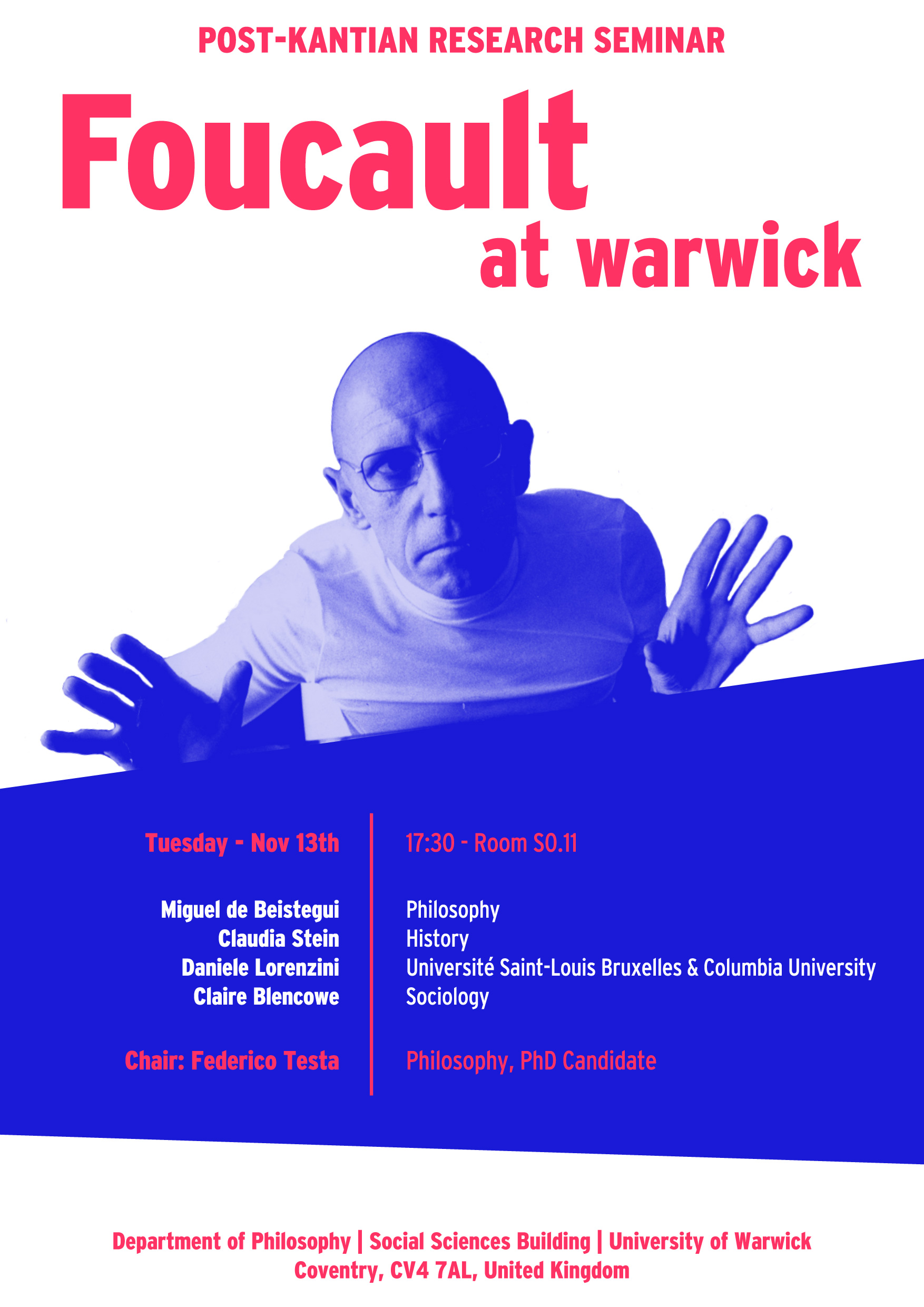
Foucault at Warwick – seminar (2018)

3 November 2018

Reconstructing the Japanese house | The Japan Times

BY JOHN L. TRAN, AUG 13, 2017

Editor’s note: old news

After very successful runs in Rome and London, “The Japanese House: Architecture and Life after 1945,” an exhibition of maquettes, photographs, plans and drawings, is now in the National Museum of Modern Art, Tokyo.

For providing an extensive look at varied and eclectic forms that architects have created in postwar Japan, the price of admission is fully justified, but the exhibition is more than that. The design of Japanese houses is explored here as a series of inquiries and arguments as to how life may be defined or transformed by the space of the home.

It’s not, however, the story of how the majority of Japanese people live. One of the main objectives of the exhibition is to celebrate the awkward and contrary, the exceptions that collectively provide an inverse image of postwar mass society in Japan. As MOMAT curator Kenjiro Hosaka puts it in his catalogue essay “On the Geneologies of the Japanese House after 1945,” “Japanese houses criticize.” Taking the term “geneology” from Michel Foucault, who in turn took it from Friedrich Nietzsche’s dismantling of Christian morality and Western philosophy, the exhibition as a whole is presented as an extended exploration of the house as a form of discourse, with propositions, rebuttals, anecdotes and jokes.

Lesley Ellis,
Through a filtered lens: unauthorized picture-taking of people with dwarfism in public spaces
(2018) Disability and Society, 33 (2), pp. 218-237.

https://doi.org/10.1080/09687599.2017.1392930

Abstract
People with dwarfism often encounter discrimination in their daily interactions with strangers. Staring, harassment and infantilization are some of the behaviours they have reported to encounter. Through two qualitative research studies conducted in 2013 and 2015/16 it was revealed that people with dwarfism also experience strangers taking unauthorized pictures of them. This article explores this phenomenon in depth, utilizing the perspective of individuals who have experienced it first hand and analysing the relevant socio-historical influences. These include the history of the photographic exploitation of ‘abnormal’ bodies, and the cultural construction of a ‘dwarf’ as an object of entertainment. This article engages gaze theories in gender and race and ethnicity studies as well as a discussion of Foucault’s interpretation of the ‘panopticon’, positing that the advent of the cell-phone camera in the twenty-first century has altered how ‘abnormal’ bodies are recorded within oppressive ideological beliefs. © 2017 Informa UK Limited, trading as Taylor & Francis Group.

Author Keywords
abnormality; culture; disability; Dwarfism; gaze

Foucault and Feminism in Finland – Emphasizing Equality – Academic Stories

For PhD student Sanna Tirkkonen, the line between research and life is a little blurred. “I work in philosophy, and it is quite usual in our field that doing research gets intertwined with the whole way of being,” she explains. “The questions we study are involved with the deep questions concerning life, ethics, society, knowledge, and existence.”

[…]

Sanna’s dissertation focuses on the works of French philosopher Michel Foucault, who she first started to study about 15 years ago. She was initially drawn to his work on ethics, which eventually became a part of her dissertation. Sanna’s dissertation examines the intersections between ethics and governing. Using Foucault’s original works, lectures, and articles, as well as other philosophical literature on the topic, she explores how ethical behaviours happen as a result of social encounters. Foucault states that acting morally is not about following moral codes, but rather spontaneously reacting a situation or experience. Sanna argues that a person’s experience is what they themselves live through, but that some experiences can also be shared. In this way, she is able to reflect on the social impacts of personal and collective experiences. It is different to experience oneself as someone “mad”, sick, healthy or disordered. While these are cultural distinctions, they impact they have on a person’s experience is quite real.

Scott Hamilton (2018). Foucault’s End of History: The Temporality of Governmentality and its End in the Anthropocene. Millennium: Journal of International Studies, 46(3), 371-395.
https://doi.org/10.1177/0305829818774892

Abstract
Michel Foucault’s concept of governmentality is widely used throughout the social sciences to analyse the state, liberalism, and individual subjectivity. Surprisingly, what remains ignored are the repeated claims made by Foucault throughout his seminal Security, Territory, Population lectures (2007) that governmentality depends more fundamentally on a specific form of time, than on the state or the subject. By paying closer attention to Foucault’s comments on political temporality, this article reveals that governmentality emerged from, and depends upon, a very specific cosmological order that experiences time as indefinite: what Foucault calls our modern ‘indefinite governmentality’. This is elaborated here in three ways. First, by reviewing the transformation from a linear Christian cosmology to our modern indefinite governmentality through what Foucault calls the ‘de-governmentalization of the cosmos’. Second, by arguing that our experience of indefinite temporality was concretised by the geological discovery of ‘deep time’. Third, by engaging a contemporary geological concept that returns humanity to its lost cosmological centrality, thereby re-governing the cosmos: the Anthropocene, or the ‘human epoch’. Analysed using indefinite governmentality, Foucault’s forewarning of an ‘end of history’ is implicit in the new concept of the Anthropocene’s origins and ends. If it is the paradigm shift its proponents claim, then it threatens to end the temporality of the state, the subject, and governmentality itself. © 2018, The Author(s) 2018.

Author Keywords
Anthropocene; governmentality; political temporality

stuartelden's avatarProgressive Geographies

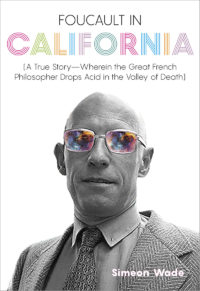
FINC_cover_800px-200x291.jpgFoucault in California [A True Story—Wherein the Great French Philosopher Drops Acid in the Valley of Death] – Heyday 2019. This is the famous/infamous memoir of Simeon Wade, with a foreword by Heather Dundas.

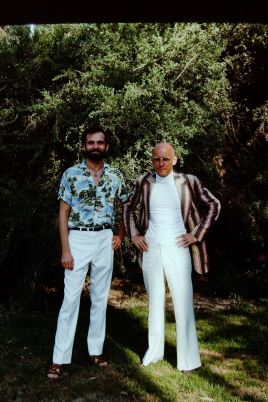
In The Lives of Michel Foucault, David Macey quotes the iconic French philosopher as speaking “nostalgically…of ‘an unforgettable evening on LSD, in carefully prepared doses, in the desert night, with delicious music, [and] nice people.’” This came to pass in 1975, when Foucault spent Memorial Day weekend in Southern California at the invitation of Simeon Wade—ostensibly to guest-lecture at the Claremont Graduate School where Wade was an assistant professor, but in truth to explore what he called the Valley of Death. Led by Wade and Wade’s partner Michael Stoneman, Foucault experimented with psychedelic drugs for the first time; by morning he was crying and proclaiming that he knew Truth.

foucault-and-simeon-wade-claremont-after-the-death-valley-experience.jpg Foucault and Wade in 1975 –…

View original post 209 more words