With all my very best wishes for the Festive Season and the New Year from Foucault News.


With all my very best wishes for the Festive Season and the New Year from Foucault News.
Georgios Tsagdis, Anthropocene Anarchives, Deleuze and Guattari Studies, Volume 19, Issue 4
https://doi.org/10.3366/dlgs.2025.0620
Abstract
The essay pursues Deleuze’s reading of Foucault in order to elicit a fourfold of anarchival virtualities that trouble and destabilise the constitution of every archive. This thematisation of the anarchival is critical in an age that orders life relentlessly, arranging and controlling its every aspect and principally its material-informational conditions as a biological phenomenon. The essay thus affords a new understanding of the Anthropocene as the age of bioarchives. Through a close examination of plant archives such as the Svalbard Global Seed Vault and animal archives, such as the Frozen Ark, the essay explicates the speculative logic that governs the discursive statements of bioarchives as well as limits of their aspirations. At the intersection of power, knowledge and memory, Deleuze’s reading of Foucault accordingly enables not only a critical engagement with the way the present attempts to preserve past life in order to govern its future but opens a space to imagine a future anarchive of life.
Phillip Joy, Meredith Bessey, and Linda Mann “I Believe in Santa Claus” and Ozempic: A Foucauldian Discourse Analysis of Holiday Health Advertising. Qualitative Health Research. First published online June 19, 2025
https://doi.org/10.1177/10497323251350876
Open access
Abstract
This study examines the weight-related discourses in holiday advertising for Ozempic, a prescription drug originally developed for diabetes management but now widely marketed for weight loss. Sponsored Facebook advertisements for Ozempic were collected throughout December 2024, with 12 ads analyzed through Foucauldian discourse analysis. This analysis identifies three interrelated discursive constructs: (1) Santa Takes Ozempic, (2) Ozempic as the Perfect Holiday Gift, and (3) Medical Authority Meets Holiday Cheer. These advertisements use cultural symbols like Santa Claus and New Year’s resolutions messaging to (re)produce dominant and contested discourses about fatness and weight loss, while constructing pharmaceutical intervention as both a necessity and a gift. The analysis highlights how these marketing strategies mobilize biopower, construct self-surveillance as normative, and contribute to the commodification of health, reinforcing weight stigma under the guise of holiday celebration.
Huseyin Caliskan, Ustuner Birben & Sezgin Ozden, Shifting Priorities: How Amendments in Forestry Law Impact Resource Management, the Case of Türkiye. Environmental Management 76, 13 (2026).
https://doi.org/10.1007/s00267-025-02308-w
Abstract
In Türkiye, where nearly all forests are publicly owned, the government exercises substantial authority over forest management and utilization. This study examines how legislative and regulatory changes in forestry have shaped local outcomes, focusing on the tension between economic priorities and ecological sustainability. Methodologically, the study combines Hamilton’s institutional approach, highlighting the role of legal frameworks, administrative routines, and authority structures in shaping governance, with Foucault’s concept of governmentality, which emphasizes how power is exercised through norms, regulations, and technical knowledge. This dual framework is applied through a qualitative document analysis of forestry laws, development plans, and policy papers. The findings show that while official statistics suggest an overall expansion of forest area, regional patterns reveal increasing pressures on natural forests to supply industrial raw materials, and growing reliance on non-forestry permits within forest boundaries. These outcomes demonstrate that governance mechanisms and legislative amendments have systematically prioritized economic utilization. The study concludes that the Turkish case illustrates how institutionalized governance choices, mediated through law and regulation, may simultaneously enable resource mobilization and accelerate long-term forest degradation. These insights emphasize the need for policy frameworks that better balance economic development with ecological preservation, offering lessons for sustainable forest governance globally.
Call for Papers
Conference: Contagion, Information, Territory
Date: 17-19 June, 2026
Location: Leiden University, The Netherlands
Keynote speakers
Dr. Ramon Amaro (Design Academy Eindhoven)
Prof. Dr. Jasbir Puar (University of British Columbia)
Deadline Call for Papers: 31 January, 2026
As new forms of exclusion and colonialism are emerging and old apartheid policies reinvigorated, the movement of people, the spread of disease, and the circulation of information become ever more central to our understanding of war, politics, identity, and government. The war in Gaza and illegal occupation in the West Bank are a case in point. This conflict is not just territorial, it is informational, and the Israeli government employs strategies of withholding care and barring humanitarian aid to preemptively immunize Israel’s cultural and legal selfperception as a ‘uniquely’ Jewish nation-state, against Palestinian life. As the international movement of trans* and queer people is restricted in ways that bring to mind the late 20th century response to the HIV/AIDS crisis, gender and sex education are thought of as ‘infecting’ children with particular sexual preferences, or encouraging trans* identification in them. Meanwhile, the language of contagion is activated politically and by opposing factions. Where some speak of a “woke mind virus,” others attempt to make sense of fascist protests like the January 6th attack on the Capitol in 2020, or the 2025 extreme rightwing riots in The Hague, the Netherlands, as fueled by viral online discourse and contagious hatred of immigrants.
In response to these concerns, contagion, information, and territory emerge as central concepts of political analysis and critical thought. Contemporary artists and writers like Isadora Neves Marques, Tabita Rezaire, Michel Nieva, and Anne Boyer reflect on these convergences in their practice, and academic consideration of such work may help theorize them further. It is for this reason that we call for papers that seek to map the connections between contagion, information, and territory through critical analyses of cultural objects.
How do public health interventions, immunization policies, and biopolitical regimes help govern populations under conditions of uncertainty? Concepts of (auto-)immunity, and parasitism, have been central to discussions around biomedicine, territory, and democracy, and considerations of care, the viral, and vaccination have found new urgency during the COVID-19 pandemic (Cohen 2009; Esposito 2008; Serres 1982; Derrida 2004; Di Cesare 2021; Povinelli 2016). Angela Mitropoulos helps us wonder how insurance, contracts, and riskprediction have historically structured vulnerability and precarity along lines of gender, race, and capital (Mitropoulos 2012). Jasbir Puar has mobilized the notion of “debility” to critically examine discourses around a variety of crises, urging us to focus on the endemic nature of state sanctioned “debilitation” as part of biopolitical regimes of power and in the context of Palestinian rights (Puar 2017).
For this conference, we are particularly interested in scholarship that brings these concerns into dialogue with contemporary technological and political realities (Pasquinelli 2023; Amoore 2013; Parisi 2013). How do data infrastructures and algorithmic systems (re)produce social hierarchies and how do they relate to what Ramon Amaro refers to as “the black technical object” (Amaro 2023)? How can bio- and necropolitical configurations around human embodiment, along with their relationship to disease, harm, and contagion, be theorized in connection to processes of territoriality and critical analyses of datafication in this “technolibertarian age” (Mbembe 2021)? How does the transformation of European borders into “deathscapes” rely on a logic of securitization and immunization supported by digital infrastructures of control and racialized surveillance (Pugliese 2022; Stümer 2018; Browne 2015)?
In conversation with cybernetics, Sylvia Wynter reminds us that the Foucauldian framework around security requires further elaboration to confront how the category of “Man” has historically depended on racialized life and the enduring histories of plantation economy, colonialism, and chattel slavery (Wynter 2003 & 2018; Foucault 2007; Tsing 2021). Articulations of territory, anxieties around health, cleanliness and contagion, and regimes of information and datafication intersect, and give rise to an assemblage in which differentially racialized, gendered, classified, and categorized human and non-human figures emerge (Weheliye 2014; Gossett & Hayward 2020). In response to this assemblage that exists at the center of contemporary political, cultural, and social subjection and abjection, we invite paper proposals reflecting on the relationship between contagion, information, and territoriality.
Responses might encompass, but are not limited to:
We welcome submissions on these themes across fields and disciplines. Please submit abstracts for 20-minute presentations of 250 to 300 words, along with brief biographical notes (about 50 words) to contagious.territories@hum.leidenuniv.nl by January 31, 2026. We especially encourage queer, BIPOC, disabled, working class, and other marginalized scholars to apply. Notifications of acceptance will be sent by February 28, 2026. Please note that attendance at this conference will be inperson ONLY. For more information, please contact us at contagious.territories@hum.leidenuniv.nl.
CFP: “Speech and Politics” with Miranda Fricker
Sciences Po’s 12th Graduate Conference of Political Theory
Submission deadline: January 31, 2026
Conference date(s):
May 27, 2026 – May 28, 2026
Call for papers
Key words: Attentiveness, listening, discourses, representation, political language, democracy, margins
The relationship between speech and politics has recently become the object of renewed scholarly interest. Following Michel Foucault’s analyses of parrhesia and the courage of truth (2008, 2017), political theory has increasingly interrogated the force of “truth-telling” within practices of resistance to power, as evidenced by studies on the so-called “liberation of speech” among women in the #MeToo movement (Châteauvert-Gagnon, 2025). In the era of social media, speech re-emerges in its fundamental ambiguity: it is at once potentially harmful to others (Butler, 1997) and constitutive of a shared world (Wolff, 2004). Developments associated with the concept of recognition (Honneth, 1995) underscore that democracy requires each singular voice to be heard so that pluralistic deliberation may unfold within the egalitarian polyphony of voices (Rancière, 1995), a condition that remains far from fulfilled today (Fricker, 2007). Speech is, at its core, relational: it presupposes both an addressee and a listener, whose conditions of possibility are invariably fragile. At a moment when regimes of sayability and audibility are being reconfigured, this twelfth Graduate Conference in Political Theory at Sciences Po, in presence of Miranda Fricker, suggests to analyse this vulnerable nexus between speech and politics by reconsidering it through the three lenses of voice, silence, and listening.
Axis 1: Voice
From the parrhesia of the ancient Greeks to the “voiceless” of contemporary democracies, and from the Roman voxpopuli to modern political representation, “voice” appears to designate the essential thread binding language to the political realm. Whether one speaks of “giving” voice or “carrying” it (Hayat et al., 2022), modern democracy inaugurates a political regime grounded in ostensibly free and egalitarian speech, yet governed by the norms of representation, participation, and liberal reason (Gourgues et al., 2013; Talpin, 2006). Considered through the lens of deliberation, voices lie at the foundation of an ethics of discussion. Although political language and discourse have given rise to extensive scholarship (Lamizet, 2011), such analyses have often proceeded in terms of a theorization of democratic reason (Habermas, 1992), examinations of discursive strategies (Fairclough, 2013; Charaudeau, 2005, 2017), of the ideas mobilized (Gaboriaux & Skornicki, 2017), and of the symbolic positions that follow (Bourdieu, 2001).
While reaffirming the value of these approaches, this axis invites instead an inquiry into the material and institutional matrix of political voice. It proposes shifting the analytical focus from the “content” to the “container” of language. Whispered or shouted, high-pitched or low, singular or collective: what are the various materialities of voice? Asking who has the right to speak also requires asking who has only the right to speak, in contrast to the sanctification of writing. Do voices that reach us in written form benefit from the same kinds of legitimation and recognition? What determinants (gender, class, race, disability, etc.) shape the production and reception of voice in political discourse? How is the authority of certain voices constituted? How does the production of knowledge depend on diverse discursive frameworks? Finally, what can be said about the dispositives of circulation or control of voices that structure the political field (speaking time, media constraints, volume, etc.)? Albert Hirschman’s now-classic triptych — Exit, Voice, Loyalty — has shown that every collective organization distributes the possible modalities of reacting to disagreement and reveals the asymmetries between those who can “make their voices heard” and those for whom exit or enforced loyalty remains the only option. Reinterpreting this intuition through the lens of political theory requires understanding not only who can speak, but above all what it means to speak politically.
Axis 2: Silence
Since speech has historically functioned as a condition of political participation, silence appears apriori as a technique of political marginalization. Beyond the constitutive exclusion of “mute” populations from the social contract — children, certain persons with disabilities (Rollo, 2020), animals (Sénac, 2024), and nature (Latour, 1999) — many work now investigates the practices of “silencing” directed at discriminated groups (Machikou, 2024). In particular, it has become clear that women, racialized and gender minorities are routinely silenced (Dotson, 2011; Paveau & Perea, 2014) and deprived of the conceptual resources needed to articulate their experiences through speech (Fricker, 2007). When opinions of a group are stigmatized, “silencing” may also take the form of self-censorship (Noelle-Neumann, 1974). Because representative democracy places its emphasis on voice, silence is often taken as absence or as a mark of political passivity (Cavarero, 2005). Identifying it instead as a signal or a practice requires a form of critical conceptual reversal, itself indicative of the difficulty of such an undertaking (Brito Vieira, 2020). By showing that there exist modes of “speaking for” and “speak about” that construct silence as a political signifier rather than as absence, Vieira’s analysis underscores the extent to which representation can betray, translate, or reconfigure muted or marginalized voices. Her perspective thus offers a valuable framework for examining the tensions between endured silence, strategic silence, and represented silence.
Because silence can be an imposed experience, it is often lived as a trap: silence does not protect, nor does it yield anything of “value” (Lorde, 1980, 1984). From this standpoint, moral philosophy has asked whether we ought to speak on behalf of those who have no voice (Boutillier Biran & Mourman, 2025). Some silences have even been accused of being complicit in, or even culpable for, injustice (Donohue, 2024; Guiora, 2024; Imhoff & Quirós, 2022). On pourrait peut-être écrire : yet, one could also state that silence could be a technique of desubjectification? Beyond the fact that a certain philosophical tradition valorizing silence as a space of reflection and dialogue with oneself finds resonance in contemporary feminist theory (Malhotra & Rowe, 2013), one might also consider that silence may serve as a means of resisting power in our “society of exposure” (Harcourt, 2020) where surveillance increasingly relies on what we say about ourselves. In postcolonial critique, silence has even emerged as a practice of resistance, enabling a form of non-vocal, intercultural communication (Lugones, 2007, 2010; Veronelli, 2016; Ferrari, 2020).
This axis therefore seeks to address the following questions: What are the boundaries of the sayable and the unsayable that structure “silencing” practices? How is this “silencing” materialized, and whom does it target in particular? How, and to what extent, can silence under these conditions become a tool of disobedience? What outcomes can be achieved through strategies of silent resistance (Deleuze, 1993)? Do such strategies not always risk reproducing forms of power tied to the exclusion and marginalization of certain populations?
Axis 3: Listening
While the distribution of speech is regularly examined through the lens of social justice, listening often remains a blind spot of the politics of speech. Studying the inaudibility of certain voices requires distinguishing between levels of hearing and listening. On the one hand, hearing without listening — or listening selectively — constitutes an epistemic injustice (Fricker, 2007; Medina, 2012) when it denies certain agents the capacity to produce knowledge. Such a denial of epistemic agency is often less a matter of difficulty hearing or being heard than of a deliberate form of political exclusion (Dotson, 2011, 2012; Pohlhaus, 2012). This deficit of listening thereby produces marginalized political identities (Alcoff, 1999, 2010) by preventing the emergence of new epistemic voices. On the other hand, listening constitutes a form of engagement that enables marginalized voices to acquire political significance. Care feminist theories have proposed various approaches for placing listening at the center of political thought. From the identification of “different voices” (Gilligan, 1982) to the notion of a “caring democracy” (Tronto, 2013), situated forms of attending to others require a cultivated sensitivity to listen and to allow oneself to be affected. In response to the crisis of liberal subjectivities, current projects increasingly turn toward a “democracy of listening” (Brown, 2025), which places at the heart of a reparative political project the act of lending an ear to those who remain unheard.
This axis seeks to explore this line of inquiry on listening within political theory and to question its limits. How might we organize the conditions for epistemico-political listening? It appears that the practice of “reasoning together” (Jasanoff, 1998) cannot be limited to a conversational space but must find material and institutional embodiments of listening. What forms might these embodiments take? On which normative criteria can we rely in order to regulate — or, conversely, to liberate or disorganize — this listening? If listening is not a passive stance but an active commitment to sustaining a shared world, a shared resonance (Rosa, 2018), how does this commitment manifest itself? What difficulties arise in listening once we account for the unequal materiality of vocal circulation and the intrinsic limits of any hermeneutics of human speech? Does a possible extension of the spectrum of listening to the non-human grant nature a new form of epistemic agency? Finally, how might we listen reciprocally and otherwise in order to repair our democratic practices?
Submission Guidelines
Paper proposals to be written in English or French (title, 300 words, excluding indicative bibliography), along with a brief biographical note, should be sent to the following email addresses: aymeric.leroy@sciencespo.fr ; lucie.granier@sciencespo.fr ; perrine.chabanel@sciencespo.fr ; lino.castex@sciencespo.fr ; gabrielle.jourde@sciencespo.fr . Please include the following subject line in your email: “Parole et Politique – Proposition.”
The deadline for submitting a proposal is 31st January 2026. Participants will receive confirmation of acceptance during February.
To allow for in-depth discussion of the presentations at the Graduate Conference, a final written version must be submitted by email no later than 25th April 2026 so that it can be circulated to the discussants. A selection of papers may be considered for later publication with the consent of the authors.
Foucault and Film (Part I)
Monday, February 10, 2025 to Friday, February 14, 2025
Theme week organized by Jenny Gunn, Georgia State University
Co-editor
Sara Ghazi Asadollahi
Foucault’s ‘Cinematicity’
By Jenny Gunn, Monday, February 10, 2025
Curator’s Note
“Foucault is uniquely akin to contemporary film.”
-Gilles Deleuze[i]
Despite Deleuze’s definitive claim in the above epigraph, Foucault’s impact on the theoretical study of film is comparatively modest. What we may characterize then as a sort of missed encounter in part results from the lack of direct engagement with film in Foucault’s formally published oeuvre. As the co-editors of the 2018 collection, Foucault at the Movies, Patrice Maniglier and Dork Zabunyan argue, cinema was in Foucault’s view, too new a discourse to be analyzed through either genealogical or archaeological methods.[ii] Indeed, in Foucault’s most productive years, the practice and discourse of cinema in France were equally prolific if also in the legacy of May 1968—most contentiously unsettled.[iii]But it was not for lack of interest that Foucault did not explicitly take up cinema in his writings. Like most of his generation, Foucault was an avid moviegoer […]
The Lonsdale Operator
By Jordan Chrietzberg, Tuesday, February 11, 2025
How do you read a “fog”? How does one interpret it? You could first describe it perhaps? Easy enough, provided we take Foucault figuratively, keep this fog a “fog,” render it a body, a human body, an actor named Lonsdale, side-lit, center-framed, front-facing, shot for a medium, a medium shot. […]
The HETEROTOPIA OF SAINT PETERSBURG: Film Landmark of POLITICAL CHANGE
By Xenia Leonteva, Wednesday, February 12, 2025
[…]
The types and connections of Foucault’s heterotopias that I have noted find an interesting reflection in contemporary Russian cinema – more precisely, in a series of films that trace their origins back to Soviet classics. According to Foucault, these archival “series” create events and are of particular interest to research, as they correlate with each other and generate new ideas (Maniglier 2018, 58). Thus, through the series, we can track the political changes in Russian cinema as a propagandistic tool forging audiovisual landmarks of the époques. […]
Untethering Structures of Power: Re-Examining Foucault’s Heterotopia
By Tara Heimberger, Thursday, February 13, 2025
Jordan Peele’s 2019 film Us interrogates systemic inequality through the Wilson family’s confrontation with their doppelgangers, part of a group called “the Tethered.” Central to the film’s social critique is the revelation of the underground tunnels where the Tethered live – a labyrinthine, subterranean world of clinical white tile in which the Tethered mirror the lives of their surface counterparts. These tunnels are allegorical to the hidden mechanisms of oppression and societal othering which, I argue, align with Michel Foucault’s theories of power, confinement, and heterotopic space. […]
Foucault and Film (Part II)
Monday, February 17, 2025 to Friday, February 21, 2025
Theme week organized by Jenny Gunn, Georgia State University
Co-editor
Sara Ghazi Asadollahi
“My memory comes in the way of your history”: Radical remembrance in Amma Ariyan as a route to politicizing history
By SanchariDuttaChowdhury, Monday, February 17, 2025
Ray vs. Foucault on the speech of the ‘mad’ subject
By Basudhara Purkait, Tuesday, February 18, 2025
The Empty Panopticon: Surveillance and Parrhesia in Iranian Cinema
By Parsa Naji, Wednesday, February 19, 2025
Sing Sing and The Cinematic Prison
By Jeffrey W. Peterson, Thursday, February 20, 2025
Prisons of Rhythm
By Jarred Biederstaedt, Friday, February 21, 2025
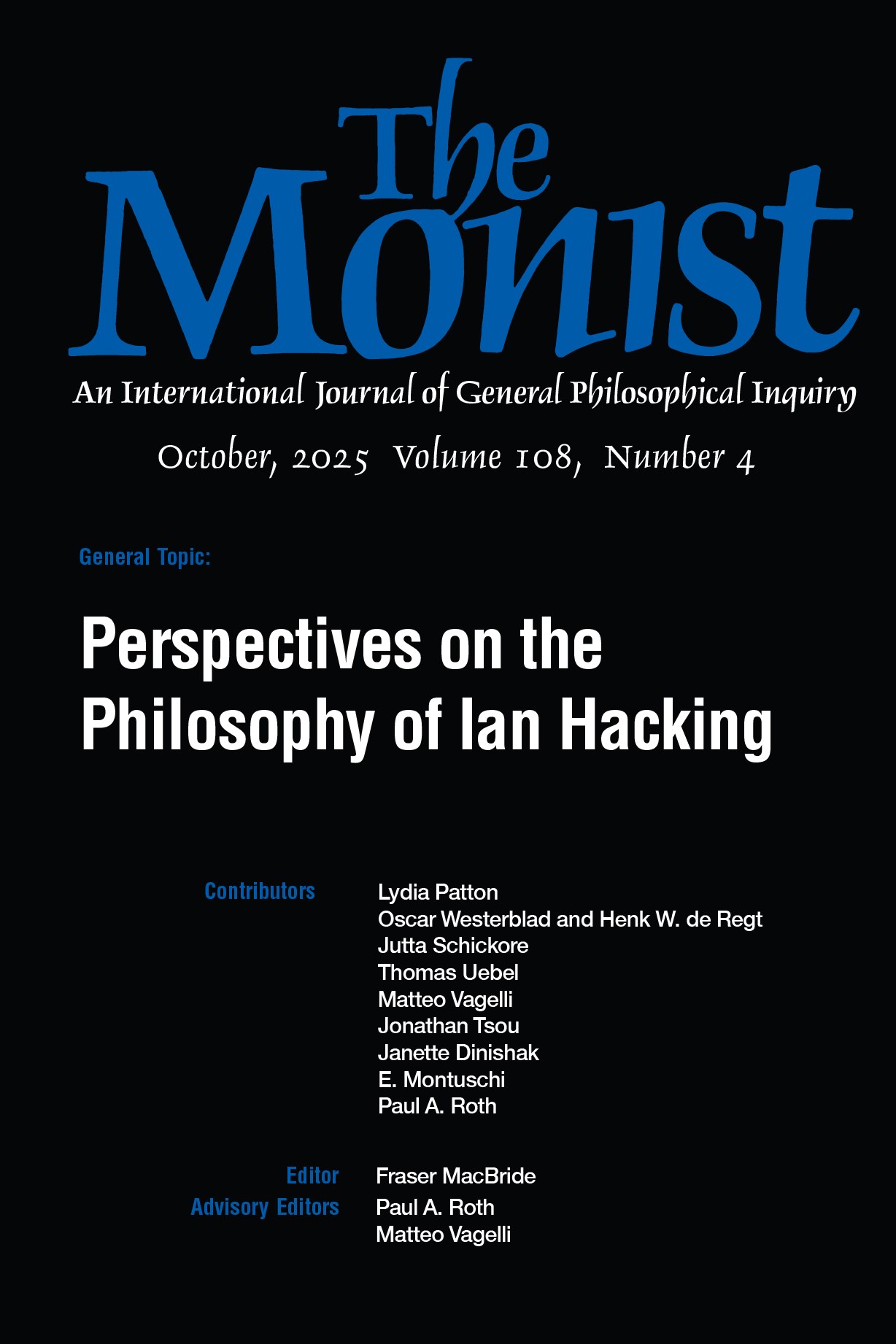
Perspectives on the Philosophy of Ian Hacking
October 2025, Volume 108, Number 4
Editor: Fraser McBride
Advisory Editors Paul A. Roth and Matteo Vagelli
Contents:
Does Entity Realism Hold Up? — Lydia Patton
Scientific Understanding Beyond Representing: Lessons from Ian Hacking’s Work — Oscar Westerblad and Henk W. de Regt
Philosophical Anthropology, Philosophical Technology, and Protocols of Intersubjectivity — Jutta Schickore
Language, Truth, and Hacking — Thomas Uebel
Hacking’s Styles of Reasoning Between Positivity and Truthfulness — Matteo Vagelli
Hacking on Looping Effects and Kinds of People — Jonathan Tsou
A Living Experiment in Concept Formation: Hacking on the Creation of a Language for Autistic Experience — Janette Dinishak
Objectivity at Rest, Or at Work? — Eleonora Montuschi
Hacking’s Historiography? — Paul A. Roth
CFP: *50 Years of The History of Sexuality*
Canadian Sociological Association Annual Conference, 2026
Gender & Sexuality Research Cluster
Organizers: Toby Anne Finlay, York University (tfinlay@yorku.ca); Chris Tatham, University of Guelph.
Dates
Call for Abstracts: December 3, 2025 – January 26, 2026
This year marks the 50th anniversary of the publication of Michel Foucault’s The History of Sexuality, Volume I—a work which has profoundly reshaped sociological, feminist, and queer understandings of sexuality, subjectivity, and power. Half a century later, Foucault’s reflections on biopower, discourse, and the production of sexual knowledge continue to animate critical thought, even as contemporary scholars confront new forms of regulation and resistance shaped by rampant global inequality and resurgent moral politics.
This session explores the incredible influence of The History of Sexuality on contemporary social theory and gender and sexuality studies. We invite papers that revisit and revise Foucault’s theorization of the biopolitics of life and death, along with presentations of empirical research on the historical construction and governance of sexuality. We welcome papers that extend Foucault’s genealogies of sexuality and biopolitics to contend with colonial and postcolonial contexts and the evolving technologies of “state racism.” Submissions may explore the biopolitics and necropolitics of life and death, homonationalism and queer sexual citizenship, the medicalization of sex, gender, and sexuality, the biomedical regulation of human reproduction, digital and biometric surveillance technologies, and the persistent possibilities of feminist, queer, and trans resistance.
As we reflect on Foucault’s legacy, we ask what “economy of bodies and pleasures” is made possible by our struggles against the dispositif of sexuality?
Chris Gavaler, Michel Foucault Is Not a Comics Scholar, The Patron Saint of Superheroes blog, August 21, 2023
[…]
Foucault is not a comics scholar. He did, however, provide one of the earliest analyses of the comics gutter:
“On the page of an illustrated book, we seldom pay attention to the small space running above the words and below the drawings, forever serving them as a common frontier. It is there, on these few millimeters of white, the calm sand of the page, that are established all the relations of designation, nomination, description, classification. […] The slender, colorless, neutral strip, which in Magritte’s drawing separates the text and the figure, must be seen as a crevasse — an uncertain, foggy region now dividing the pipe floating in its imagistic heaven from the mundane tramp of words marching in their successive line. Still it is too much to claim that there is a blank or lacuna: instead, it is an absence of space, an effacement of the “common place” between the signs of writing and the lines of the image.” ([This is not a pipe] 28-9)
To Foucault, the background color of the image is somehow both “colorless” and “sandy,” while, if “foggy” is visually connotative, also gray. The color (which Magritte painted on a canvas but may evoke the beige of a book page) is also conceptually “neutral” — what Foucault further calls “a neutral, limitless, unspecified space” (15), a space “possessing the neutrality, openness, and inert blankness of paper” (20) — recalling the racial paradox of racial Whiteness, which while literally “sandy” is also sometimes treated as conceptually “colorless” and so outside of race as Color. The “frontier” could be literal but is also as metaphorically suggestive as the “crevasse,” while “an absence of space” is pure abstraction and further paradox.
Foucault is not describing a comics gutter directly but a more general phenomenon that includes comics gutters as a subset. Magritte’s painting, he writes, “is as simple as a page borrowed from a botanical manual: a figure and the text that names it” (19). Foucault is describing any page that combines image and text. This more general approach is useful to comics theory, in part because comics theory has a tendency to describe and analyze gutters as if they were unique to comics, while also sometimes mistaking their merely conventional features for their definingly formal ones.
[…]
Chris Gavaler is a professor of English at W&L University, comics editor of Shenandoah magazine, and series editor of Bloomsbury Comics Studies. He has published seven books of comics-related scholarship: On the Origin of Superheroes (Iowa 2015), Superhero Comics (Bloomsbury 2017), Superhero Thought Experiments (with Nathaniel Goldberg, Iowa 2019), Revising Fiction, Fact, and Faith (with Nathaniel Goldberg, Routledge 2020), Creating Comics (with Leigh Ann Beavers, Bloomsbury 2021), The Comics Form (Bloomsbury 2022), and Revising Reality (with Nathaniel Goldberg, Bloomsbury 2024). His comics appear INKS, Studies in Comics, Sequentials, Ilanot Review, and other journals.

