Foucault News

News and resources on French thinker Michel Foucault (1926-1984)

stuartelden's avatarProgressive Geographies

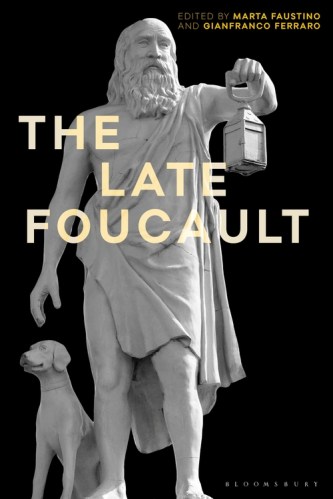
9781350134355Marta Faustino, Gianfranco Ferraro (eds.), The Late Foucault: Ethical and Political Questions– Bloomsbury, December 2020

Michel Foucault is one of the most important and controversial thinkers of the twentieth century and one of the leading figures in contemporary Western intellectual life and debate. The recent publication of his last lecture courses at the Collège de France (1981-1984), together with the short texts, essays, and interviews from the same period, have sparked new interest in his work, allowing for a new understanding of his philosophical trajectory and challenging several interpretations produced over the last few decades.

In this later phase of his thinking, Foucault deepens and expands the course of his preceding works on the genealogy of subjectivity, while at the same time adding a significant ethical and political dimension to it. His focus on the ancient ethics of care of the self and technologies of self-constitution during this period…

View original post 94 more words

Biopolitics and coronavirus: compilation (English, Portuguese and Spanish), Sexuality Policy Watch, 15 Apr 2020

A list of recent references

A Deleuzian Undercurrent to Foucault’s “What is an Author?” (part 1)
By Gordon Hull, New APPS: Art, Politics, Philosophy, Science, 27 February 2020

Toward the end of “What is an Author,” Foucault distinguishes between the “founder” and “initiator [instaurateur]” of a discourse. Galileo is the paradigmatic example of the former, and Marx of the latter. This is a puzzling distinction, to say the least. Let’s begin with the terminology: Although “founder [fondateur]” is common enough, as far as I know, Foucault doesn’t use “instaurateur” anywhere else. At least, a computer search of the text of Les Mots et Les Choses, Archéologie du Savoir and the pre-1975 Dits et Écrits didn’t turn up anything. Other things being equal, those seem like the most likely places to find it (if I’m missing uses of the term, I’d love to learn about them!). In particular, Order is a likely bet, because in the French seminar version (the one in D&E – see my initial thoughts here and Stuart Elden’s discussion of the textual history here) of “Author,” Foucault frames the text as partly responding to some leftover business from Order, where he admits that he both refuses to organize texts by authors, but also uses authorial names. The nominal “instauration” occurs a few times in these texts in a way that something more substantial than a blog post would need to investigate, but as far as I can tell, the term of art in “Author” – “instauration discursive,” naming somebody rather than an event – is specific to that lecture. So something is going on here!

read more

Farzaneh Haghighi, Heterotopic sites of knowledge production: Notes on an architectural analysis of lecture halls, Cultural Dynamics, February 14, 2020
DOI: 10.1177/0921374020907111

Abstract
This article is concerned with the spatial analysis of lecture theaters in higher education institutions and it draws upon two concepts developed by Michel Foucault during the 1970s—heterotopia and the will to know. By examining the heterotopic potentials of lecture theaters where knowledge is rendered visible and articulable, the article argues that the notion of heterotopia is more relevant than panopticon for spatial analysis of these spaces. Heterotopias are defined as counter-sites inhabited by the abnormal, and as such include two dimensions. First there is an exclusion of the abnormal that is aimed at the fabrication of specific subjectivities, students and a more productive workforce. Second, as counter-spaces, heterotopias maintain a hopeful aspect that is providing an opportunity for unsettling the social norms. To support this exploration, the article uses higher education as a transitional environment for the production of an employable workforce and specifically focuses on auditoriums in universities. Contemporary lecture halls originating from the early modern anatomy halls are introduced as a strong spatial context for exploring the spatialization of knowledge and the construction of selves as subjects who desire to know.

Keywords heterotopia, higher education, learning environments, lecture halls, will to know

mghamner's avataraffecognitive

In these days of quarantine against COVID-19, I frequently see essays on social media aimed against normal mandates of worker productivity. These reports are aimed at the privileged, that is, those who still have jobs and are working from home. As such, these anxious stabs against the perceived persistent expectation of professional productivity–resistance expressed in light of the anxiety of the world and about the virus itself–succinctly caption the neoliberal subject as self-entrepreneur. We neoliberal professionals are so deeply formed by the need to prove ourselves productive–increasingly productive and productive in increasingly new ways–that when psycho-social conditions render this mandate impossible, we turn our productivity to producing accounts of why we can’t be productive.

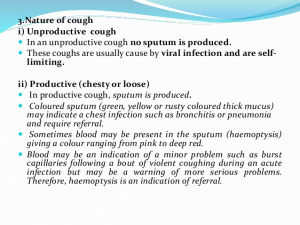
  Productivity and unproductivity appear in our news feeds about the virus in another, quite different way: the cough symptomatic of COVID-19 is what they call “unproductive.” If you have a productive cough, you probably…

View original post 1,468 more words

zjb's avatarjewish philosophy place

dance of deathdiscipline and punsihBergman

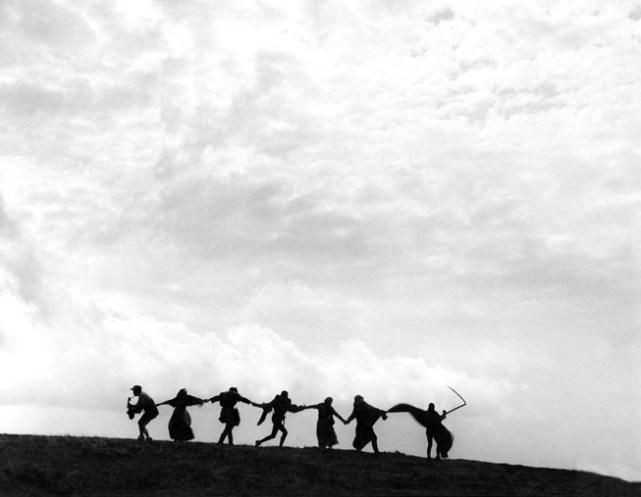
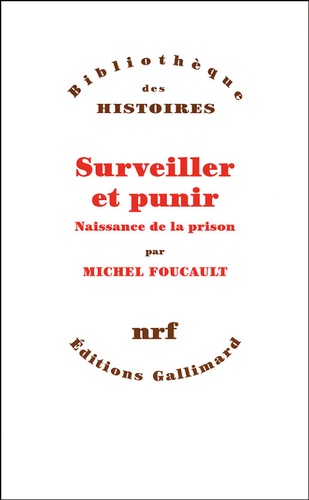
Throwing up my hands, re-reading after many years the famous chapter on Panopticism in Foucault’s classic study Discipline and Punish, first published in France in 1975. Readers today, responding to the Coronavirus, have already noted that plague quarantines and other practices of social control start his analysis. But what are we supposed to make of that analysis except to place it in historical context and parse out something of a confusion between history, literature, philosophy, policy, and politics?

We could start first by submitting Foucault’s thesis to the judgment of historians and intellectual historians while understanding, at the same time, as non-historians, that it might, in fact, be unarguably true that it was, indeed, the plague that “gave rise to disciplinary projects” and “disciplined society” (p.198). Fitting the timeline that determines so much of Foucault’s analysis about disciplinary politics here and elsewhere are the great pandemics of the 17

View original post 1,101 more words

Free Foucault
Foucault for the rest of us

Free Foucault est une plateforme décentralisée et non-censurable donnant accès à une version restaurée des enregistrements – ainsi débarassés de leurs grésillements – des cours dispensés par Michel Foucault au Collège de France entre 1972 et 1984.

On s’étonnera peut-être qu’il ait fallu attendre 50 ans pour que les enregistrements des cours de « l’auteur en sciences humaines le plus cité au monde » – hier encore réservés aux amis du Collège de France – soient enfin restaurés et rendus à l’écoute des nigauds ordinaires. On s’étonnera aussi qu’il ait fallu, pour cela, l’intervention d’un pangolin. Ne s’en étonneront en vérité que les fonctionnaires médiocres, nuls, imbéciles, pelliculaires, ridicules, râpés, pauvres, impuissants de la république.


Cette plateforme repose sur la technologie IPFS. Chaque enregistrement y est découpé en une multiplicité de petits fragments eux-mêmes éparpillés à travers une multiplicité de serveurs. Cette fragmentation-dispersion de la donnée, rendant inassignable « l’hébergeur » de ces enregistrements, constitue la meilleure défense contre la censure.

Nous pensons aussi que Michel Foucault aurait apprécié le procédé : c’est, après tout, par ce type de dispersion que s’organise l’art de n’être pas tellement gouverné. Sa voix se dupliquera désormais de serveurs en serveurs, de fragments en fragments, comme une épave heureuse. Nous espérons ainsi que cette technologie permettra à la voix de Michel Foucault de vivre éternellement.


Pour des raisons techniques nous publierons un cours par semaine. Actualité oblige, nous inaugurons le lancement de cette plateforme avec la publication de « Naissance de la bio-politique ». Dans ce cours, dispensé entre 1978 et 1979, Michel Foucault analysait « la manière dont on a essayé, depuis le XVIIIe siècle, de rationaliser les problèmes posés à la pratique gouvernementale par les phénomènes propres à un ensemble de vivants constitués en population : santé, hygiène, natalité, longévité, races… »

Crying for Repression: Populist and Democratic Biopolitics in Times of COVID-19.
by Karsten Schubert • Critical Legal Thinking— Law and the Political —1, April 2020

We live in very Foucauldian times, as the many think-pieces published on biopolitics and COVID-19 show. Yet what is remarkable—biopolitically—about the current situation has gone largely unnoticed: We are witnessing a new form of biopolitics today that could be termed populist biopolitics. Awareness of this populist biopolitics helps illuminate what is needed today: democratic biopolitics.

Traditional analyses of biopolitics focus on state and medical institutions and how they govern the behavior of individuals and the people. These analyses carve out the (potentially) repressive effects of such biopower on individuals and communities. Governing in the time of an epidemic is biopolitics in its purest form—it is no surprise that Agamben (Foucault et al. 2020) interpreted the severe measures that the state implemented in terms of their repressive effects.

[…]

read more

Kyungmee Lee (2020) Openness and innovation in online higher education: a historical review of the two discourses, Open Learning: The Journal of Open, Distance and e-Learning, Published online: 14 Jan 2020

DOI: 10.1080/02680513.2020.1713737

ABSTRACT
This article tackles a critical question:‘to what extent can online higher education (HE) be open and innovative at the same time?’ To provide a more comprehensive answer to the question, the author takes up a notion of discourse and situates the analysis in a specific online HE setting: Athabasca University (AU), Canada. In this article, the author first unpacks how the openness and innovation discourses originally emerged in AU throughout its early years and how the original conceptualisation of the two and their relationships have shifted in more recent years. The results demonstrate that there has been an increasing level of discontinuity between the conceptualisation of openness and innovation as independent principles and the operationalisation of the two, incompatible in course design practice at AU. Being fully open to diverse student groups and being technologically innovative by integrating a state-of-the-art technology cannot be achieved in a single online course. In addition, being pedagogically innovative by increasing interactivity among students while maintaining the same level of flexibility provided by the independent study model seems very challenging. This article also discusses the institutional conditions that make teaching-oriented innovation more difficult to achieve.

KEYWORDS: Distance education, open university, learning designer, discourse analysis, text analysis, Foucault