
Foucault News

News and resources on French thinker Michel Foucault (1926-1984)

Willmott, Kyle. 2020. From self-government to government of the self: Fiscal subjectivity, Indigenous governance and the politics of transparency. Critical Social Policy, 40(3): 471-491.

DOI: 10.1177/0261018319857169

Abstract
In 2013 the Canadian Parliament passed the First Nations Financial Transparency Act (FNFTA). Subject to immediate controversy, the law generated legal and political resistance from Indigenous leaders and scholars. The law requires First Nations governments to post audited consolidated financial statements and the salaries of chiefs and councillors online for public consumption. The article traces the use of transparency as a technology of government to examine how disclosure acts as an organizing mechanism of commensuration and moral scrutiny. The article then shows how transparency and disclosure was directed to rescale critique of the state away from the Canadian government, and toward First Nations governments. The article concludes by examining how bureaucrats envisioned how Indigenous peoples would use transparency and disclosure to reform their political conducts into that of a calculating taxpayer citizenship.

Keywords
audit, settler colonialism, First Nations, governmentality, indigeneity
The Biopolitics of Covid-19
Seán Brennan on April 2, 2020, Slugger O’Toole
(news and opinion blog)

[…]
Increasingly, states will have to choose between the ‘bare life’ theories of Italian theorist Giorgio Agamben or the ‘social care’ theories of French philosopher Michel Foucault. Agamben argues, left to their own devices, states will provide minimal social security and maximum disciplinary powers. In contrast, Foucault argues, if a population becomes aware of its power, it can radically transform a state through the everyday administration of social care so people can better take control of life or death issues. In support, the Italian theorist, Roberto Esposito suggests, Foucault’s aim for social care offers new opportunities to immunise communities from a raft of pandemics, from the economic to the medical.
[…]

On non-fascist life with Natasha Lennard, Politics, Theory, Other, Tribune Magazine
Podcast interview by Alex Doherty

Natasha Lennard joins me to discuss her book, Being Numerous: Essays on Non-Fascist Life. We spoke about whether or not Donald Trump and the movement that has coalesced around him ought to be characterised as fascist, we also talked about the contributions of Wilhelm Reich, Michel Foucault, and other figures in the anti-psychiatry movement to theorising fascism. We discussed the legitimacy and history of anti-fascist violence and its treatment by the media, and finally we spoke about Natasha’s writing on suicide and how the act of suicide brings into question capitalism’s positing of the idea of the sovereign individual.

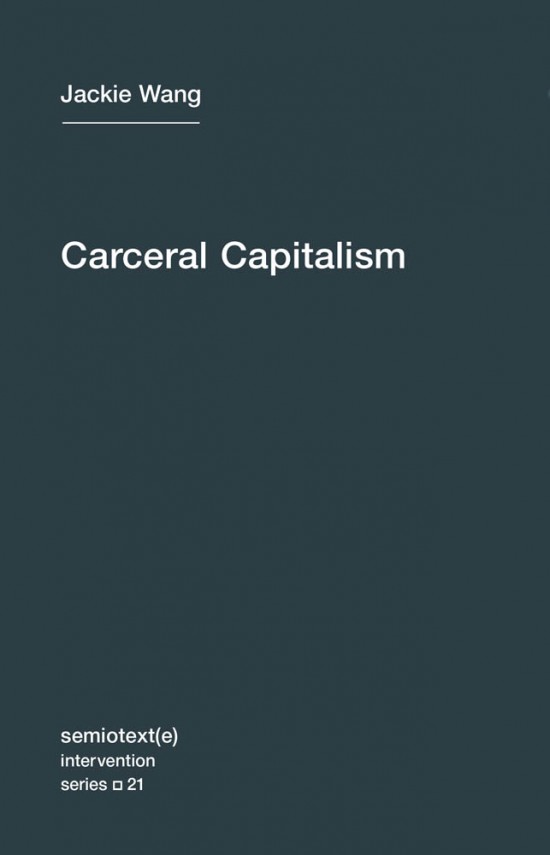
Jackie Wang, Carceral Capitalism, Semiotext(e) / Intervention Series, 2018

Summary
Essays on the contemporary continuum of incarceration: the biopolitics of juvenile delinquency, predatory policing, the political economy of fees and fines, and algorithmic policing.

What we see happening in Ferguson and other cities around the country is not the creation of livable spaces, but the creation of living hells. When people are trapped in a cycle of debt it also can affect their subjectivity and how they temporally inhabit the world by making it difficult for them to imagine and plan for the future. What psychic toll does this have on residents? How does it feel to be routinely dehumanized and exploited by the police?
—from Carceral Capitalism

In this collection of essays in Semiotext(e)’s Intervention series, Jackie Wang examines the contemporary incarceration techniques that have emerged since the 1990s. The essays illustrate various aspects of the carceral continuum, including the biopolitics of juvenile delinquency, predatory policing, the political economy of fees and fines, cybernetic governance, and algorithmic policing. Included in this volume is Wang’s influential critique of liberal anti-racist politics, “Against Innocence,” as well as essays on RoboCop, techno-policing, and the aesthetic problem of making invisible forms of power legible.

Wang shows that the new racial capitalism begins with parasitic governance and predatory lending that extends credit only to dispossess later. Predatory lending has a decidedly spatial character and exists in many forms, including subprime mortgage loans, student loans for sham for-profit colleges, car loans, rent-to-own scams, payday loans, and bail bond loans. Parasitic governance, Wang argues, operates through five primary techniques: financial states of exception, automation, extraction and looting, confinement, and gratuitous violence. While these techniques of governance often involve physical confinement and the state-sanctioned execution of black Americans, new carceral modes have blurred the distinction between the inside and outside of prison. As technologies of control are perfected, carcerality tends to bleed into society.

Foucault on Puppet Theaters, Flaubert and the Modern Imagination 1 March 2020

Michel Foucault and Salvador Dalí visit an exhibition in the “Museum of Imagination” displaying various versions of the “Temptation of Saint Anthony”…

Why filming police violence has done nothing to stop it
Ethan Zuckerman, MIT Technology Review
June 3, 2020

After years of police body cams and bystander cellphone video, it’s clear that evidentiary images on their own don’t bring about change. What’s missing is power.

The murder of George Floyd by Minneapolis police officers was captured on video, not once but half a dozen times.

[…]

Much of what we think about surveillance comes from the French philosopher Michel Foucault. Foucault examined the ideas of the English reformer Jeremy Bentham, who proposed a prison—the panopticon or Inspection-House—in which every cell was observable from a central watchtower. The possibility that someone might be watching, Bentham believed, would be enough to prevent bad behavior by prisoners. Foucault observed that this knowledge of being watched forces us to police ourselves; our act of disciplining ourselves as if we were always under observation, more than the threat of corporal punishment, is the primary mechanism of “political technology” and power in modern society.
[…]

It turns out that images matter, but so does power. Bentham’s panopticon works because the warden of the prison has the power to punish you if he witnesses your misbehavior. But Bentham’s other hope for the panopticon—that the behavior of the warden would be transparent and evaluated by all who saw him—has never come to pass. Over 10 years, from 2005 to 2014, only 48 officers were charged with murder or manslaughter for use of lethal force, though more than 1,000 people a year are killed by police in the United States.
[…]

Chow, D., Bracci, E.
Neoliberalism, accounting, and the transformation of subjectivities in social work: A study on the implementation of personal budgets
(2020) Financial Accountability and Management, 36 (2), pp. 151-170.

DOI: 10.1111/faam.12231

Abstract
This study examines, through the case of Personal Budgets in England, the role of accounting in transforming the subjectivities of social workers through a Foucauldian lens. The findings show how accounting can reshape the subjectivities of social workers serving as intermediaries responsible for the frontline implementation of neoliberal reforms. It does so through an empirical demonstration on how accounting harnesses an individual’s autonomy and responsibility to nurture “productive” relationships between citizens and the state. Furthermore, the findings also highlight the vulnerability of social workers’ subjectivities from the installation of an accounting infrastructure with multiple capabilities. This study contributes to a more nuanced understanding of how neoliberal policies transform subjectivities in social work and adds to the literature on accounting’s biopolitical role in the reconstitution of such subjectivities. It also addresses the relative neglect of studies examining the role of accounting in neoliberal transformations of social work that, despite its significance for an ageing society and its attendant consequences for public finances, receives far less attention than healthcare reforms. © 2020 John Wiley & Sons Ltd

Author Keywords
accounting; Foucault; neoliberal; social work; subjectivity

Jordan Jochim, Aristotle, Tyranny, and the Small-Souled Subject (2020) Political Theory, 48 (2), pp. 169-191.
https://doi.org/10.1177/0090591719851802

Abstract
Political theorists converge in identifying modern techniques of domination as habit-formative and psychologically invasive, in contrast to earlier, more blatantly coercive forms of repression. Putting Aristotle on tyranny in conversation with Michel Foucault on subject formation, this article argues for continuity across the pre- and postmodern divide. Through a close reading of the “three heads of tyranny” in Politics 5.11 (1314a13-29)—those being the tyrant’s efforts to form subjects who (1) have small thoughts (2) are distrustful of one another, and (3) are incapable of action—I argue that central to Aristotle’s account of tyrannical domination is how tyrants cultivate the ethical vice of “small-souledness” (Nicomachean Ethics 1123b7), thus producing subjects with humbled desires for a proportionate distribution of political power. This article deepens our appreciation of the social and psychological registers of Aristotle’s theorization of domination and gives reasons for continuing to take Aristotle’s insights into tyranny seriously today. © The Author(s) 2019.

Author Keywords
Aristotle; desire; domination; Foucault; justice; tyranny

Laughlin, C.
Transcendental meditation’s tipping point: the allure of celebrity on the American spiritual marketplace
(2020) Popular Communication, 18 (2), pp. 108-120.

DOI: 10.1080/15405702.2019.1634810

Abstract
Since 2005, the film director David Lynch has been the most visible and vocal proponent for the spread of Transcendental Meditation (TM), a practice brought to the United States by Maharishi Mahesh Yogi in the late 1950s. This paper analyzes the public-facing operations: website, books, and celebrity benefit concerts, through which the David Lynch Foundation interacts with its American audience and charts two moves that the David Lynch Foundation has made in order to market TM. First, I assert that they have positioned TM as a technique rather than a spiritual practice and I understand this through Foucault’s theory of techné. Second, I argue that they have leveraged the auracular quality of celebrity as a modality through which to brand TM for the spiritual consumer. Ultimately, I made claims on how these moves represent a shift in how American spiritual seekers are understood and marketed to in popular culture. © 2019, © 2019 Taylor & Francis Group, LLC.

Author Keywords
branding; celebrity; marketing; religion; spirituality; Transcendental meditation

Meneses, K.C.
L’Arche, a Radical Reversal: Fearless Dialogue between Foucault and Vanier with the New Testament
(2020) Journal of Disability and Religion, 24 (2), pp. 151-173.

DOI: 10.1080/23312521.2020.1718571

Abstract
Today many of us are unaware and perhaps even deny the fact that our ideas, decisions, and choices are driven by fear whether obvious or subtle. In his seminal book, Madness and Civilization: A History of Insanity in an Age of Reason, Michel Foucault examines the archeology of madness wherein he illuminates how fear of the other has come to shape society’s moral compass toward persons adjudged as lamentable, engendering certain social constructs that have given shape to what he called the mutation of confinement. In other words, Foucault highlights the historical and cultural turning points that gave rise to the societal belief that necessitates the establishment of confinement. To “cage” people who are different from the composite identity position held by those unmarked by stigmatized identifiers—those who fall outside the “norm”—is perceived as a meaningful exercise toward the greater good and security of society. Juxtaposed with society’s “civilized” attitude toward persons regarded as lamentable and thus worthy of confinement is Jean Vanier’s understanding of the value and dignity of each person—a radical conviction that gave rise to L’Arche, a revolutionary attempt to dismantle the walls of fear within, between, and among us.

In what follows, Jean Vanier’s understanding of fear will be comparatively analyzed in relation to the dominant societal notion of fear in order to draw attention to the practical ways in which these ideas have consequences in L’Arche and society as a whole. Underlying this attempt is the contention that Vanier’s notion of fear entails a radical reversal of the “civilized norm” of confinement. This article proceeds in three parts and will offer a theological reflection which could serve as a catalyst for a world that remains enveloped with fear of the other, particularly those deemed different and deviant. © 2020, © 2020 Taylor & Francis Group, LLC.

Author Keywords
Deafness; disability; new testament; social inclusion; vulnerability