Foucault News

News and resources on French thinker Michel Foucault (1926-1984)

Tivadar Vervoort, “Nous Sommes Tous Néokantiens”: Foucault, Lukács, and the Critique of Social Forms, HOPOS: The Journal of the International Society for the History of Philosophy of Science 2025 15:1, 209-241

Abstract
In his introduction to Canguilhem’s Le normal et le pathologique, Michel Foucault claims that the “question of Enlightenment” has been taken up differently in the German and French philosophical traditions. Nevertheless, Foucault signals a “correspondence” between the works of Georg Lukács and the Frankfurt School, on the one hand, and the French epistemologists (including himself), on the other. In this article, I deepen this correspondence by assessing Foucault’s and Lukács’s respective relations to the neo-Kantian problem of the form and content of knowledge. In theorizing the problem of reification, Lukács mobilizes Emil Lask’s understanding of the concept “form of objectivity.” He starts from Lask’s unification of the form and content of knowledge by suggesting that the commodity form emerges as the form of objectivity that constitutes both objects and subjects of knowledge in capitalist societies. I show that Foucault’s use of the notions episteme, historical a priori, and regime of truth shares the neo-Kantian concern with of the content of knowledge. By arguing that Foucault’s critique of the philosophical anthropology underlying Marxism does not apply to Lukács’s neo-Kantianism, I make room for considering both of their philosophical strategies as a “critique of social forms.”

Tuomo Tiisala, Power and Freedom in the Space of Reasons Elaborating Foucault’s Pragmatism, Routledge, 2024

Open access

Description
This book argues that the received view of the distinction between freedom and power must be rejected because it rests on an untenable account of the discursive cognition that endows individuals with the capacity for autonomy and self-governed rationality.

In liberal and Kantian approaches alike, the autonomous subject is a self-standing starting point whose freedom is constrained by relations of power only contingently because they are external to the subject’s constitution. Thus, the received view defines the distinction between freedom and power as a dichotomy. Michel Foucault is arguably the most important critic of that dichotomy. However, it is widely agreed that Foucault falls short of justifying the alternative view he develops, where power and freedom are essentially entangled instead. The book fills out the gap by investigating the social preconditions of discursive cognition. Drawing on pragmatist-inferentialist resources from the philosophy of language (Wittgenstein, Sellars, and Brandom), it presents a new interpretation of Foucault’s philosophy that is unified by his overlooked idea of “the archaeology of knowledge.” As a result, the book not only explains why and how power and freedom must be entangled but also what it means ethically to pursue and gain autonomy with respect to one’s own understanding.

Power and Freedom in the Space of Reasons will appeal to scholars and advanced students working in social and political philosophy, critical theory, ethics, philosophy of language, and the history of 20th-century philosophy.

The Open Access version of this book, available at http://www.taylorfrancis.com, has been made available under a Creative Commons Attribution-Non Commercial (CC-BY-NC) 4.0 license.

Any third party material in this book is not included in the OA Creative Commons license, unless indicated otherwise in a credit line to the material. Please direct any permissions enquiries to the original rightsholder.

This research was funded in whole or in part by the Austrian Science Fund (FWF) [10.55776/COE3]. For open access purposes, the author has applied a CC BY-NC public copyright license to any author-accepted manuscript version arising from this submission.

Published with the support of the Austrian Science Fund (FWF): 10.55776/PUB1157

Winsky, N. and Onusseit, C. (2025), The Rickshaw as In-Between: Heterotopias and Social Participation in Aging. Population, Space and Place, 31: e70068.
https://doi.org/10.1002/psp.70068

ABSTRACT
As the population aged 65 and older significantly increases, understanding the dynamics within nursing homes becomes crucial. Residents often face loneliness upon entering these facilities, experiencing a disconnection from their previous lives and parts of society. The initiative “Cycling Without Age” fosters reconnection through volunteer-led rickshaw rides. This study conceptualizes the rickshaw as an in-between space, expanding on Foucault’s notion of heterotopia. By examining the interplay between nursing homes as heterotopic sites and the rickshaw as an intermediary space, this study draws on 24 qualitative interviews with volunteers, highlighting how the interactions between pilots and passengers enhance social engagement and challenge existing societal structures such as spatial exclusion. Our theoretical-conceptual contribution engages in a ludic dialogue between Foucault’s concept of heterotopias and our empirical material, speculating on the role that the rickshaw, as a mobile, micro-scale in-between space, can play between the heterotopic nursing home and the non-heterotopic rest of space.

Call for papers: Psychoanalysis in Transition: New Queer Approaches in 21st-Century France
Northeast Modern Language Association Convention
2026-03-05 to 2026-03-08
Gannon University
Erie, Pennsylvania. USA

Since the 1970s, LGBTQ+ Francophone authors and scholars have produced an expansive critique of psychoanalytic practices and thought. Despite their differing views, Guy Hocquenghem, Michel Foucault, Monique Wittig, Didier Eribon, Sam Bourcier, and Paul B. Preciado have all underscored the normative tendencies of psychoanalysis (particularly in its structuralist Lacanian tradition) and its complicity in enforcing the regime of sexual difference. “We urgently need clinical practice to transition,” Preciado urged the École de la cause freudienne in 2019. “This cannot happen without a revolutionary mutation in psychoanalysis, and a critical challenge of its patriarchal-colonial presuppositions.”

Around that time, a loose coalition of French psychoanalysts advocating for queer, feminist, and postcolonial approaches emerged. Fabrice Bourlez, for example, proposes reconciling psychoanalysis and queer theory through the concept of the “minor clinic,” which he argues is better suited to plural, non-normative subjectivities. Similarly, Thamy Ayouch advocates for the “hybridization” of psychoanalysis through queer, postcolonial, and decolonial discourses to move away from the medicalization of minor subjectivities. Laurie Laufer draws on second-wave feminism, Foucauldian critique, and LGBTQ+ activism to promote an “emancipation of psychoanalysis” through the politicisation of its praxis.

Can this new paradigm effectively combat queerphobic and transphobic tendencies within the French psychoanalytic establishment? Can psychoanalysis truly “transition,” or should queer thought, as Eribon suggests, “turn its back on psychoanalysis.”

This panel welcomes papers that explore emerging queer and intersectional approaches to psychoanalysis in France, from theoretical, literary, clinical and activist perspectives.

We welcome papers related, but not limited, to the following topics:

– Queer legacies of 1970s critiques of structuralist psychoanalysis
– Psychoanalysis and debates around same-sex unions and non-normative kinship in 21st-century France
– Transphobia and psychoanalysis: (de)pathologising discourses and practices
– Queer, feminist and decolonial approaches to psychoanalysis today
– Queer transatlantic dialogues between France and the U.S.
– The future of psychoanalysis in France
– How queer/trans Francophone authors use, reject or rework psychoanalytic theories

Please submit a title, abstract (200-250 words) and a short biography through the NeMLA portal by Sept 30th 2025. Papers may be presented in English or French.

For any questions, feel free to email Benoit Loiseau : bl4115@nyu.edu

Maddalena Cerrato, Michel Foucault’s Practical Philosophy. A Critique of Subjectivation Processes, SUNY Series in Contemporary French Thought, De Gruyter Brill, 2025

Interview with author on New Books site, 2 September 2025

About this book
Offers a wholistic approach to Michel Foucault’s thought introducing the idea of practical philosophy as an original interpretative framework.

Michel Foucault’s thought, Maddalena Cerrato writes, may be understood as practical philosophy. In this perspective, political analysis, philosophy of history, epistemology, and ethics appear as necessarily cast together in a philosophical project that aims to rethink freedom and emancipation from domination of all kinds. The idea of practical philosophy accounts for Foucault’s specific approach to the object, as well as to the task of philosophy, and it identifies the perspective that led him to consider the question of subjectivity as the guiding thread of his work. Overall, Cerrato shows the deep consistency underlying Foucault’s reflection and the substantial coherence of his philosophical itinerary, setting aside all the conventional interpretations that pivot on the idea that his thought underwent a radical “turn” from the political engagement of the question of power toward an ethical retrieval of the question of subjectivity.

Maddalena Cerrato is Assistant Professor of Critical Theory in the Department of International Affairs at the Bush School of Government and Public Service, Texas A&M University.

Allsobrook, C. (2025). The Structural Violence of Imperial Trusteeship in Postcolonial Governmentality. African Studies, 1–20.
https://doi.org/10.1080/00020184.2025.2536036

ABSTRACT
The article considers how structural violence in African polities has displaced sovereign agency and responsibility for its harmful effects by extending imperial practices of trusteeship in postcolonial governmentality. It explains how, with liberation, decolonisation and political independence, imperial practices of indirect rule and informal empire – legitimised with reference to trusteeship – have resulted in practices of domination, which are instantiated in structural violence. Trusteeship formally displaces the direct agency of coercive imperial colonisation, first, by disguising it as protection and development assistance, and second, by setting up proxy domestic political agents to stand in for absent imperial sovereignty. I analyse these dynamics with reference to Foucault’s account of governmentality and his theories of power to explain African complicity with empire. I then review and critique Mbembe’s analysis of necropolitics in the postcolony to explain a weakness in his account, which leads him to misconstrue these conflicts in terms of sovereign power, thereby misrepresenting the agency of the consequent African victims of postcolonial structural violence, without pointing to any way out. To correct this misunderstanding, and to identify a basis for emancipatory agency in Africa, I turn to Biko’s critical analysis of Black governmentality under apartheid, which points forward to postcolonial empowerment.

KEYWORDS:
structural violence, postcolonial governmentality, necropolitics, biopower, disciplinary power, trusteeship

CALL FOR PAPERS
The twenty-fourth annual meeting of the
Foucault Circle
University of Notre Dame, South Bend, Indiana
April 3-5, 2026

We seek submissions for papers on any aspect of Foucault’s work, as well as studies, critiques, and applications of Foucauldian thinking. This conference also celebrates the centennial of Foucault’s birth, so we also welcome biographical retrospectives and papers that set an agenda for the next century of Foucauldian thought.

Paper submissions require an abstract of no more than 750 words. All submissions should be formatted as a “.doc” or “.docx” attachment, prepared for anonymous review, and sent via email to the attention of program committee chair Anna Ahlgren (anna.ahlgren@specped.su.se) on or before November 1, 2025. Indicate “Foucault Circle submission” in the subject heading. Program decisions will be announced in December.

We expect that the conference will begin Friday afternoon and will conclude around lunchtime on Sunday. Presenters will have approximately 40 minutes for paper presentation and discussion combined; papers should be a maximum of 3500 words (20-25 minutes reading time). Please note that conference presentations will be in person and in English.

Logistical information about lodging, transportation, and other arrangements will be available after the program has been announced.

For more information about the Foucault Circle, please see our website
http://www.foucaultcircle.org
or contact our Coordinator, Brad Elliott Stone
brad.stone@lmu.edu

Mu, Y., & Vásquez, C. (2025). “Waste-sorting is the new fashion”: waste, power, and the semiotic landscape. Social Semiotics, 1–22.
https://doi.org/10.1080/10350330.2025.2543085

ABSTRACT
This study examines how the Chinese government uses multiple semiotic resources, in both online and offline contexts, to (re)shape citizens’ behaviors and construct knowledge about wastesorting under the recent national waste-sorting policy. Informed by Foucault’s notion of governmentality, we show how governmental strategies operate at the level of both material artifacts (e.g. rubbish bins in one city) as well as in national media reports (i.e. news articles from state-sponsored news websites). By integrating geosemiotics with multimodal critical discourse analysis, we demonstrate how rubbish bins visually, interactively, and spatially construct wastesorting as “fashionable” public behavior. At the same time, online news media reports complement these artifacts by highlighting certain elements of the new bins (e.g. CCTV cameras and card-swiping systems) and by capturing strategic moments of residents using the bins, thus supporting and promoting actions that are aligned with national policy.

KEYWORDS:

Semiotic landscape, Foucauldian power, multimodality, waste

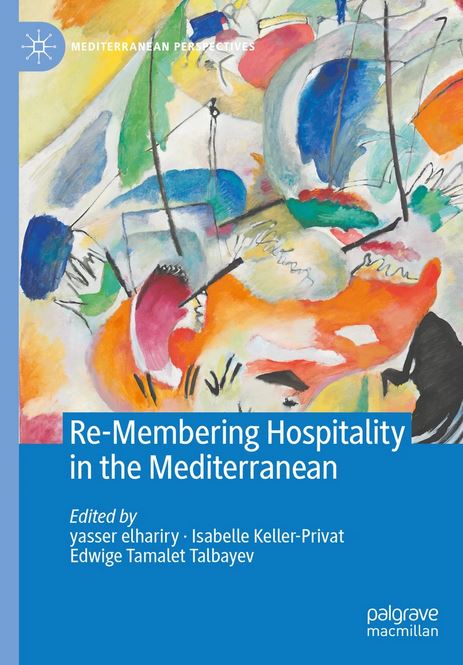
Le Blanc, G. (2025). Let Live or Let Die: Stranger to the Nation. Translated by Kaitlin Sager. In: Elhariry, Y., Keller-Privat, I., Tamalet Talbayev, E. (eds) Re-Membering Hospitality in the Mediterranean. Mediterranean Perspectives. Palgrave Macmillan, Cham.
https://doi.org/10.1007/978-3-031-84043-2_9

Abstract
This chapter explores Michel Foucault’s analysis of biopolitics and its application to contemporary migration and refugee issues. Drawing on Foucault’s analogy between the madman and the foreigner, the study examines how modern migrants embody the status of “border-being,” as they are simultaneously included and excluded from society. The notion of hospitality is criticized as a mechanism that facilitates exclusion under the guise of care, with refugee camps serving as the instruments of segregation and invisibility. The text extends Foucault’s concepts, arguing that biopolitics today bifurcates toward the management of productive lives and the relegation of unproductive ones—especially migrants—to the margins. The chapter highlights the racialization of migrants, which moves from biological to cultural “neo-racism,” wherein cultural differences sustain exclusion. An interrogation of the role of humanitarian governance likens the process to managing “undesirables,” and identifies parallels between historical mechanisms of exclusion and contemporary migration management, such as surveillance and detention. The analysis critiques the re-legitimization of the nation-state through the biopolitical distinction between nationals and foreigners, underpinned by disciplinary technologies. Finally, the study reflects on the symbolic invisibility of migrant spaces, like camps and jungles, as heterotopias that spatialize exclusion and reinforce national identities. The conclusion calls for a reconsideration of the intersection of biopolitics, national borders, and social governance in the face of global migration challenges.

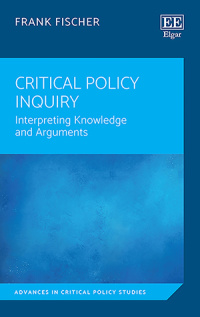
Frank Fischer, Critical Policy Inquiry. Interpreting Knowledge and Arguments. Edward Elgar Publishing, 2024

Presenting a critical approach to the study of public policy and policy analysis, this book offers a postpositivist foundation that challenges empiricist and technocratic approaches to policy studies. Critical Policy Inquiry draws on Jürgen Habermas’s work on communicative action and deliberation, Michel Foucault’s writings on discourse, and the epistemics of social constructivism.

Frank Fischer advances deliberative policy argumentation and the logic of practical reason, exploring how this can be used as a framework for interpreting the interaction of normative and empirical arguments in policy politics. He applies this approach to a diverse range of topics, including technocracy, policy expertise, deliberative democratic politics, interpretive policy analysis, post-truth, climate and Covid denialism, participatory governance, local and tacit knowledge, and the role of emotion in policy controversies. The book concludes with a look to transformative policy learning and the future of the field.

Connecting social and political theory with empirical research, this book is essential for students and scholars of public policy, politics, governance, public administration, and regulatory policy. Its practical, real-world applications will also be of value to policymakers worldwide.