Foucault News

News and resources on French thinker Michel Foucault (1926-1984)

Mark G. E. Kelly, Foucault and the Politics of Language Today
Telos Summer 2020 vol. 2020 no. 191 47-68

doi: 10.3817/0620191047

From Editorial summary – Special Issue Telos 191 (Summer 2020): Going Viral
By David Pan · Monday, June 15, 2020

We face such danger with every viral outbreak that underlines the unpredictability of our biological as well as digital lives. The flows of social media are nothing if not capricious, and Mark Kelly analyzes the politics of representation in the controversies about racism in the United States by developing Michel Foucault’s claim that language’s effects are unpredictable. Because both discriminatory language and the attempts to ban such language might have unintended consequences, battles between the right and left about representation and politically correct language do not lead in any clear directions. Though Trump uses a great deal of anti-immigrant rhetoric, the real policy effects have been minimal. Similarly, left-wing attempts to suppress discriminatory language and include more racial diversity in movies and television do not clearly improve the situation of the disadvantaged. The focus on representation may even provide a cover for the reproduction of existing power structures. As this issue of Telos goes to press, protests in reaction to George Floyd’s death continue to spread into an outbreak of rioting and looting, and Kelly’s analysis indicates that the use of violence to oppose hate speech may be counterproductive. As he suggests with regard to left-wing violence, “the danger lurks that it is precisely anti-fascism that is effectively tactically cohering with its supposed enemy in driving its growth as a kind of autoimmune response by the left.”

Excerpt
We find ourselves today in a conjuncture where the use of language has become an object of political concern to a perhaps unprecedented extent, or at least in unprecedented ways. In particular, the words used to refer to individuals and to groups, down to the use of pronouns, have come into intense question, as have the ways in which groups are represented in the media and in positions of power. In light of this situation, I want to bring the analytical tools of a thinker peculiarly concerned with the nexus of language and politics, Michel Foucault, to bear in order…

Problematic statues and ‘race war’
by Blake Smith, Washington Examiner, June 18, 2020

[…]
What we are in the habit of calling “identity politics,” and particularly political movements based on (somewhat contradictory) appeals to racial solidarity and anti-racism, depend on a “certain way of making historical knowledge work within political struggle.” So argued Foucault in Society Must Be Defended, a 1976 book based on a lecture series about “political historicism.” Many on the American Right hold Foucault, along with his French postmodernist contemporaries, partly responsible for the emergence of identity politics. It would be more accurate to say that Foucault was one of the first, and sharpest, analysts of the way identity-based political movements appeal to history and ignite what he called “race war.”

read more

Pandemic Conundrum: To Control Or To Trust? – Analysis, Eurasia Review June 27, 2020 By Yasmine Wong

The COVID-19 pandemic has blurred the boundaries between private and public life. Government efforts to discourage socially irresponsible behaviour have emboldened individuals to report, shame, and berate individuals who flout rules. This rise in mutual surveillance erodes trust in the community, and in social capital.
[…]

The Panopticon aptly describes lived reality during the pandemic, where the encouragement of mutual surveillance cultivates a panoptic social environment. COVID-19 may prompt suspicion and distrust; this forms part of our ‘behavioural immune system’. It consists of behavioural and psychological adaptations we undergo to reduce the likelihood of contact with the virus.
[…]

Judith Butler, The Force of Nonviolence. The Ethical in the Political, Verso, February 2020

Towards a form of aggressive nonviolence.

Judith Butler’s new book shows how an ethic of nonviolence must be connected to a broader political struggle for social equality. Further, it argues that nonviolence is often misunderstood as a passive practice that emanates from a calm region of the soul, or as an individualist ethical relation to existing forms of power. But, in fact, nonviolence is an ethical position found in the midst of the political field. An aggressive form of nonviolence accepts that hostility is part of our psychic constitution, but values ambivalence as a way of checking the conversion of aggression into violence. One contemporary challenge to a politics of nonviolence points out that there is a difference of opinion on whatcounts as violence and nonviolence. The distinction between them can be mobilised in the service of ratifying the state’s monopoly on violence.

Considering nonviolence as an ethical problem within a political philosophy requires a critique of individualism as well as an understanding of the psychosocial dimensions of violence. Butler draws upon Foucault, Fanon, Freud, and Benjamin to consider how the interdiction against violence fails to include lives regarded as ungrievable. By considering how ‘racial phantasms’ inform justifications of state and administrative violence, Butler tracks how violence is often attributed to those who are most severely exposed to its lethal effects. The struggle for nonviolence is found in movements for social transformation that reframe the grievability of lives in light of social equality and whose ethical claims follow from an insight into the interdependency of life as the basis of social and political equality.

Purdy, N., Hunter, J., Totton, L.
Examining the legacy of the Warnock Report in Northern Ireland: A Foucauldian genealogical approach
(2020) British Educational Research Journal, 46 (3), pp. 706-723.

DOI: 10.1002/berj.3604

Abstract
Over 40 years after the publication of the Report of the Committee of Enquiry into the Education of Handicapped Children and Young People, commonly referred to as the Warnock Report, this article uniquely considers its legacy in the context of Northern Ireland. The article adopts a Foucauldian genealogical approach to consider first the specific context of the ‘emergence’ or ‘origins’ of the Warnock Report in the 1970s, highlighting competing political forces and the positioning of the report at the very end of the age of post-war welfarism. The approach details the key elements of the Warnock Report itself, and then charts the resulting development of SEN policy in Northern Ireland, culminating in the faltering process of reform which began in 2006 and has been partially completed but which has recently been halted by the collapse of the power-sharing Executive and the suspension of the Northern Ireland Assembly in January 2017. The legacy of the Warnock Report is critically examined, identifying the main positive contributions of the report but also acknowledging the enduring challenges set against a complex current financial and political context. Finally, rather than leaving Warnock completely behind, a case is made for a fresh, detailed, context-specific reading of this seminal report. © 2020 British Educational Research Association

Author Keywords
Foucault; inclusion; special educational needs; Warnock

Wynne, L.
Empowerment and the individualisation of resistance: A Foucauldian perspective on Theatre of the Oppressed
(2020) Critical Social Policy, 40 (3), pp. 331-349.

DOI: 10.1177/0261018319839309

Abstract
Waterloo, in Sydney, Australia, is a neighbourhood currently dominated by a large public housing estate. The estate is to be redeveloped to be a ‘socially mixed’ community largely comprised of private residents. Many current residents of Waterloo have organised in opposition to the redevelopment. At the same time, government and community development agencies have implemented a number of capacity building and consultation programmes for residents, including a theatre performance. Programmes of empowerment are increasingly used by the state and the third sector to encourage disadvantaged or marginalised citizens to ‘take responsibility’ for their own lives. In this article, I examine a performance coordinated by a community theatre group that uses the ‘Theatre of the Oppressed’ format, intended to allow participants to identify ways to overthrow the forces that oppress them. I use a Foucauldian conception of power, subjectivity and resistance to critically examine the performance in its context. I explore ways in which the Theatre of the Oppressed format was applied (perhaps unintentionally) in such a way that it reinforced a vision of the situation as immutable and unchangeable, placing the onus on residents to transform their own actions to deliver change. Such framing makes any effort at resistance appear absurd, and is anything but empowering for residents. © The Author(s) 2019.

Author Keywords
Boal; Foucault; housing; renewal; resistance; Theatre of the Oppressed

Index Keywords
capacity building, community development, empowerment, individualism, neighborhood, redevelopment; adult, article, Australia, capacity building, conception, consultation, empowerment, government, housing, human, individualization, neighborhood, resident, responsibility, vision; Australia, New South Wales, Sydney [New South Wales]

stuartelden's avatarProgressive Geographies

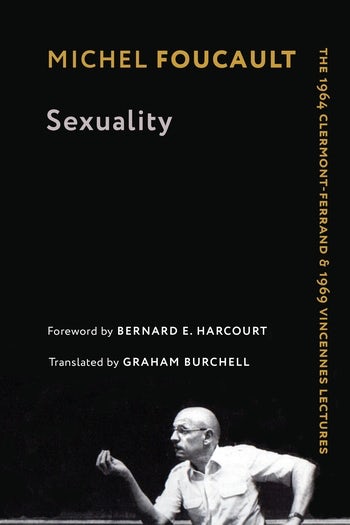
While work on The Early Foucault is just about complete, though stuck until I can get back to Paris, I’m today beginning work on ‘The Archaeology of Foucault’, the fourth and final book in this sequence. It fills in the missing years of 1962-1969, providing an intellectual history of Foucault’s entire career. During this time Foucault taught at Clermont-Ferrand, Tunis and Vincennes, and in Brazil, and while his books Birth of the ClinicThe Order of Things and The Archaeology of Knowledge are the best known outputs from this period, he did a lot of other things too. His work on literature, including the book on Raymond Roussel and lots of short pieces, and on art is also significant, and some of his lecture materials are in the process of being published. Some materials have been published already, and quite a lot is being edited. There is also a…

View original post 241 more words

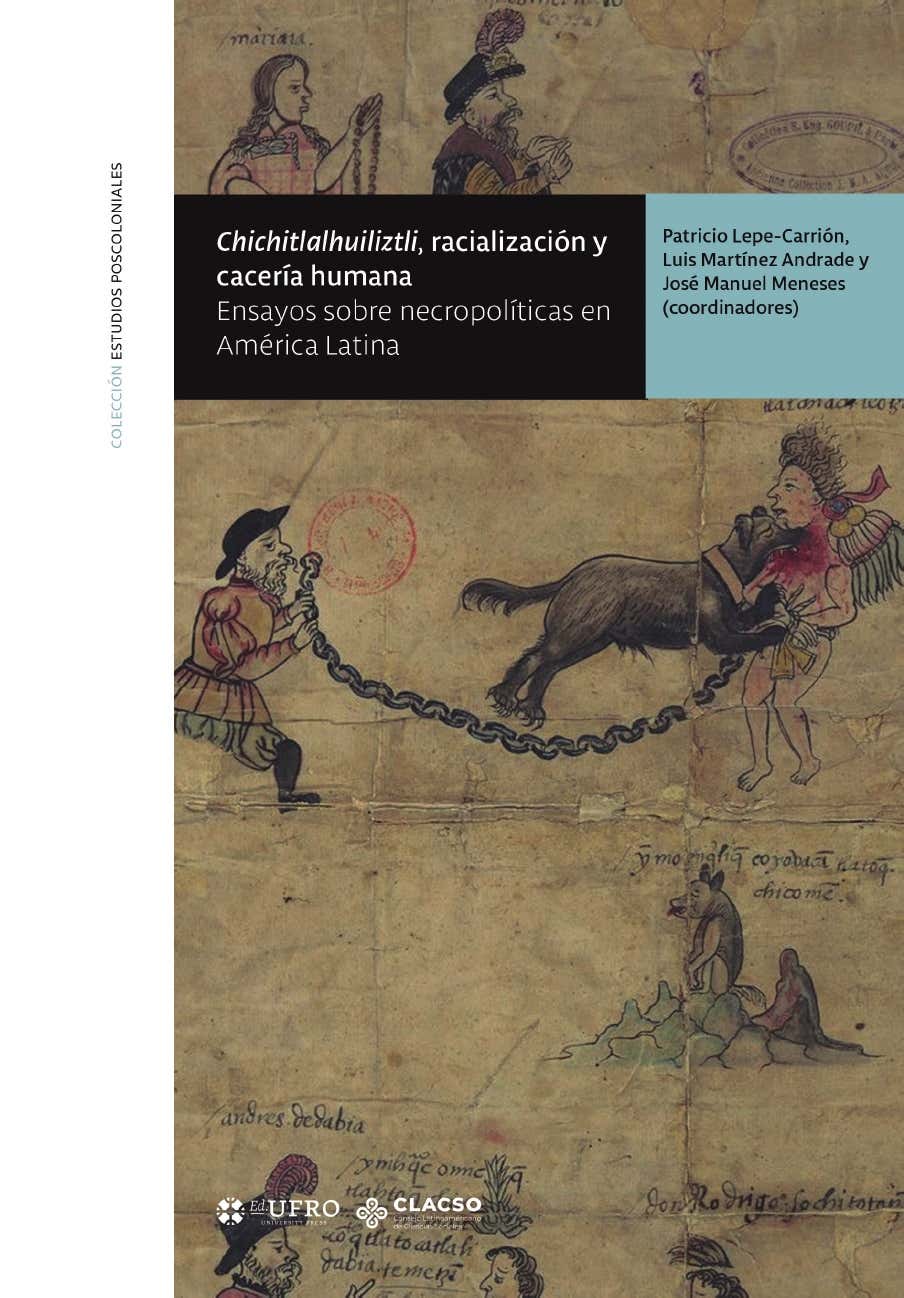
Daniel Nemser, Infrastructures of Race. Concentration and Biopolitics in Colonial Mexico, University of Texas Press, 2017.

See also radio interview with Daniel Nemser

Description
Many scholars believe that the modern concentration camp was born during the Cuban war for independence when Spanish authorities ordered civilians living in rural areas to report to the nearest city with a garrison of Spanish troops. But the practice of spatial concentration—gathering people and things in specific ways, at specific places, and for specific purposes—has a history in Latin America that reaches back to the conquest. In this paradigm-setting book, Daniel Nemser argues that concentration projects, often tied to urbanization, laid an enduring, material groundwork, or infrastructure, for the emergence and consolidation of new forms of racial identity and theories of race.

Infrastructures of Race traces the use of concentration as a technique for colonial governance by examining four case studies from Mexico under Spanish rule: centralized towns, disciplinary institutions, segregated neighborhoods, and general collections. Nemser shows how the colonial state used concentration in its attempts to build a new spatial and social order, and he explains why the technique flourished in the colonies. Although the designs for concentration were sometimes contested and short-lived, Nemser demonstrates that they provided a material foundation for ongoing processes of racialization. This finding, which challenges conventional histories of race and mestizaje (racial mixing), promises to deepen our understanding of the way race emerges from spatial politics and techniques of population management.

Extract

Race and Biopolitics
Racialization as the politics of death cannot be detached from the biopolitics of life. According to the historical analysis that Michel Foucault first began to lay out in the mid-1970s, political modernity is characterized by the emergence of a new form of power, distinct from the sovereign power that had been dominant up to that point: “The right of sovereignty was the right to take life or let live. And then this new right is established: the right to make live and to let die.” Sovereign power, “the right to take life or let live,” is exercised by the sword. Faced with a given transgression of his law, the sovereign can decide to kill or not to kill, that is, to spare the life of the perpetrator. This is the full extent of the sovereign’s power—a negative power not over life but strictly over death. But beginning in the sixteenth century, at the “threshold of modernity,” a new form of power, borrowing and expanding on the techniques of the Christian pastorate, began to operate in conjunction with the emergence of modern capitalism. It did so first at the level of the individual, using discipline to optimize the body’s forces and integrate them effectively and efficiently into various processes of production, and later at the level of the population, intervening in abstract biological processes and rhythms in order to foster life and maximize vitality. In contrast to “taking life,” the negative capacity of sovereignty, the shift to “making live” captures the productive orientation of biopolitical forms of modern power.

But the rise of an affirmative biopolitics, deeply invested in the production of life, does not mean that the negative power of sovereignty over death declines, disappears, or becomes entirely obsolete. Although his depiction is conceptually enigmatic, Foucault suggests that this historical shift is marked by “overlappings, interactions, and echoes.” The biopolitical state never stops drawing on the techniques of sovereignty. This, importantly, is where racism comes into play. Knowledge is for cutting, as Foucault remarks elsewhere, and racism operates precisely in this way, by “introducing a break into the domain of life that is under power’s control: the break between what must live and what must die.” The ancient logic of warfare, by which one side confronts and must destroy another in order to survive in battle, is transformed into a new logic of biopower that operates on the basis of racial hierarchy, linking the elimination of inferior races with the improvement, optimization, and purifi cation of life in its most general sense. Death is deployed, in other words, in the interest of life: “massacres have become vital.”

Journal Interlitterara
Call for papers
Pandemics in European Literature (20th – 21st ce.): Theory and Practice

Guest Editors:
Nikoleta Zampaki, PhD Candidate of Modern Greek Philology, Department of Philology, National and Kapodistrian University of Athens, Greece,
e-mail: nikzamp@phil.uoa.gr, nikoletazampaki@hotmail.com

Peggy Karpouzou, Assistant Professor of Theory of Literature, Department of Philology, National and Kapodistrian University of Athens, Greece,
e-mail: pkarpouzou@phil.uoa.gr

Paper proposals are invited for a special issue on the topic of Pandemics in European Literature (20th – 21st ce.): Theory and Practice and they might explore the topic of pandemics in the European Literature. Over time disease outbreaks have ravaged humanity, sometimes changing the course of history. From Homer’s Iliad which starts with a plague that strikes the Greek army at Troy there are numerous examples of contagion fables (plagues, epidemics, infectious diseases, etc.) into the European canon, among the most outstanding are certainly The Decameron, written by Renaissance humanist Giovanni Boccaccio in the late 1340s and early 1350s, Daniel Defoe’s A Journal of the Plague Year (1722), Mary Shelley’s, The Last Man (1826), Jack London’s The Scarlet Plague (1912) and Albert Camus, La Peste (1947). We will highlight the notion of pandemics, thought as a very large epidemic, through variable European literary texts, the impact on the people and their culture as well as the psychological dimensions that caused to humanity.

Papers might address questions like the following:

• Which are the representations of pandemics in the Εuropean Literary tradition (20th-21st ce.) and genres like science fiction, apocalyptic fiction, climate fiction, traveling writing? How can pandemics be represented through the different local literary traditions? • How did European Literature and Culture contribute to quarantine time? How did authors continue to write through the time of pandemics?
• How can society and individuals live through the sense of isolation and loss of community? How is their identity shaped and which is the social impact of pandemics? Which is the role of biopolitics and necropolitics in this direction?
• How about the impact of Ethics into Pandemics and vice versa?
• How can self-quarantine create an opportunity for increased engagement with environmental humanities and animal studies?
• May we investigate any nexus between pandemics and feminism or ecofeminism?
• Which is the relationship of pandemics and post humanities? Should we consider different representations of meta-bodies into today’s literary texts?
• Could be found any scientific discourses of pandemics into European Literature?
• May we contribute any ideas arising from our research to the current pandemic literature and what concerns may be pushed to the background now that pandemics dominate the headlines, but are still relevant and happening at the same time?
• How could pandemics construct or establish variable narrations today? May we consider a new pandemic theory as a new sub-form at the era of Anthropocene?

Through this call we focus on a variety of pandemic dimensions in the European Literature and we aim to provide broader scientific and cultural context for it. To cover the global scope of the topic, we seek contributions from around the world. Interested authors should send an abstract of no more than 300 words, a brief bio (c. 200 words) and 3-5 key words at both Guest Editors’ emails by the 31st of January 2021. Authors will be informed about whether their proposals have been accepted after the deadline. The call targets an academic and professional audience and all papers should follow the journal’s guidelines of submissions and policy. Please follow the guidelines for the submission and the articles’ word count should be approximately 6.000 words. Please do not hesitate to contact us with any queries you might have.

Michel Foucault: Penal Theories and Institutions: Lectures at the Collège de France, 1971-1972
Review by Michael Maidan, Phenomenological Reviews, Sunday June 7th, 2020

Open access

Penal Theories and Institutions contains the lectures delivered by Foucault in his second-year tenure at the College de France (1971-2). It is also the last volume of this series, concluding a publication cycle of close to twenty years. The publication of Foucault’s lectures started mid-way with the 1976 course and then proceeded sideways, preventing us from grasping the development of his thought during the last fifteen years of his life.

Foucault did not prepare his lectures for publication, and their initial publication in 1997 was initially considered a transgression to Foucault’s last wishes for his posthumous writings not to be published. However, the proliferation of unauthorized versions of the lectures, based on transcriptions from audio recordings of unequal quality, decided the family and friends to allow their publication.

read more