
Foucault News

News and resources on French thinker Michel Foucault (1926-1984)

Andrew Durbin Hervé Guibert: Living Without a Vaccine, New York Review of Books, June 12, 2020,

Adapted from the introduction to a new edition of Hervé Guibert’s To the Friend Who Did Not Save My Life, published by Semiotext(e) / Native Agents and MIT Press.

In 1988 the French novelist and photographer Hervé Guibert was diagnosed with HIV. Two years later, Éditions Gallimard published To the Friend Who Did Not Save My Life, a stark autobiographical book about his desperate effort to gain access to an experimental “AIDS vaccine.” To the Friend made Guibert both wealthy and famous, especially after an appearance on the French TV show Apostrophes.
[…]

The central and most arresting portrait is of Guibert’s mentor, the philosopher Muzil, based on Michel Foucault, whose death the writer repeatedly returns to in the first half of the novel.

Guibert’s gripping revelation, in the character of Muzil, of Foucault’s final days, which had been kept secret by the privacy-obsessed French press, caused a stir in the country, abetting the author’s rise to fame late in his young life. Muzil is cavalier about the virus when the first reports of a “gay cancer” arrive in Europe, and later he even admires its “revolutionary effects.”
[…]

Disease is conspiratorial, never egalitarian, always crawling along social fissures. We know that many wealthy Americans have largely escaped Covid-19, while poorer people have not. They have still had to risk their lives for “essential” work—in Amazon fulfillment centers and factory farms and at call centers and in retail. But then American memorial culture tends to flatten the differences between populations in order to make the deaths of a few more “relatable” to the many, and to obscure the social critique that the disease often follows systemic inequality.
[…]

Michel Foucault – Portrait With Flower Crown Mask

Philosophy Mask
Designed and Sold by isstgeschichte

Michel Foucault – Portrait With Flower Crown: This is probably one of my favorite works that I have ever made. It’s one of the most important philosophy figures, decorated with a beautiful flower crown, making it a fantastic philosophy meme.

For every non-medical mask sold, TeePublic will donate one medical grade mask to Direct Relief.

Meekes, J.F., Buda, D.M., de Roo, G.
Socio-spatial complexity in leisure development
(2020) Annals of Tourism Research, 80, art. no. 102814,

DOI: 10.1016/j.annals.2019.102814

Abstract
Connections between socio-spatial complexity in a social domain and Foucauldian discourse analysis gain momentum in the wider social sciences, but have been marginalized in leisure and tourism research. We combine, explore and expand theories of socio-spatial complexity with leisure-led regional development and Foucauldian discourse analysis, for the first time in tourism studies. Based on interviews with 37 local leisure and tourism stakeholders in the Dutch province of Fryslân, we analyze how discourses condition leisure development. Through Foucauldian analysis we uncover powerful discourses behind interactions that drive socio-spatial complexity. Values and meanings in these discourses condition a region’s tourism and leisure development. Established discourses structure which tourism and leisure developments are pursued, and shifts in these discourses trigger structural societal changes. © 2019

Author Keywords
Discourse analysis; Foucault; Fryslân, the Netherlands; Socio-spatial complexity; Spatial planning; Tourism and leisure-led regional development

Index Keywords
complexity, development discourse, leisure industry, regional development, spatial planning, stakeholder, tourism development; Netherlands

Mark G. E. Kelly, Foucault and the Politics of Language Today
Telos Summer 2020 vol. 2020 no. 191 47-68

doi: 10.3817/0620191047

From Editorial summary – Special Issue Telos 191 (Summer 2020): Going Viral
By David Pan · Monday, June 15, 2020

We face such danger with every viral outbreak that underlines the unpredictability of our biological as well as digital lives. The flows of social media are nothing if not capricious, and Mark Kelly analyzes the politics of representation in the controversies about racism in the United States by developing Michel Foucault’s claim that language’s effects are unpredictable. Because both discriminatory language and the attempts to ban such language might have unintended consequences, battles between the right and left about representation and politically correct language do not lead in any clear directions. Though Trump uses a great deal of anti-immigrant rhetoric, the real policy effects have been minimal. Similarly, left-wing attempts to suppress discriminatory language and include more racial diversity in movies and television do not clearly improve the situation of the disadvantaged. The focus on representation may even provide a cover for the reproduction of existing power structures. As this issue of Telos goes to press, protests in reaction to George Floyd’s death continue to spread into an outbreak of rioting and looting, and Kelly’s analysis indicates that the use of violence to oppose hate speech may be counterproductive. As he suggests with regard to left-wing violence, “the danger lurks that it is precisely anti-fascism that is effectively tactically cohering with its supposed enemy in driving its growth as a kind of autoimmune response by the left.”

Excerpt
We find ourselves today in a conjuncture where the use of language has become an object of political concern to a perhaps unprecedented extent, or at least in unprecedented ways. In particular, the words used to refer to individuals and to groups, down to the use of pronouns, have come into intense question, as have the ways in which groups are represented in the media and in positions of power. In light of this situation, I want to bring the analytical tools of a thinker peculiarly concerned with the nexus of language and politics, Michel Foucault, to bear in order…

Problematic statues and ‘race war’
by Blake Smith, Washington Examiner, June 18, 2020

[…]
What we are in the habit of calling “identity politics,” and particularly political movements based on (somewhat contradictory) appeals to racial solidarity and anti-racism, depend on a “certain way of making historical knowledge work within political struggle.” So argued Foucault in Society Must Be Defended, a 1976 book based on a lecture series about “political historicism.” Many on the American Right hold Foucault, along with his French postmodernist contemporaries, partly responsible for the emergence of identity politics. It would be more accurate to say that Foucault was one of the first, and sharpest, analysts of the way identity-based political movements appeal to history and ignite what he called “race war.”

read more

Pandemic Conundrum: To Control Or To Trust? – Analysis, Eurasia Review June 27, 2020 By Yasmine Wong

The COVID-19 pandemic has blurred the boundaries between private and public life. Government efforts to discourage socially irresponsible behaviour have emboldened individuals to report, shame, and berate individuals who flout rules. This rise in mutual surveillance erodes trust in the community, and in social capital.
[…]

The Panopticon aptly describes lived reality during the pandemic, where the encouragement of mutual surveillance cultivates a panoptic social environment. COVID-19 may prompt suspicion and distrust; this forms part of our ‘behavioural immune system’. It consists of behavioural and psychological adaptations we undergo to reduce the likelihood of contact with the virus.
[…]

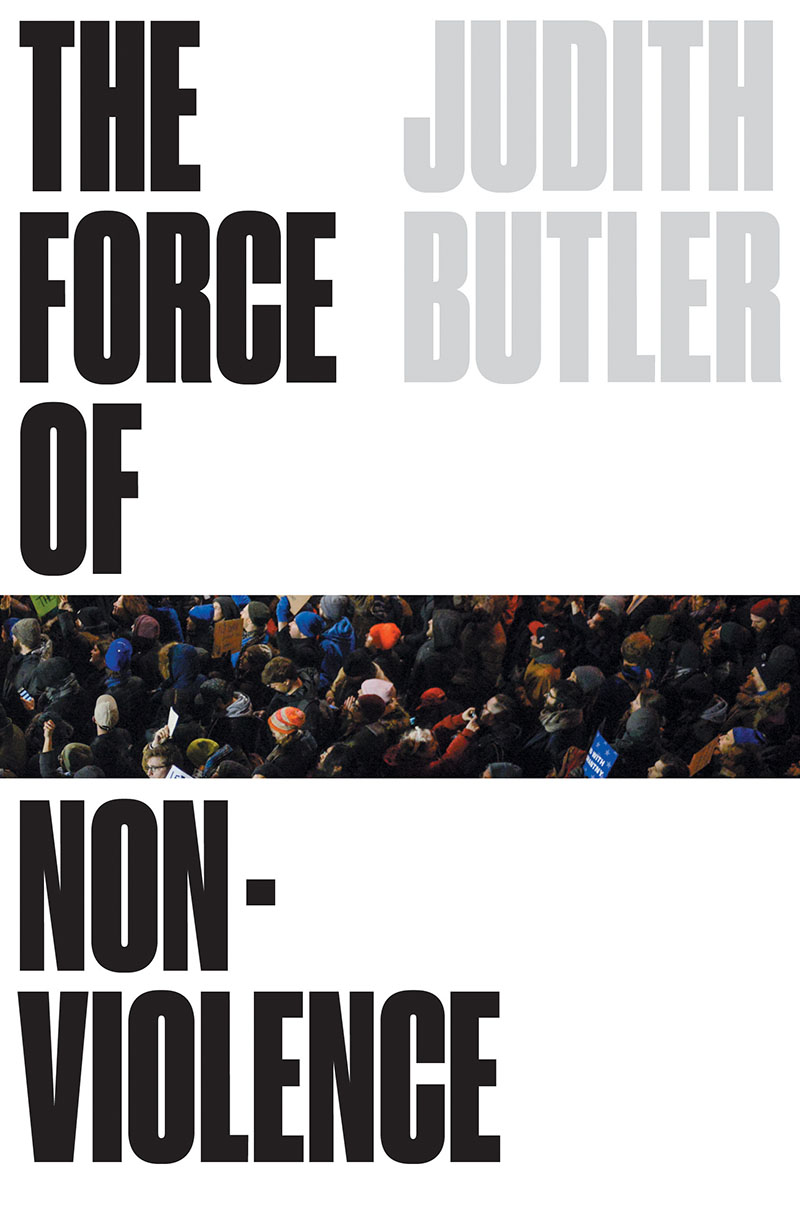
Judith Butler, The Force of Nonviolence. The Ethical in the Political, Verso, February 2020

Towards a form of aggressive nonviolence.

Judith Butler’s new book shows how an ethic of nonviolence must be connected to a broader political struggle for social equality. Further, it argues that nonviolence is often misunderstood as a passive practice that emanates from a calm region of the soul, or as an individualist ethical relation to existing forms of power. But, in fact, nonviolence is an ethical position found in the midst of the political field. An aggressive form of nonviolence accepts that hostility is part of our psychic constitution, but values ambivalence as a way of checking the conversion of aggression into violence. One contemporary challenge to a politics of nonviolence points out that there is a difference of opinion on whatcounts as violence and nonviolence. The distinction between them can be mobilised in the service of ratifying the state’s monopoly on violence.

Considering nonviolence as an ethical problem within a political philosophy requires a critique of individualism as well as an understanding of the psychosocial dimensions of violence. Butler draws upon Foucault, Fanon, Freud, and Benjamin to consider how the interdiction against violence fails to include lives regarded as ungrievable. By considering how ‘racial phantasms’ inform justifications of state and administrative violence, Butler tracks how violence is often attributed to those who are most severely exposed to its lethal effects. The struggle for nonviolence is found in movements for social transformation that reframe the grievability of lives in light of social equality and whose ethical claims follow from an insight into the interdependency of life as the basis of social and political equality.

Purdy, N., Hunter, J., Totton, L.
Examining the legacy of the Warnock Report in Northern Ireland: A Foucauldian genealogical approach
(2020) British Educational Research Journal, 46 (3), pp. 706-723.

DOI: 10.1002/berj.3604

Abstract
Over 40 years after the publication of the Report of the Committee of Enquiry into the Education of Handicapped Children and Young People, commonly referred to as the Warnock Report, this article uniquely considers its legacy in the context of Northern Ireland. The article adopts a Foucauldian genealogical approach to consider first the specific context of the ‘emergence’ or ‘origins’ of the Warnock Report in the 1970s, highlighting competing political forces and the positioning of the report at the very end of the age of post-war welfarism. The approach details the key elements of the Warnock Report itself, and then charts the resulting development of SEN policy in Northern Ireland, culminating in the faltering process of reform which began in 2006 and has been partially completed but which has recently been halted by the collapse of the power-sharing Executive and the suspension of the Northern Ireland Assembly in January 2017. The legacy of the Warnock Report is critically examined, identifying the main positive contributions of the report but also acknowledging the enduring challenges set against a complex current financial and political context. Finally, rather than leaving Warnock completely behind, a case is made for a fresh, detailed, context-specific reading of this seminal report. © 2020 British Educational Research Association

Author Keywords
Foucault; inclusion; special educational needs; Warnock

Wynne, L.
Empowerment and the individualisation of resistance: A Foucauldian perspective on Theatre of the Oppressed
(2020) Critical Social Policy, 40 (3), pp. 331-349.

DOI: 10.1177/0261018319839309

Abstract
Waterloo, in Sydney, Australia, is a neighbourhood currently dominated by a large public housing estate. The estate is to be redeveloped to be a ‘socially mixed’ community largely comprised of private residents. Many current residents of Waterloo have organised in opposition to the redevelopment. At the same time, government and community development agencies have implemented a number of capacity building and consultation programmes for residents, including a theatre performance. Programmes of empowerment are increasingly used by the state and the third sector to encourage disadvantaged or marginalised citizens to ‘take responsibility’ for their own lives. In this article, I examine a performance coordinated by a community theatre group that uses the ‘Theatre of the Oppressed’ format, intended to allow participants to identify ways to overthrow the forces that oppress them. I use a Foucauldian conception of power, subjectivity and resistance to critically examine the performance in its context. I explore ways in which the Theatre of the Oppressed format was applied (perhaps unintentionally) in such a way that it reinforced a vision of the situation as immutable and unchangeable, placing the onus on residents to transform their own actions to deliver change. Such framing makes any effort at resistance appear absurd, and is anything but empowering for residents. © The Author(s) 2019.

Author Keywords
Boal; Foucault; housing; renewal; resistance; Theatre of the Oppressed

Index Keywords
capacity building, community development, empowerment, individualism, neighborhood, redevelopment; adult, article, Australia, capacity building, conception, consultation, empowerment, government, housing, human, individualization, neighborhood, resident, responsibility, vision; Australia, New South Wales, Sydney [New South Wales]

stuartelden's avatarProgressive Geographies

While work on The Early Foucault is just about complete, though stuck until I can get back to Paris, I’m today beginning work on ‘The Archaeology of Foucault’, the fourth and final book in this sequence. It fills in the missing years of 1962-1969, providing an intellectual history of Foucault’s entire career. During this time Foucault taught at Clermont-Ferrand, Tunis and Vincennes, and in Brazil, and while his books Birth of the ClinicThe Order of Things and The Archaeology of Knowledge are the best known outputs from this period, he did a lot of other things too. His work on literature, including the book on Raymond Roussel and lots of short pieces, and on art is also significant, and some of his lecture materials are in the process of being published. Some materials have been published already, and quite a lot is being edited. There is also a…

View original post 241 more words