Foucault News

News and resources on French thinker Michel Foucault (1926-1984)

As the 6th edition of the Workshop on Historical Epistemology – Historical Epistemology and Epistemology of History – could not take place last spring, we have rescheduled it in a new format. We are thus very glad to invite you to the Month of Historical Epistemology! During November 2020, we will hold weekly meetings on Zoom to discuss different aspects of the relationships between historical epistemology and epistemology of history. 

Sessions will take place every Wednesday in November, from 17h to 19h (Paris time). Since Wednesday, November 11 is a holiday in France, that week’s session will be an exception and take place on Thursday, November 12, 17h-19h. 

In order to participate and receive relevant information concerning the weekly discussions and meeting links, please register at the following link: https://forms.gle/bzTgrrzu5XGkUaND7

The abstracts of the talks and all Workshop updates can be found at https://episthist.hypotheses.org/

6th International Workshop on Historical Epistemology
Historical Epistemology and Epistemology of History


November 4, 12, 18, 25  2020 ; 17h-19h (Paris time) on Zoom

Inscription required:
https://forms.gle/bzTgrrzu5XGkUaND7

The workshop is organized by Épistémologie historique. Research Network 
on the History and the Methods of Historical Epistemology
https://episthist.hypotheses.org/

With the support of École doctorale de Philosophie – ED 280 (Paris 1)
IHPST (UMR 8590, Paris 1/CNRS)
PhiCO/ISJPS (UMR 8103, Paris 1)

République des Savoirs (USR 3608, ENS/ Collège de France/CNRS)
École doctorale Lettres, Arts, Sciences humaines et sociales –
ED 540 (ENS) – EUR Translitteræ (PSL)
Maison d’Auguste Comte

**
Wednesday, November 4
17h-19h (Paris time)

Paul Roth (University of California, Santa Cruz), Hacking’s Historiography?

Matteo Vagelli (Université Paris 1 Pantheon-Sorbonne), Does historical
epistemology need a theory of history?

Lucie Fabry (École normale supérieure & Centre Marc Bloch), Epistemologies
of history with a Bachelardian background: Granger, Althusser and
Foucault.

**
Thursday, November 12
17h-19h (Paris time)

Stefanos Geroulanos (New York University), Concepts, Metaphors, and
Historical Epistemology.

Annagiulia Canesso (Università degli Studi di Padova, Istituto Italiano
per gli Studi Filosofici di Napoli), L’histoire errante de la vérité entre
Gaston Bachelard et Georges Canguilhem.

Alberto Vianelli (Università degli Studi dell’Insubria), Marc Bloch, un
historien entre métier et méthode.

**
Wednesday, November 18
17h-19h (Paris time)

Perrine Simon-Nahum (CNRS, École normale supérieure), Le jeune Aron : de
la biologie à la philosophie de l’histoire.

Massimiliano Simons (Ghent University), History as engagement: The
Historical Epistemology of Raymond Aron.

Iván Moya Diez (Université Paris 1 Panthéon-Sorbonne), Dès l’universalité
à la contingence des valeurs. La problématisation du jugement historique
chez Canguilhem.

***
Wednesday, November 25
17h-19h (Paris time)

Sophie Roux (École normale supérieure), La question de l’historicité des
sciences chez les bachelardiens.

Silvia De Cesare (Université de Genève), L’idée de « progrès » entre
histoire des sciences et histoire de la vie : analyse d’une analogie
proposée par Thomas Kuhn.

Masahito Hirai (University of Tokyo), Le principe des conditions d’existence et son
application en sociologie comtienne.

Organizing committee

Matteo Vagelli
Ivan Moya Diez
Lucie Fabry
Caroline Angleraux
Marcos Camolezi
Victor Lefèvre

Scientific Committee

Christian Bonnet, CHSPM Paris 1
Jean-François Braunstein, PhiCo Paris 1
Hasok Chang, Cambridge University
Cristina Chimisso, Open University, UK
Arnold I. Davidson, Université de Chicago
Moritz Epple, Université de Francfort
Pierre Wagner, IHPST Paris 1

Beer, David. “A History of the Data Present.” History of the Human Sciences, (October 2020). https://doi.org/10.1177/0952695120959254.

How We Became Our Data: A Genealogy of the Informational Person

Colin Koopman, How We Became Our Data: A Genealogy of the Informational Person. Chicago, ILUniversity of Chicago Press2019. 269 pp. ISBN: 9780226626581

Watching TV I start to wonder if I should be more mindful of my credit score. Am I neglecting my own future? Am I risking the viability of my ‘data shadow’? Am I not being attentive enough to my data? The often repeated advert suggests to me that my credit score – as a representation of my riskiness and worthiness – is something that I should be spending time tracking, monitoring, and maintaining. The implication is that I should actively learn how to manage this metric in order to maximise the opportunities presented to me by the capitalist structures of credit and debt with which I am confronted.

We are never too far from a reminder that we have, as Koopman’s (2019) revealing new book suggests, become our data. It is hard not to get trapped in the glare of the shiny devices and predictive systems that present our data back to us. Momentarily a new development gives us a fleeting glimpse into just how powerful data have become. A data leak, for instance, or maybe a flash crash, or perhaps a misjudged roll-out of an overly surveillant new product or service: these give us little moments of insight into the power of the data acting upon us. Such moments provide only fleeting glimpses before the data formations become familiar and return to the background of social life. As a result, things like credit score self-monitoring become something that is hardly even noticed, let alone questioned. Koopman’s answer is to look backwards in order to get a new perspective on the role of data in the present.

More

Antoine Traisnel, Capture: American Pursuits and the Making of a New Animal Condition, Minnesota University Press, 2020

University of Minnesota Press | 368 pages | September 2020
ISBN  978-1-5179-0964-2 | paper | $27.00

ISBN  978-1-5179-0963-5 | cloth | $108.00

Reading canonical works of the nineteenth century through the modern transformation of human-animal relations

Antoine Traisnel reveals how the drive to contain and record disappearing animals was a central feature and organizing pursuit of the nineteenth-century U.S. cultural canon. Capture offers a critical genealogy of the dominant representation of animals as elusive, precarious, and endangered that came to circulate widely in the nineteenth century.

From Audubon’s still-life watercolors to Muybridge’s trip-wire locomotion studies, from Melville’s epic chases to Poe’s detective hunts, the nineteenth century witnessed a surge of artistic, literary, and scientific treatments that sought to “capture” the truth of animals at the historical moment when animals were receding from everyday view. In Capture, Antoine Traisnel reveals how the drive to contain and record disappearing animals was a central feature and organizing pursuit of the nineteenth-century U.S. cultural canon.

Capture offers a critical genealogy of the dominant representation of animals as elusive, precarious, and endangered that came to circulate widely in the nineteenth century. Traisnel argues that “capture” is deeply continuous with the projects of white settler colonialism and the biocapitalist management of nonhuman and human populations, demonstrating that the desire to capture animals in representation responded to and normalized the systemic disappearance of animals effected by unprecedented changes in the land, the rise of mass slaughter, and the new awareness of species extinction. Tracking the prototyping of biopolitical governance and capitalist modes of control, Traisnel theorizes capture as a regime of vision by which animals came to be seen, over the course of the nineteenth century, as at once unknowable and yet understood in advance—a frame by which we continue to encounter animals today.

Federico Soldani: intervista TV su politica, linguaggio medico-psicologico e tecnocrazia (2020)

10 October 2020


stuartelden's avatarProgressive Geographies

The view back from the Devil’s Staircase

The hairpins on the way up Penrhiw-Wen

The valley road to the Devil’s Staircase

A lot of the time recently has been spent revisingThe Early Foucault, but that is nowdone, and in the run-up to term I spent a bit of time onthis manuscript. Ordinarily I’d have had to spend this time preparing teaching, but this coming academic year is very different and so I’ve not been able to do this. It was only a few days before term started that I was definitively told what I’d be teaching, which is mainly to run seminars on one of our big undergraduate modules on the history of political thought. Some seminars are in person, and some online. I’ve taught on this module before, but not for almost twenty years… My own module on European Political Theory is being…

View original post 1,994 more words

Lars Erik Løvaas Gjerde (2020) From liberalism to biopolitics: investigating the Norwegian government’s two responses to Covid-19, European Societies, DOI:10.1080/14616696.2020.1824003

Open access

Abstract
In this text, I investigate the Norwegian government’s two responses to the Covid-19 pandemic, utilizing a Foucauldian discourse analysis. The pandemic forces us to ask questions about political leadership – about how successful political programmes appear to be, as well as the rationalities underpinning them. I will focus upon the latter and find the Norwegian government to have initially articulated a liberal rationality that was later replaced by a biopolitical one. The former entails perceiving the pandemic as a phenomenon to be handled through a laissez-faire approach, by leaving things free to run their natural course. The latter revolves around discarding this liberalism in favour of an interventionist approach that restricts freedoms and economic progress in favour of safeguarding the health of the population. I investigate the links between the laissez-faire discourse and the government’s initial hesitation, as well as the biopolitical discourse and the draconian measures and contradictions between these two approaches.

KEYWORDS:
BiopoliticsCovid-19discourse analysisliberalism


Foucault Studies, Vol 1 No 28 (2020): Number 28, September 2020

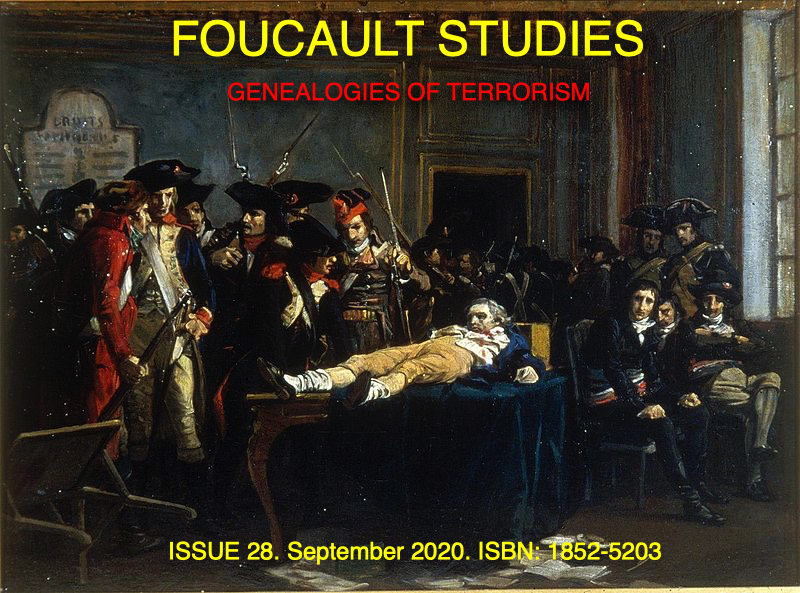
The editors of Foucault Studies are pleased to publish this issue containing a review symposium of Verena Erlenbusch-Anderson’s “Genealogies of Terrorism” as well as four original articles and three book reviews.

Editorial
Sverre Raffnsøe et al.

Review Symposium
Preface to Symposium on Verena Erlenbusch-Anderson’s “Genealogies of Terrorism”
Colin Koopman

Examining Genealogy as Engaged Critique
Samir Haddad

Genealogy, Terrorism, and the “Relays” of Thought
Sarah K. Hansen

Situating Genealogies of Terrorism
Cressida J. Heyes

Genealogy as Multiplicity, Contestation, and Relay: Response to Samir Haddad, Sarah Hansen, and Cressida Heyes
Verena Erlenbusch-Anderson

Articles
The carceral existence of social work academics: a Foucauldian analysis of social work education in English universities
Diane Simpson, Sarah Amsler

On the Ways of Writing the History of the State
Eli B. Lichtenstein

Foucault On Psychoanalysis: Missed Encounter or Gordian Knot?
Mark G. E. Kelly

Parrhesia and the ethics of public service – towards a genealogy of the bureaucrat as frank counsellor
Edward Barratt

Review Essay
Foucault on Drugs: The Personal, the Ethical and the Political in Foucault in California
Kurt Borg

Book Reviews
Marcelo Hoffman (special ed.), Foucault and the Politics of Resistance in Brazil. The Carceral Notebooks 13. (2017-2018). pp. 230. http://www.thecarceral.org/journal-vol13.html.
Pedro Mauricio Garcia Dotto

C. Heike Schotten, Queer Terror: Life, Death, and Desire in the Settler Colony. (New York: Columbia University Press, 2018). 272 pp. ISBN: 9780231187473.
Yin-An Chen

Tom Bentley, Settler state apologies and the elusiveness of forgiveness: The purification ritual that does not purify (2020) Contemporary Political Theory, 19 (3), pp. 381-403.
https://doi.org/10.1057/s41296-019-00356-6

Open access

Abstract
Focusing on Australian Prime Minister Kevin Rudd’s 2008 apology to the Stolen Generations, this article asks: can colonial-settler states obtain forgiveness through political apologies? The article first defends Jacques Derrida’s observation that political apologies resemble the Christian practice of confession. In doing so, it subsequently draws on Michel Foucault’s (1979) detailed treatise on confession in order to assess the potential for absolution. For Foucault, the process of engaging in exhaustive truth-telling of sin before a demarcated authority provides a route to such atonement. By contrast, any potential unburdening of sin is lost when there is either no adequate authority to coax the confession or if the confession is less than full. The problem for the settler state is that it is predisposed to re-evoking the imaginary of the settler nation and Westphalian sovereignty in the very process of apologising. Consequently, there is no scope to submit before a higher sovereign body and any truth-telling is necessarily partial. As such, the central argument is that forgiveness for the settler state must remain elusive. The political opportunities arising from this for Indigenous peoples are discussed in the final section. © 2019, Springer Nature Limited.

Author Keywords
Australia; confession; forgiveness; political apology; settler colonialism; Stolen Generations

Kathryn Gomersall, Imposition to agonism: Voluntary poverty alleviation resettlement in rural China (2020) Political Geography, 82, art. no. 102250.
https://doi.org/10.1016/j.polgeo.2020.102250

Abstract
Implementation of voluntary Poverty Alleviation Resettlement (PAR) in Shanxi Province, rural China is a function of the democratic processes of village governance under the Organic Law of Villages Committees and Assemblies. Villages consult with their constituent households on the decision to resettle and aspects of the process of rebuilding homes and livelihood adaptations. This article analyses the participatory process through an analytic of government that exposes the contingency of local governance as liberal techniques are negotiated amongst historical illiberal governance norms. Processes of subjection during resettlement decision making and implementation defy a liberal/illiberal binary as the effects of power during governance can have a duel nature. These effects produce dialectical tensions that the local Party-state draws on to smooth consent for their political economic goals. Villagers in response draw on multiple political and economic subjectivities to reposition themselves and contest intersubjective norms that define relations between governor and governed. Contestation is most aptly defined as agonism which represents the permanent provocation (Foucault, 1982) between liberal and illiberal governance and the potential for equitable resettlement outcomes. © 2020 Elsevier Ltd

Author Keywords
Agonism; China; Democratic governance; Dialectics; Governmentality; Resettlement

Index Keywords
local government, political economy, poverty alleviation, rural area; China, Shanxi

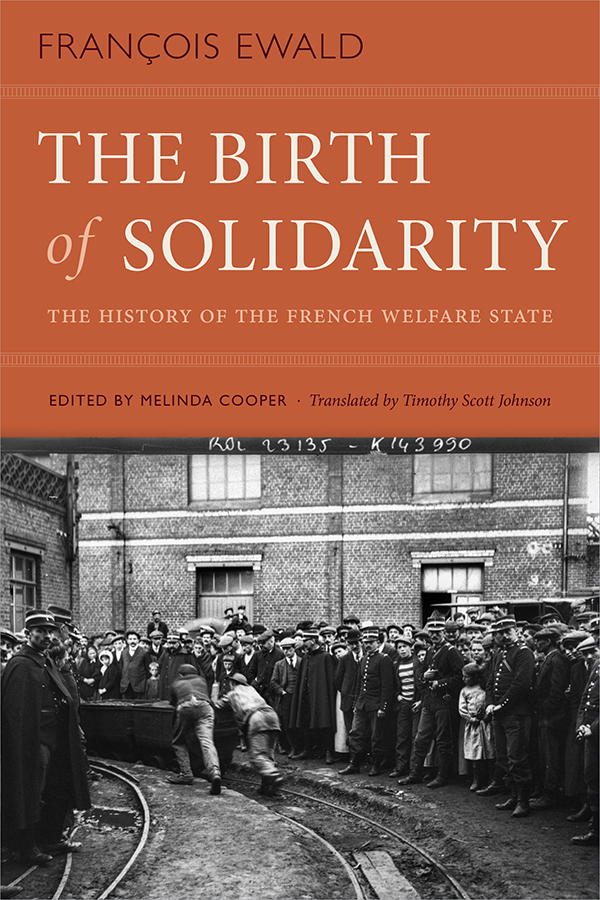
François Ewald, The Birth of Solidarity. The History of the French Welfare State, Duke University Press, Editor: Melinda Cooper, Translator: Timothy Scott Johnson, 2020

François Ewald’s landmark The Birth of Solidarity—first published in French in 1986, revised in 1996, with the revised edition appearing here in English for the first time—is one of the most important historical and philosophical studies of the rise of the welfare state. Theorizing the origins of social insurance, Ewald shows how the growing problem of industrial accidents in France throughout the nineteenth century tested the limits of classical liberalism and its notions of individual responsibility. As workers and capitalists confronted each other over the problem of workplace accidents, they transformed the older practice of commercial insurance into an instrument of state intervention, thereby creating an entirely new conception of law, the state, and social solidarity. What emerged was a new system of social insurance guaranteed by the state. The Birth of Solidarity is a classic work of social and political theory that will appeal to all those interested in labor power, the making and dismantling of the welfare state, and Foucauldian notions of governmentality, security, risk, and the limits of liberalism.

François Ewald is International Research Fellow at the University of Connecticut School of Law, chair of the Scientific Committee of the Université de l’Assurance, and the author and coeditor of several books in French.

Melinda Cooper is Professor of Sociology at the Australian National University.

Timothy Scott Johnson is Visiting Assistant Professor of History at Texas A&M University, Corpus Christi.