Foucault News

News and resources on French thinker Michel Foucault (1926-1984)

David Langwallner: Human Rights In A Coronavirus Panopticon, Broadsheet, 10 March 2021

Now of course we live in perilous times worldwide for the justice system and one can have far too much faith in legal processes to protect us as the rule of law and the cause of human rights diminishes and the gatekeepers have to enforce ever more draconian legislation. Constrained by the literal application of rules they often disagree with in civilised societies and by a worldwide society descending into borderline anarchy.

In this respect Jeremy Bentham developed the model prison The Panopticon of which Kilmainham in Dublin was an example to enforce 24 hour surveillance. not ultimately adopted due to its inhumane qualities.

Now modern society has become a worldwide Panopticon, as Foucault saw happening, and as the people of Cork in the peaceful protest last Saturday expressed beautifully.
[…]

Zaidi, Z., Bush, A.A., Partman, I.M. et al. From the “top-down” and the “bottom-up”: Centering Foucault’s notion of biopower and individual accountability within systemic racism. Perspectives on Medical Education (2021).

https://doi.org/10.1007/s40037-021-00655-y
Open access

First paragraph
In the wake of worldwide events coalescing in 2020, the presence of anti-Black racism in the United States was made visible to those abroad and its egregiousness made more explicit to some citizens previously unaware of it in the U.S. In addition to the onset of the COVID-19 pandemic exposing deep-seated structural health disparities between white and non-white communities, a global mass uprising emerged in response to George Floyd’s death [1, 2]. In ways that could not have been anticipated even a few years earlier, segments of American society have had to reckon with the pervasive, powerful forces of white supremacy and the ways society and its structures have disadvantaged racially minoritized groups. In this wide-sweeping shift, medical education and medicine have also grappled with these issues, especially the ways in which medical education perpetuates institutional racism.

Ponzo, J., Marino, G.
Modelizing epistemologies: Organizing Catholic sanctity from calendar-based martyrologies to today’s mobile apps
(2021) Semiotica

DOI: 10.1515/sem-2019-0089

Abstract
The Catholic concept of “sanctity” can be thought of as a “cultural unit”(Eco) composed of a wide variety of “grounds”(Peirce) or distinctive features. The figures of individual saints, i.e., tokens of sanctity, are characterized by a particular set of grounds, organized and represented in texts of different genres. This paper presents a semiotic study of texts seeking to offer an encompassing view of “sanctity” by listing all the saints and supplementing their names with a short description of their lives emphasizing the grounds characterizing each of them. The analysis focuses on a seminal liturgical text, the Martyrologium Romanun (1584-2004), and the first official encyclopedia of saints, the Bibliotheca Sanctorum (1961-2013), as well as a sample of digital texts and media such as websites and mobile apps. While the first text offers a dogmatic perspective on sanctity and saintly figures and the second offers a historical and culturological one, websites succeed in reconciling the two paradigms into a single syncretic form of interactive fruition in which the more up-to-date encyclopedic model subsumes the traditional calendar one and, in the case of apps, adds a glocal dimension, enhancing situated cognition. The analysis shows that the introduction of the encyclopedic genre and subsequent proliferation of digital repertoires is connected to a shift in the Catholic “episteme”(Foucault) of sanctity and a growing tendency to consider saints as not (only) religious characters and objects of cult, but (also) as historical individuals and components of a culture and, consequently, as suitable objects of critical discourse. © 2021 Walter de Gruyter GmbH, Berlin/Boston 2021.

Author Keywords
Bibliotheca Sanctorum; Catholic saints; encyclopedia; epistemology; Martyrologium Romanum

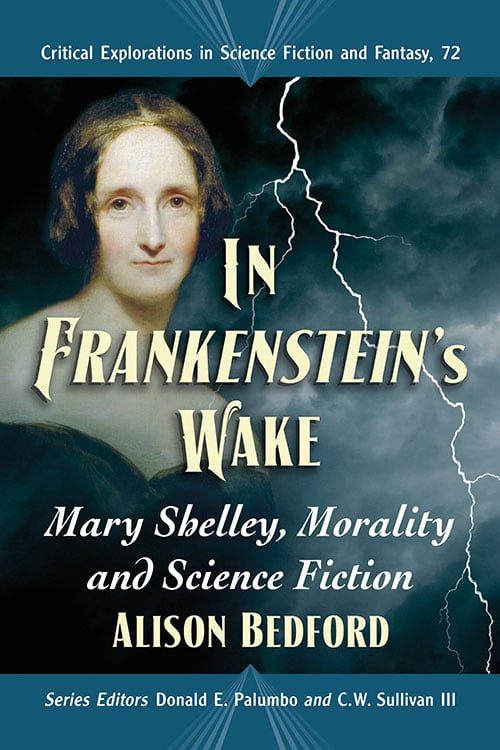
Alison Bedford, Donald E. Palumbo, C.W. Sullivan III, In Frankenstein’s Wake. Mary Shelley, Morality and Science Fiction, McFarland, 2021

Just over 200 years ago on a stormy night, a young woman conceived of what would become one of the most iconic images of science gone wrong, the story of Victor Frankenstein and his Creature. For a long period, Mary Shelley languished in the shadow of her luminary husband, Percy Bysshe Shelley, but was rescued from obscurity by the feminist scholars of the 1970s and 1980s.

This book offers a new perspective on Shelley and on science fiction, arguing that she both established a new discursive space for moral thinking and laid the groundwork for the genre of science fiction. Adopting a contextual biographical approach and undertaking a close reading of the 1818 and 1831 editions of the text give readers insight into how this story synthesizes many of the concerns about new science prevalent in Shelley’s time. Using Michel Foucault’s concept of discourse, the present work argues that Shelley should be not only credited with the foundation of a genre but recognized as a figure who created a new cultural space for readers to explore their fears and negotiate the moral landscape of new science.

Authors
Alison Bedford is a sessional lecturer at the University of Southern Queensland in Toowoomba, Australia. She is also a secondary school English and history teacher. Her research interests and publications focus on Romantic and Victorian fiction and pedagogy for the teaching of history.

Donald E. Palumbo is a professor of English at East Carolina University. He lives in Greenville, North Carolina.

C.W. Sullivan III is Distinguished Professor of arts and sciences at East Carolina University and a full member of the Welsh Academy. He is the author of numerous books and the on-line journal Celtic Cultural Studies.

stuartelden's avatarProgressive Geographies

The French Programme: How Theory Came to London – Colm McAuliffe on the 1973 ICA festival that sparked British interest in Francophone structuralist and post-structuralist thought.

March 1973: two months after Britain joins the European Economic Community, the French historian of ideas Michel Foucault is scheduled to give a lecture in London. Foucault is one of the star attractions of the French Programme, a month-long series of lectures and screenings at the Institute of Contemporary Arts. Jacques Derrida, Gilles Deleuze, Felix Guattari, and Tzvetan Todorov are among the other avatars of Francophone structuralist and post-structuralist thought appearing throughout the month, described in the French newspaper Combat as “the most important French cultural event ever organised in Britain”, and one which has been almost entirely funded by the British Government, eager to foster positive cultural relations between Britain and its sister nations in the Common Market.[continues here]

View original post

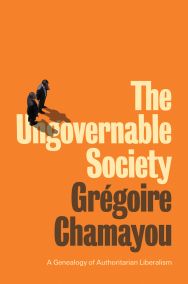
Grégoire Chamayou, The Ungovernable Society. A Genealogy of Authoritarian Liberalism, Translated by Andrew Brown, Polity 2021

Rebellion was in the air. Workers were on strike, students were demonstrating on campuses, discipline was breaking down. No relation of domination was left untouched – the relation between the sexes, the racial order, the hierarchies of class, relationships in families, workplaces and colleges. The upheavals of the late 1960s and early 1970s quickly spread through all sectors of social and economic life, threatening to make society ungovernable. This crisis was also the birthplace of the authoritarian liberalism which continues to cast its shadow across the world in which we now live.To ward off the threat, new arts of government were devised by elites in business-related circles, which included a war against the trade unions, the primacy of shareholder value and a dethroning of politics. The neoliberalism that thus began its triumphal march was not, however, determined by a simple ‘state phobia’ and a desire to free up the economy from government interference. On the contrary, the strategy for overcoming the crisis of governability consisted in an authoritarian liberalism in which the liberalization of society went hand-in-hand with new forms of power imposed from above: a ‘strong state’ for a ‘free economy’ became the new magic formula of our capitalist societies.The new arts of government devised by ruling elites are still with us today and we can understand their nature and lasting influence only by re-examining the history of the conflicts that brought them into being.

French original

Via Progressive Geographies

Anthropology News website. 2019. “How to Spark Joy by Tidying Up Your Thesis.” May 20, 2019.
DOI: 10.1111/AN.1174
Open access

Before we can begin revising your thesis, you must make the decision that you want to revise it. Once you make that step, this process will only need to happen one time, because then you will be working on a well-organized paper, and you will want to keep it well organized. But you should not jump in and just start tidying. Instead, take some time to imagine the life you will have after your thesis is done.
[..]
Then, go through the list one by one and ask yourself if each theorist sparks joy. For example, if Foucault no longer sparks joy for you, take a moment to thank him for his service in helping to get your thinking to the point where it is now, and then let him go.
[…]

The new issue of Philosophical Inquiries (IX, 1-2021)  features a Focus section discussing Ian Hacking’s philosophy,  his arguments on the combination between history and philosophy of science, on experimental realism, on scientific stability and on the disunity of the sciences. The Focus section is edited by Matteo Vagelli and Marica Setaro. The issue also presents Gaston Bachelard’s introduction to his Le rationalisme appliqué translated into English for the first time.

TABLE OF CONTENTS:
[Focus section]
Ian Hacking and the Historical Reason of the Sciences

Matteo Vagelli and Marica Setaro
Introduction

David Hyder
Naturalism, Pragmatism and Historical Epistemology

Manolis Simos and Theodore Arabatzis
Ian Hacking’s metahistory of science

Massimiliano Simons and Matteo Vagelli
Were experiments ever neglected? Ian Hacking and the history of philosophy of experiment

Jacqueline Sullivan
Understanding stability in cognitive neuroscience through Hacking’s lens

[Past Present]

Lucie Fabry
Le rationalisme appliqué. A dialogical philosophy: Bachelard’s “Introduction” to Le Rationalisme appliqué

Gaston Bachelard
The dialogical philosophy. La philosophie dialoguée

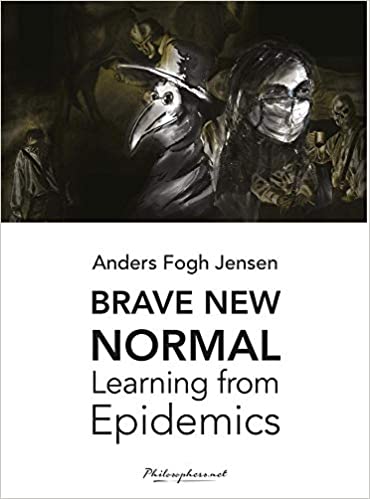
Anders Fogh Jensen, Brave New Normal, Filosoffen, 2021

(See also earlier post)

The book is an introduction to the history of Epidemics through the analytical lens of Foucault.

Throughout history, epidemics have repeatedly posed a single, provocative question: ‘Organise or die – what will you do?’ This book explores how different societies have answered. In ten concise, good-humoured chapters, the philosopher Anders Fogh Jensen tells the story of epidemics and control from the 13th century to the present. The book places the coronavirus pandemic into a historical perspective. It illuminates a range of strategies used to combat epidemics and the thinking behind them, and shows how epidemics inspire and act as catalysts for the brave new normal.

Anders Fogh Jensen (born 1973) is a Danish philosopher with a Diplomé d’Études Approfondies from the Sorbonne and a PhD from the University of Copenhagen. He is also a playwright, public speaker, author and the originator of concepts such as ‘the project society’ and ‘pseudowork’ to describe the society of today. A frequent commentator on matters philosophical on the radio, on TV and in newspapers, Anders has written several books, some of which have been translated into English, among these The Project Society (2012) and Pseudowork (2021). His plays include De danser alene (They Dance Alone), about the individual and life in the project society. Anders has also lectured at universities in Denmark for many years.

Guillaume Lachenal, Ranger façon Marie Kondo ou Michel Foucault ? Liberation, 11 décembre 2019

J’ai arrêté de lire la Magie du rangement, le best-seller de la coach japonaise en économie domestique, au moment où il faut jeter ses feuilles de paye – il faut vraiment venir d’un pays qui ne croit plus à la retraite pour écrire une chose pareille. Chez nous, terre de démographie florissante, de grands appartements et d’administration dysfonctionnelle (tout cela relativement au Japon), mieux vaut les garder dans ses coffres – et aller manifester.

[…]
La seconde réponse, plus subtile, donne raison à la gourou japonaise : la perte est en fait une condition nécessaire de la connaissance. L’histoire des collections et des archives doit se comprendre par son envers : celle de la sélection et de la destruction volontaire d’informations. C’est un lieu commun d’archivistes, qui jettent autant qu’ils peuvent : se souvenir de tout, c’est ne se souvenir de rien. […]

La pensée médicale moderne est, en son fondement, une pratique du tri (et de la mise à la benne). Ce sont les données manquantes qui rendent le savoir possible. Marie Kondo égale Michel Foucault.
[…]