Foucault News

News and resources on French thinker Michel Foucault (1926-1984)

Tom Roach, Screen Love. Queer Intimacies in the Grindr Era, SUNY Press.

Engaging analysis of men-seeking-men media as paradoxical sites of both self-marketing and radical queer sociality.

In work, play, education, and even healthcare, we are using social media during COVID-19 to approximate “normal life” before the pandemic. In Screen Love, Tom Roach urges us to do the opposite. Rather than highlight the ways that social media might help reproduce the pre-pandemic status quo, Roach explores how Grindr and other dating/hookup apps can help us envision a radically new normal: specifically, antinormative conceptions of selfhood and community. Although these media are steeped in neoliberal relational and communicative norms, they offer opportunities to reconceive subjectivity and ethics in ways that defy normative psychological and sexual paradigms. In the virtual cruise, Roach argues, we might experience a queer sociability in which participants are formally interchangeable avatar-objects. On Grindr and other m4m platforms, a model of selfhood championed in liberal-humanist traditions—an intelligent, altruistic, eloquent, and emotionally expressive self—is often a liability. By teasing out the queer ethical and political potential of an antisocial, virtual fungibility, Roach compels readers to think twice about media typically dismissed as sordid, superficial, and narcissistic. Written for students, professors, and nonacademics alike, Screen Love is an accessible, provocative, and at times subversively funny read.

“Tired of being a square on a virtual grid? Lean into it; relish your interchangeability. Can’t find love online? Rethink your relationship goals; enjoy the sensual nonsense of the cruise. In Screen Love, Tom Roach extends the arguments developed in his seminal Friendship as a Way of Life to consider the shared estrangements constitutive of contemporary screen-mediated intimacies. In the emphatically queer tradition of antisociality, Roach offers a series of brilliant, and fun, meditations on the radical ethical potential of impersonality, virtual fungibility, and embracing the sameness of our irreducible differences. My own takeaway? Get over yourself if you want to better make an art of your (impersonal) life.” — Shaka McGlotten, author of Virtual Intimacies: Media, Affect, and Queer Sociality

“With a raucous sensibility and a light touch, Tom Roach reads the screened aesthetics of neoliberal fungibility not as a trap, but as an invitation to explore its queer, world-making potential.” — Shannon Winnubst, author of Way Too Cool: Selling Out Race and Ethics

“Wonderfully thought-provoking and incisive, this book made me feel as if I were engaged in an interesting conversation with its author.” — Greg Goldberg, author of Antisocial Media: Anxious Labor in the Digital Economy

Tom Roach is Professor of Philosophy and Cultural Studies at Bryant University. He is the author of Friendship as a Way of Life: Foucault, AIDS, and the Politics of Shared Estrangement, also published by SUNY Press.
Ramírez-García, V. The Administration of Desire: Governmentality and Sexual Politics in Mexico’s Demographic Shift of the 1970s. Sexuality Research and Social Policy volume 17, pp. 741–752 (2020).
DOI:10.1007/s13178-020-00430-4
Open access

Abstract
Introduction

In 1974 Mexico adopted a new Population Act which marked a turning point in its policies of migration, fertility and education; this new legislation embraced population as a set of collective regularities ruled by intelligible laws which the state was impelled to administer.
Methods
Cabinet research in historical archives of 292 documents from the National Population Council in Mexico, published during the first decade of its formulation and implementation (1974-1984).
Results
Mexican demographic shift of the 1970s shows the emergence of a new rationality of power and knowledge through the consolidation of governmentality as a complex network of practices and discourses, mostly in the fields of education and health.
Conclusions
There was an effort to reshape the subjectivity of individuals through the incitement and stimulation of a new political rationality, that of governmentality, embracing responsibility vis-à-vis the ‘sexual reproduction function’, a function which was attached to the reproduction of social structures like marriage and family.
Policy Implications
I argue that this particular case can contribute to the study of similar political and epistemic tendencies in other contexts, especially on the analysis of the intersection between family planning and sex education policies.

Georgette Bajada, Anne-Marie Callus & Kurt Borg (2021) Unpretentious education: a Foucaultian study of inclusive education in Malta, Disability & Society, Published online: 27 Jan 2021
DOI: 10.1080/09687599.2021.1874877

Abstract
This article adopts a theoretical perspective inspired from the work of Michel Foucault to explore the experience of disabled students in Malta. In particular, it studies the discourses and educational practices of five students and their educators. The research explores the idea that students’ voices should be imperative in their Individualised Educational Plan (IEP). The article argues that, although inclusive education is presented as a more progressive and emancipatory model, it is still ridden with similar problems associated with the older paradigm of ‘special education needs’. Disabled students remain individualised, labelled, categorised, treated with special consideration and held personally accountable for their unsuccessful integration in the mainstream educational system. Consequently, the article proposes the idea that genuine inclusive education entails the notion of unpretentious education, that is, the necessity that educators silence their dominant voices; brush aside the hegemonic effects of culturally defined and socially constructed discourses and practices; call out and avoid normalising ways of distinguishing between students; and appreciate the magnitude of the voice of disabled students.

Points of interest
The article explores the experience of disabled students in Malta.

Inclusive education is still associated with special education needs.

Education is truly inclusive when educators do not assume that they know everything about disability.

We should listen to disabled students’ voices and rethink the way we talk about inclusive education, the way we practise it, and the way we think about disabled students.

It is hoped that, then, disabled students will feel that they truly belong in schools, where difference is truly accepted.

It is then that each disabled student can exclaim, ‘being different is okay!’

Keywords: Inclusive education, Foucault, disabled children, critical disability studies

Covid-19 no Brasil e diagnóstico do presente: análise do discurso e biopolítica, Revista Ética e Filosofia Política, v. 2 n. 23 (2020): Episteme e Práxis
DOI: 10.34019/2448-2137.2020.33287
Open access

Resumo
A partir do pano de fundo da gestão política da pandemia de COVID-19, este artigo visa apresentar e discutir a noção foucaultiana de biopolítica articulando esta não apenas à questão da gestão política da vida, mas também com a especificidade de uma abordagem arqueo-genealógica. Neste sentido, destacamos a função da história e da análise do discurso na construção de um diagnóstico do presente, o que ajuda a destacar a especificidade do pensamento foucaultiano. Sustentamos hipótese de que a abordagem foucaultiana da biopolítica necessita de ajustes para a compreensão da gestão brasileira da pandemia. O principal ajuste seria a análise dos efeitos de centenas de anos de escravidão na sociedade brasileira. Contudo, o pensamento foucaultiano permite enxergar as racionalidades estratégicas de discursos que aparentam ser apenas irracionais, absurdos ou notícias falsas, os quais foram importantes no caso brasileiro. A exposição de milhões de pessoas aos riscos de contaminação é compreendida enquanto a radicalização de um corte biopolítico, constituído de modo sócio-histórico, que separa vidas que merecem ser protegidas de vidas que podem ou devem ser expostas ao risco de morte e outras decorrências da contaminação.

Palavras-chave: biopolítica; diagnóstico do presente; genealogia; pandemia; discurso.

Abstract in English
This article intends to present and discuss the foucaultian notion of biopolitcs in its content not only of the the political management of life, but also the specificities of an archeogenealogical approach, having as a background the political management of the COVID-19 pandemics. We emphasize the function of history and the analysis of discourse to the construction of a diagnostic of the present, which helps to emphasize the specificity of the foucaultian approach. We also suggest that the foucaultian approach of biopolitics to understand the pandemics needs some adjustments in order to comprehend the Brazilian management of the pandemics. The main problem is the effects of hundreds of years of slavery to the constitution of Brazilian society. Nevertheless, foucaultian toughth can provide an understanding of the strategic rationality of discourses that appears to be just irrational, absurd or just fake news, but had a great importance to the Brazilian case. The exposal of millions of people to the risk of contamination is understood as a radicalization of a socially and historically biopolitical cut which separates lives that must be defended from those which ought to be exposed to the risks of death and other effects of contamination.

Keywords: biopolitics; diagnose of the present; genealogy; pandemics; discourse

Federico Jose Lagdameo, Normalizing the Population: The Biopolitics of the “New Normal”, Budhi: A Journal of Ideas and Culture XXIV.1 (2020): 67–97.
Open access

Abstract
While the whole world is trying to get its bearings in the face of the radical changes brought about by the COVID-19 pandemic, two prevailing attitudes or approaches have emerged: (1) a yearning for a return to pre-COVID-19 normalcy typified by what I call the “typhoon-shelter approach” and (2) recognizing the irreversibility of the current condition and seeking to establish a “new normal.” The biopolitical analysis employed in this paper reveals unintended consequences that slip through the mesh of traditional forms of critique centered on capital, ideology, or class conflict. Specifically, the “new normal” project prevents the free movement of peoples while ensuring the continuous flow of data through what Luciano Floridi calls the “infosphere.” This politics instills a xenophobia in which the other is construed as a disease while migrating the population to the realm of virtual reality.

Keywords
biopolitics; COVID-19; Foucault; infosphere; normalization; pandemic

stuartelden's avatarProgressive Geographies

Stuart Elden, The Early Foucault – Polity, June 2021

Three really generous endorsements for the book, from people whose own work I really admire.

‘Elden’s compendious coverage of Foucault’s intellectual career constitutes the contemporary apogee of scholarship on Foucault.’
Mark G. E. Kelly, Western Sydney University

‘This is a work of immense scholarship. Stuart Elden provides a wealth of contextual information on Foucault’s less familiar early career.’
Clare O’Farrell, Queensland University of Technology

‘Stuart Elden’s comprehensive, finely crafted investigation of the early Foucault is much more than a contribution to Foucault studies. It’s an exemplary guide to writing intellectual history.’
Michael J. Shapiro, University of Hawai’i, Manoa

The proofs and index for the book are complete, so just waiting to see the finished thing. Here’s the back cover description:

It was not until 1961 that Foucault published his first major book,History ofMadness. He had been working as an…

View original post 234 more words

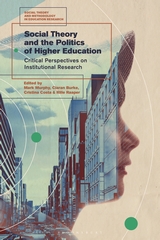
Social Theory and the Politics of Higher Education. Critical Perspectives on Institutional Research
Editors: Mark Murphy, Ciaran Burke, Cristina Costa, Rille Raaper, Bloomsbury

Social Theory and the Politics of Higher Education brings together an international group of scholars who shine a theoretical light on the politics of academic life and higher education. The book covers three key areas:

1) Institutional governance, with a specific focus on issues such as measurement, surveillance, accountability, regulation, performance and institutional reputation.
2) Academic work, covering areas such as the changing nature of academic labour, neoliberalism and academic identity, and the role of gender and gender studies in university life.
3) Student experience, which includes case studies of student politics and protest, the impact of graduate debt and changing student identities.

The editors and chapter authors explore these topics through a theoretical lens, using the ideas of Michel Foucault, Niklas Luhmann, Barbara Adams, Donna Massey, Margaret Archer, Jürgen Habermas, Pierre Bourdieu, Hartmut Rosa, Norbert Elias and Donna Haraway, among others. The case studies, from Africa, Europe, Australia and South America, draw on a wide range of research approaches, and each chapter includes a set of critical reflections on how social theory and research methodology can work in tandem.

Webinar: All Eyes on Latin America: Anti-Gender Politics Through Transnational Lenses, on January 29, 2021 at 9 am EST

Press Release

Abstracts

Iain Mackenzie, Critique in a World of Control

Paris Institute for Critical Thinking
Our tenth interview is with Iain Mackenzie, philosophy scholar (Canterbury, UK) by Evrim Emir-Sayers (Paris, France) Thursday, May 7, 2020

PICT Voices is an interview series conducted by PICT faculty with notable members of the broader PICT community. Our goal is to present our community with a variety of voices across the spectrum of the humanities and critical, creative thinking. To achieve this, we will interview a broad spectrum of thinkers ranging from scholars to journalists.

With thanks to David Selim Sayers for this link

Hull, Gordon, Infrastructure, Modulation, Portal: Thinking with Foucault about how Internet Architecture Shapes Subjects, SSRN (January 22, 2021).
Open access

Abstract
Following Foucault’s remarks on the importance of architecture to disciplinary power, this paper offers a typology of power relations expressed in different models of Internet governance. Infrastructure governance understands the Internet as a common pool or public resource, on the model of traditional infrastructures like roads and bridges. Modulation, which I study by way of Net Neutrality debates in the U.S., understands Internet governance as traffic shaping. Portal governance, which I study by way of data collection policies of dominant platform companies, understands the Internet as creating a user experience that facilitates data mining. The latter two are forms of architectural disciplinary power that undermine the first. I then argue that the rise of portal and modulation governance primarily serves to remake parts of civil society by fostering market norms of consumption and entrepreneurialism. In that sense, efforts to shape Internet architecture need to be understood as techniques of subjectification.

Keywords: infrastructure, platform, portal, net neutrality, disciplinary power