Foucault News

News and resources on French thinker Michel Foucault (1926-1984)

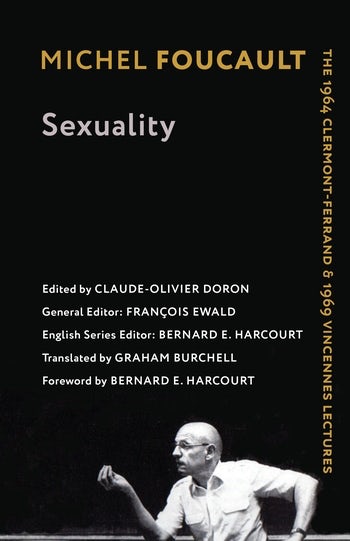
Michel Foucault. Sexuality. The 1964 Clermont-Ferrand and 1969 Vincennes Lectures
Edited by Claude-Olivier Doron. General Editor: François Ewald. English Series Editor: Bernard E. Harcourt. Translated by Graham Burchell. Foreword by Bernard E. Harcourt. Columbia University Press 2021

Michel Foucault’s The History of Sexuality—the first volume of which was published in 1976—exerts a vast influence across the humanities and social sciences. However, Foucault’s interest in the history of sexuality began as early as the 1960s, when he taught two courses on the subject. These lectures offer crucial insight into the development of Foucault’s thought yet have remained unpublished until recently.

This book presents Foucault’s lectures on sexuality for the first time in English. In the first series, held at the University of Clermont-Ferrand in 1964, Foucault asks how sexuality comes to be constituted as a scientific body of knowledge within Western culture and why it derived from the analysis of “perversions”—morbidity, homosexuality, fetishism. The subsequent course, held at the experimental university at Vincennes in 1969, shows how Foucault’s theories were reoriented by the events of May 1968; he refocuses on the regulatory nature of the discourse of sexuality and how it serves economic, social, and political ends. Examining creators of political and literary utopias in the nineteenth and twentieth centuries, from Sade to Fourier to Marcuse, who attempted to integrate “natural” sexualities, including transgressive forms, into social and economic life, Foucault elaborates a double critique of the naturalization and the liberation of sexuality. Together, the lectures span a range of interests, from abnormality to heterotopias to ideology, and they offer an unprecedented glimpse into the evolution of Foucault’s transformative thinking on sexuality.

Michel Foucault (1926-1984), a French philosopher, historian, and social theorist, was one of the most important figures in twentieth-century thought.

Claude-Olivier Doron is a professor of history and philosophy of science at the University of Paris and an editor of the works of Foucault.

François Ewald is a political philosopher and historian, and oversaw, with Alessandro Fontana, the publication of Foucault’s lectures at the Collège de France.

Bernard E. Harcourt is a chaired professor at Columbia University and the École des hautes études en sciences sociales in Paris and has edited a range of works by Foucault in French and English.

Graham Burchell is coeditor of The Foucault Effect: Studies in Governmentality (1991) and has translated a range of works by Foucault, including his lectures at the Collège de France.
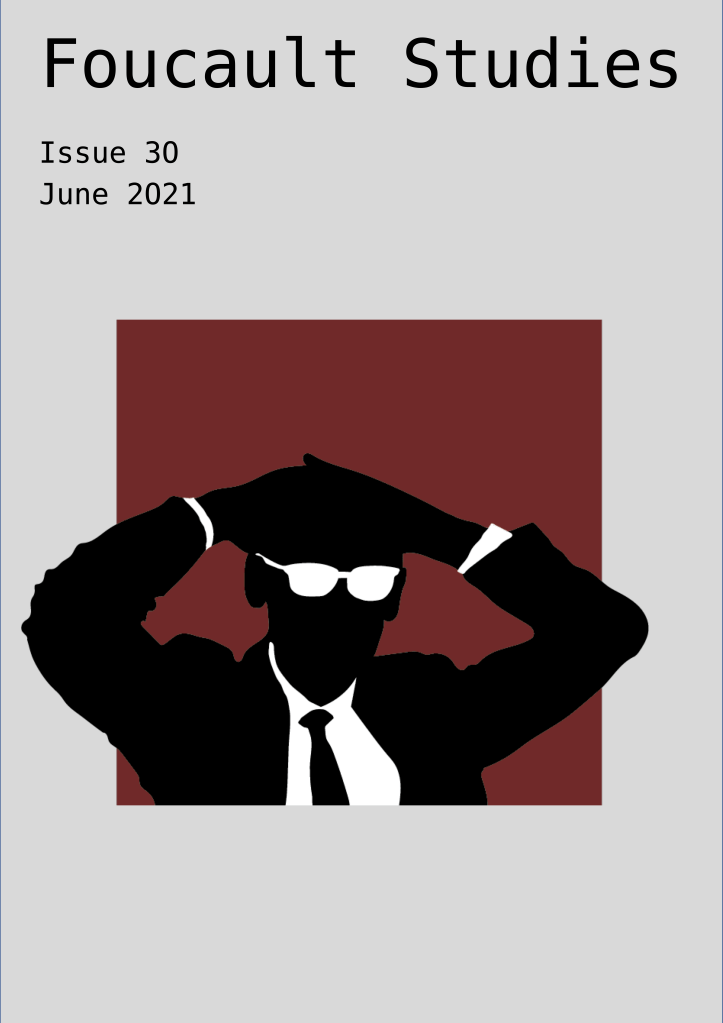

Foucault Studies, Number 30, June 2021
Articles

Resistance: An Arendtian Reading of Solidarity and Friendship in Foucault
Liesbeth Schoonheim

Avowing Unemployment: Confessional Jobseeker Interviews and Professional CVs
Tom Boland

The Carnival of the Mad: Foucault’s Window into the Origin of Psychology
Hannah Lyn Venable

Book Reviews
Nancy Luxon (ed.), Archives of Infamy: Foucault on State Power in the Lives of Ordinary Citizens. Minneapolis: University of Minnesota Press, 2019. 400 pp.
ISBN 9781517901110 (paperback)
Julian Molina

Thomas Lemke, Foucault’s Analysis of Modern Governmentality: A Critique of Political Reason. Translation Erik Butler. London: Verso, 2019. 445 pp.
ISBN-13: 978-1-78663-645-4
Paul Gorby

Patrick G. Stefan, The Power of Resurrection: Foucault, Discipline, and Early Christian Resistance. Lanham, MD: Rowman and Littlefield, 2020. 277pp.
ISBN978-1-9787-0462-6 (hardback), ISBN 978-1-9787-0463-3 (ebook)
Bianca Maria Esposito

Stephen W. Sawyer and Daniel Steinmetz-Jenkins (ed.), Foucault, Neoliberalism, and Beyond. London: Rowman & Littlefield, 2019. 227 pp.
ISBN 978-1-78660-376-0
Rick Mitcham

Stuart Elden, Canguilhem. Cambridge: Polity Press, 2019. 215 pp. + Samuel Talcott, Georges Canguilhem and the Problem of Error. Cham: Palgrave MacMillan, 2019. 294 pp.
ISBN 9781509528783; ISBN 3030007782
Codrin Tăut

Michael Ure, Nietzsche’s The Gay Science: An Introduction. Cambridge Introductions to Key Philosophical Texts. Cambridge: Cambridge University Press, 2019. 273 pp.
ISBN 9780521760904 (hardback), ISBN 9780521144834 (paperback)
Stephanie B. Martens

Review Essay
Critique in Truth: Bernard Harcourt’s Critique & Praxis
Colin Koopman

Foucault, les Pères, le sexe. Autour des Aveux de la chair
Edited by Philippe Büttgen, Philippe Chevallier, Agustín Colombo, Arianna Sforzini, Éditions de la Sorbonne, 2021

Description in English below
Flyer in English

Les aveux de La chair, dernier volume de l’Histoire de la sexualité, fruit de près de huit ans de travail sur le christianisme ancien, est le livre auquel Foucault aura consacré le plus de temps, sans parvenir à l’achever complètement. Le détour par les Pères de l’Église (Tertullien, Augustin, Cassien, etc.) devait contribuer à éclairer le rapport que l’Occident entretient au corps et à ses plaisirs, au croisement de la subjectivité et de la vérité. Publiés posthumément en 2018, déjà traduits en plusieurs langues, Les aveux de la chair révèlent l’étendue des recherches conduites par Foucault sur les premiers siècles chrétiens, que les textes et les cours jusqu’ici connus laissaient à peine deviner.

Le présent ouvrage organise une rencontre inédite : les lectures « chrétiennes » de Foucault sont ici interrogées par seize historiens, philosophes et théologiens internationaux, spécialistes de cette période ainsi que de la pensée de Foucault. En quoi l’approche de Foucault renouvelle-t-elle la manière de lire les Pères ? Permet-elle d’aborder autrement la question de la nouveauté apportée par le christianisme dans la culture antique ? Et comment cette nouveauté peut-elle faire sens en philosophie aujourd’hui ? Questions cruciales, non seulement pour l’histoire des idées, mais d’abord et avant tout pour la compréhension de notre actualité.

English
Les aveux de La chair, the last volume of the Histoire de la sexualité, the fruit of nearly eight years of work on ancient Christianity, is the book to which Foucault devoted the most time, without managing to finish it completely. The diversions through the Fathers of the Church (Tertullian, Augustine, Cassian, etc.) was to contribute to shedding light on the relationship that the West has with the body and its pleasures, at the intersection of subjectivity and truth. Published posthumously in 2018 and already translated into several languages, Les aveux de la chair reveals the extent of Foucault’s research on the early Christian centuries, which the texts and courses previously known barely hinted at.

The present book organises a new encounter: Foucault’s «Christian» readings are here questioned by sixteen international historians, philosophers and theologians, specialists of this period as well as of Foucault’s thought. How does Foucault’s approach renew the way of reading the Fathers? Does it allow for a different approach to the question of the novelty brought by Christianity to ancient culture? And how can this novelty make sense in philosophy today? These are crucial questions, not only for the history of ideas, but first and foremost for the understanding of our current situation.

Mitchell Dean and Daniel Zamora, Today, the self is the battlefield of politics. Blame Michel Foucault, The Guardian, 15 June 2021

The rise of confessional politics has its origins in the left’s post-60s turn away from structures and towards the individual

“We are perhaps living at the end of politics,” Michel Foucault wrote in the late 1970s. With the exhaustion of utopias and radical alternatives to capitalism, what was now at stake, he memorably wrote, was to develop “new types, new kinds of relations to ourselves”. Political advancement is not delivered through “parties, trade unions, bureaucracy and politics any more”, he wrote. Instead, politics has become “an individual, moral concern”.

In this new definition of politics – in which “everything is political” and “the personal is political” – the self was thought to have become the battlefield of contemporary politics. At that time, many intellectuals, including Foucault, announced the “end of the age of revolution”, opening an era where transforming oneself became the most popular conception of social change. With the collapse of collective “grand narratives”, they argued, we had now to look inwards. Beginning in the late 60s, political change would be reframed as a struggle against oneself, against our “inner enemy”. One had to confront the “fascist within”.
[…]

Despite what Foucault had hoped for, we have not seen a retreat from confession but an intensification and multiplication of it in the public domain.
[…]

Davis, D.S., Buffa, D., Rasolondrainy, T., Creswell, E., Anyanwu, C., Ibirogba, A., Randolph, C., Ouarghidi, A., Phelps, L.N., Lahiniriko, F., Chrisostome, Z.M., Manahira, G., Douglass, K.
The aerial panopticon and the ethics of archaeological remote sensing in sacred cultural spaces
(2021) Archaeological Prospection

DOI: 10.1002/arp.1819

Abstract
Remote sensing technology has become a standard tool for archaeological prospecting. Yet the ethical guidelines associated with the use of these technologies are not well established and are even less-often discussed in published literature. With a nearly unobstructed view of large geographic spaces, aerial and spaceborne remote sensing technology creates an asymmetrical power dynamic between observers and the observed. Here, we explore the power dynamics involved with aerial and spaceborne remote sensing, using Foucault’s notion of power and the panopticon. In many other areas of archaeological practice, such power imbalances have been actively confronted by collaborative approaches and community engagement, but remote sensing archaeology has been largely absent from such interventions. We discuss how aerial and spaceborne imagery is perceived by local communities in southwest Madagascar and advocate for a more collaborative approach to remote sensing archaeology that includes local stakeholders and researchers in all levels of data acquisition, analysis, and dissemination. © 2021 John Wiley & Sons, Ltd.

Author Keywords
community archaeology; ethics; Madagascar; remote sensing; surveillance

Innico, S.
Enacting Statehood in Places of Exception: The Structural Effect of Statehood on Greek Migration Management
(2021) Ethnopolitics

DOI: 10.1080/17449057.2021.1907932

Abstract
The aim of this paper is to outline an analytic perspective on the notion of statehood, state authorities’ performance in situations of exceptionality, and to present some insights from ethnographic research in the context of migration in contemporary Greece. Following Timothy Mitchell’s thesis on the ‘effect of state’, taking into account Giorgio Agamben’s and Michel Foucault’s theories regarding the ‘state of exception’ and ‘exceptionalised institutions’, as well as Erving Goffman’s ‘dramaturgical perspective’ on the studies of social interactions, it is argued that 1. the ongoing cases of illegal and unsanctioned practices carried out by police and army officers in the Greek migration context should be interpreted, first and foremost, as mere practices of statehood enactment; 2. the ‘state of exception’ is not merely a useful spatialised device used by state authorities for mobility-control purposes, but rather an essential trait of statehood enactment itself. In order to reconcile the internal ambiguities inherent in the convoluted ensemble of perceived notions about what ‘a state’ is and how ‘a state’ does what it is supposed to do, it will be argued that, statehood enactment, by its very definition and constitution, frequently requires recurring to an ‘institutionalised state of exception’. From a broader viewpoint, these arguments question some supposedly non-problematic assumptions about the (concrete or abstract) nature of the state, while at the same time proposing an examination of the epistemological status of migranthood.

Roberts, J., Sanderson, P., Seidl, D., Krivokapic, A.
The UK Corporate Governance Code Principle of ‘Comply or Explain’: Understanding Code Compliance as ‘Subjection’ (2020) Abacus

DOI: 10.1111/abac.12208

Abstract
The focus of this paper is on UK Code compliance and the contests and confusions that have surrounded its principle of ‘comply or explain’. In contrast to many agency theory-informed studies, the paper suggests that visible compliance with the Code cannot itself be taken as a reliable proxy for board effectiveness. Instead, drawing upon Foucault’s account of governance as subjection, we argue that, as a form of board accountability, visible compliance can only support the Code’s primary objective of establishing norms which shape the conduct of directors within boards. The contests and confusions as to the meaning of comply or explain are then explored in terms of the challenge regulators have faced, throughout the subsequent life of the Code, in respecting the freedom of action of directors, whilst nevertheless seeking to influence how this is exercised. The paper first explores three key moments in the evolution of the UK Code: the initial Cadbury committee two-page ‘Code of Best Practice’ in 1992, the more prescriptive 2003 post-Enron changes to the UK Combined Code following the Higgs review, and the retreat from such prescription in the 2010 changes to the Code. This is complemented by drawing on qualitative empirical research to describe three very different ‘subject positions’—refusal, cynical distance, and willing embrace—which directors have come to adopt in response to the Code. The paper concludes by pointing to the very different consequences for actual board effectiveness implied by these contrasting, but largely invisible, responses to the Code. © 2020 Accounting Foundation, The University of Sydney

Author Keywords
Board effectiveness; Compliance; Comply or explain; Corporate governance; Foucault; Subjection

Crispin Sartwell, Michel Foucault Switches Sides, Splice Today, 7 June 2021

Neither the left nor the right can deal with an anti-authoritarian.

The French philosophe Michel Foucault (1926-1984) is currently up for re-assessment. In The New York Times, Ross Douthat writes that Foucault, usually thought of as a notorious postmodern neo-Marxist leftist relativist, has lately been associated with the Trumpian right. And an essay in The Point surveys the various attempts to make the French bad boy over into a neo-liberal, for heaven’s sake, and condemn him on that basis. (Neo-liberalism and Trumpian populism are also completely incompatible with one another.)

Right. Michel Foucault’s not on your side. But that doesn’t mean he’s on the other side.

In my opinion, the most important intellectual book of the late-20th century is Foucault’s Discipline and Punish: The Birth of the Prison.
[…]

There are games of truth in which truth is a construction and others in which it is not. One can have, for example, a game of truth that consists of describing things in such and such a way: a person giving an anthropological description of a society supplies not a construction but a description, which itself has a certain number of historically changing rules, so that one can say that it is to a certain extent a construction with respect to another description. This does not mean that there’s just a void, that everything is a figment of the imagination. On the basis of what can be said, for example, about this transformation of games of truth, some people conclude that I have said that nothing exists-I have been seen as saying that madness does not exist, whereas the problem is absolutely the converse: it was a question of knowing how madness, under the various definitions that have been given, was at a particular time integrated into an institutional field that constituted it as a mental illness occupying a specific place alongside other illnesses.

Michel Foucault (1997). The ethics of the concern of the self as a practice of freedom. In P. Rabinow (Ed.), R. Hurley and others (Trans.), The essential works of Michel Foucault, 1954– 1984: Vol. 1. Ethics: Subjectivity and truth. Harmondsworth, UK: Allen Lane, Penguin, p.297

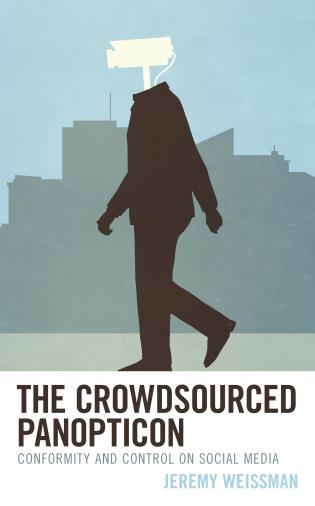
Jeremy Weissman, The Crowdsourced Panopticon. Conformity and Control on Social Media, Rowman & Littlefield, 2021

Review at LSE Review of Books

Behind the omnipresent screens of our laptops and smartphones, a digitally networked public has quickly grown larger than the population of any nation on Earth. On the flipside, in front of the ubiquitous recording devices that saturate our lives, individuals are hyper-exposed through a worldwide online broadcast that encourages the public to watch, judge, rate, and rank people’s lives. The interplay of these two forces – the invisibility of the anonymous crowd and the exposure of the individual before that crowd – is a central focus of this book. Informed by critiques of conformity and mass media by some of the greatest philosophers of the past two centuries, as well as by a wide range of historical and empirical studies, Weissman helps shed light on what may happen when our lives are increasingly broadcast online for everyone all the time, to be judged by the global community.

Table of contents

Introduction
Part I: Conformity

1. The Human Animal in Civilized Society
2. Social Media as an Escape from Freedom
3. Meaninglessness in the Present Age

Part II: Control
4. The Spectacular Power of the Public
5. ‘P2P’ Surveillance and Control

6. The Net of Noramlization

Part III: Resistance

7. Freedom from the Public Eye

8. Strategies of Resistance
Bibliography