Foucault News

News and resources on French thinker Michel Foucault (1926-1984)

Eckstein, N.A.
Plague time: Space, fear, and emergency statecraft in early modern Italy
(2021) Renaissance and Reformation, 44 (2), pp. 87-111.

DOI: 10.33137/rr.v44i2.37522

Abstract
Michel Foucault argued famously that early modern European governors responded to plague by quarantining entire urban populations and placing citizens under minute surveillance. For Foucault, such sixteenth-and seventeenth-century policies were the first steps towards an authoritarian paradigm that would only emerge in full in the eighteenth century. The present article argues that Foucault’s model is too abstracted to function as a tool for the historical examination of specific emergencies, and it proposes an alternative analytical framework. Addressing itself to actual events in early modern Italy, the article reveals that when plague threatened, Florentine and Bolognese health officials projected themselves into a spatio-temporal dimension in which official actions and perceptions were determined solely by the spread of contagion. This dimension, “plague time,” was not a stage on the irresistible journey towards Foucault’s “utopia of the perfectly governed city.” A contingent response to a recurrent existential menace, plague time rose and fell in response to events, and may be understood as a season.

Maher, H.
Foucault against the Foucauldians? On the problem of the neoliberal state
(2021) Thesis Eleven

DOI: 10.1177/07255136211053377

Abstract
The survival of neoliberal forms of governance after their apparent repudiation during the Global Financial Crisis is a problem that continues to generate significant scholarly controversy. One of the most influential accounts of the survival of neoliberalism in the crisis draws on Michel Foucault’s The Birth of Biopolitics to claim that states intervening to support financial markets during the crisis was simply the neoliberal system working as expected. Returning to Foucault’s original text, I argue this account constitutes a systematic misreading because it treats Foucault as having developed an instrumentalist theory of the neoliberal state, a possibility Foucault explicitly rejected. I suggest that the reasons that led Foucault to reject an instrumentalist theory of the state remain just as relevant today, and accordingly argue for a return to Foucault’s methodological decision to treat neoliberalism not as a theory of state but as a discourse which constructs a novel bio-political governmentality. © The Author(s) 2021.

Author Keywords
discourse; Foucault; governmentality; neoliberalism; state

Thornton, E.
Unregulated Powers: The Politics of Metaphysics in French Post-Kantianism
(2021) European Legacy

DOI: 10.1080/10848770.2021.1987849

Abstract
For thinkers such as Foucault and Deleuze, it is not possible to engage with metaphysical questions without simultaneously considering other, more political problems concerning the power relations that are internal to thought. In this article I argue that, despite certain important ways in which this trend follows in the wake of Nietzsche’s polemic against the tyranny of Truth, to understand the political nature of metaphysics in late twentieth-century French philosophy we must see these thinkers as dealing with an explicitly Kantian problem. After some introductory material in the first section, I lay out the problem of legitimacy in Kant’s Critique of Pure Reason and assess his own solution to this problem. In the third section I explain Nietzsche’s critique of Kant’s solution, while in the fourth section I explain how Foucault and Deleuze each return and respond to the political foundation of Kant’s metaphysics in their own way.

Author Keywords
Deleuze; Foucault; French Philosophy; Kant; Metaphysics; Nietzsche; Politics

Hadot and Foucault on Ancient Philosophy: Critical Assessments
Symposium 17-19th November 2021

Register here for Zoom attendance

Call for papers
Michel Foucault and the Historiography of the Sciences

The June 2022 edition of Transversal: International Journal for the Historiography of Science will present a special issue dedicated to the work of Michel Foucault. The aim is to bring together analyses and reflections on the history of the relationship between Michel Foucault’s work and the historiography of the sciences.

Several axes may guide contributors to this special issue. The first axis concerns the classical relationship between Michel Foucault’s work and the French historical epistemology or philosophical history of the sciences (Gaston Bachelard, Alexandre Koyré, Jean Cavaillès, and Georges Canguilhem). From a methodological point of view, numerous commentators have already highlighted the significance of this tradition in the French philosopher’s books written in the 1960s. Foucault’s first important works on psychiatry, medicine, and the human sciences prolong but, at the same time, produce a series of significant displacements concerning this tradition.

A second axis connects the author of Les Mots et les Choses and the historiography of the sciences tout court. This axis can unfold in several ways. On the one hand, there were proximities, distances, and polemics between Michel Foucault and historians of medicine. The polemic with Jacques Léonard is perhaps the best-known controversy. Erwin Ackerknecht, a disciple of Sigerist, wrote a history of the hospital in France heralded as a counterpoint to Foucault’s theses in Naissance de la Clinique. On the other hand, Foucault’s interest in George Rosen’s work on social medicine shows that this relationship was not made only under the sign of polemics. Moreover, Foucault’s work had important effects on the reconfiguration of the history of science from that time onwards. One can remember the importance of the notion of practice, which became central in the work of many historians from then on, or even the debt that other researchers, such as Ian Hacking, François Delaporte, and, Lorraine Daston claim to have with the Foucauldian work.

A third axis deals with the renewal of the objects of the history of science. Michel Foucault introduced numerous new concepts that have become central to philosophical and historiographical discussions in recent decades and have often transformed the very status of the sciences. Thus, for example, one can think about the concept of biopolitics or in the Foucauldian notion of technology. At the same time, the French thinker opened new domains that have been little explored from a historiographical viewpoint. One can think about such as those linked to economic historiography and neoliberalism.

Finally, we cannot fail to remember the importance of the opening of the Michel Foucault Archives by the National Library of France and the possibilities that these documents open for researchers in the history of the historiography of science.

The expectation is that we will receive contributions that discuss all these possibilities above and other similar topics concerning Foucault’s thought.

Submission details:

Submissions must be received by April 15, 2022, via the journal webpage so they can be considered for the June 2022 issue.

Submissions must be prepared for double-blind review. Notification of acceptance will be sent on May 15, 2022.

Please, see the Author’s Guidelines here.

For any further information concerning this Call for Papers please contact:

Marlon J. Salomon – Universidade Federal de Goiás, Brazil
E-mail: marlonsalomon@ufg.br

Mauro L. Condé – Universidade Federal de Minas Gerais, Brazil
E-mail: mauroconde@ufmg.br

Voogt, A.
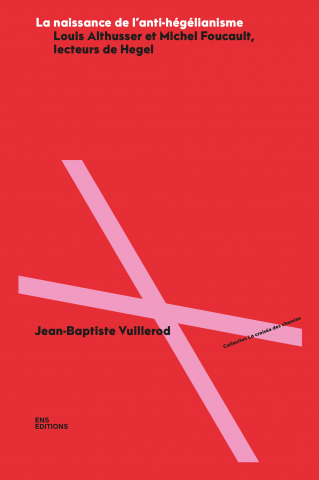
Spirituality in Hegel’s Phenomenology of Spirit: An analysis in the wake of Foucault (2021) Metaphilosophy

DOI: 10.1111/meta.12523

Abstract
Ancient philosophy is often distinguished from modern philosophy regarding its affinity to spirituality. In antiquity, philosophy meant a way of life rather than a body of knowledge. Yet according to Michel Foucault, Hegel’s Phenomenology of Spirit constitutes an important exception to modern philosophy’s break with spirituality, as it integrates structures of spirituality into modern forms and ideals of philosophy. This article builds on Foucault’s analysis by revealing the structures of spirituality that are present within the Phenomenology of Spirit. It argues that in Hegel’s Phenomenology of Spirit the exercise of reason is itself understood as a spiritual exercise. The case of Hegel shows that modern philosophy is not as a whole opposed to the conception of philosophy as a way of life but contains strands that are in line with the ancient tradition.

Author Keywords
Foucault; Hegel; Phenomenology of Spirit; philosophy as a way of life; spiritual exercise; spirituality

Horton, S.
When the face becomes a carrier: Biopower, Levinas’s ethics, and contagion
(2021) Revista Portuguesa de Filosofia, 77 (2-3), pp. 715-732.

DOI: 10.17990/RPF/2021_77_2_0715

Abstract
In the midst of a pandemic, what does it mean to see the Other as Other and not as a carrier of the virus? I argue that in seeking a Levinasian response to the pandemic, we must be mindful of the implications of the mechanisms of surveillance and control that, presented as ways to protect the Other, operate by controlling the Other and rendering our relation to the Other increasingly impersonal. Subjected to these mechanisms, the Other becomes a dangerous entity that must be controlled, and the state that deploys them comes increasingly to mediate the relation between self and Other. The more we rely on such mechanisms for protection, the easier it becomes to regard the Other not as one who summons me to an infinite responsibility but as a vector of disease. Despite all the differences between Levinas’s and Foucault’s approaches, reading them in conversation shows that the control and surveillance of the population functions within a discourse that medicalizes and objectifies the Other in favor of the centralizing power that uses those technologies. In defiance of Levinas’s warning against imposing a narrative on the Other’s suffering, this discourse coopts that suffering as a justification for biopower.

Author Keywords
Biopower; Covid-19; Disease; Ethics; Foucault; Levinas; SARS-CoV-2; Surveillance

2nd Month of Historical Epistemology
November 3, 10, 17, 24 / 2021

17h-19h (Paris time GMT+1)

Link Zoom: unive.zoom.us/j/6569494316

Organizing Committee

Caroline Angleraux
Lucie Fabry
Ivan Moya Diez
Matteo Vagelli

Épistémologie Historique. Research Network
on the History and the Methods of Historical Epistemology

with the support of
IHPST (UMR 8590, Paris 1/CNRS)
République des Savoirs (USR 3608, ENS/ Collège de France/CNRS)
École doctorale Lettres, Arts, Sciences humaines et sociales (ED 540, ENS – EUR Translitteræ, PSL)
Centre Gilles Gaston Granger (UMR 7304)
Universidad Alberto Hurtado
Università Ca’ Foscari Venezia
European Commission  (This project has received funding from the European Union’s Horizon 2020 research and innovation programme under the Marie Skłodowska-Curie grant agreement No 101030646, « EPISTYLE »)

PROGRAM (PDF / abstracts here)

Wednesday, November 3, 17h-19h (GMT +1)

« Biology and Medecine », Chair Matteo Vagelli

Samuel Talcott, University of the Sciences (Philadelphia)
« Methods and Events: François Delaporte on the 1832 Parisian Cholera and its Role in the Birth of Biosocieties »

Silvia De Cesare, Université de Genève
« L’idée de progrès entre organismes et artefacts techniques »

Wednesday, November 10, 17h-19h (GMT +1)

« Economics », Chair Iván Moya-Diez

Emmanuel Picavet, Université Paris 1 Panthéon-Sorbonne
« Introduction »

Sina Badiei & Matteo Vagelli, Lausanne / Ca’Foscari
« Étudier la pensée économique par le prisme de l’épistémologie historique »

Clémence Thébaut, Université de Limoges
« L’évaluation économique en santé au prisme de la typologie des épistémès de Foucault »

Wednesday, November 17, 17h-19h (GMT+1)

« Social sciences and ecology », Chair Caroline Angleraux

Martín Bernales-Odino, Iván Moya-Diez, Mauricio Canals & Valentina Riberi, Universidad Alberto Hurtado
« The poor as a kind of people and epistemic objects. 1778-1854 »

Andrea Angelini, Centre Cavaillès
« Canguilhem dans le Capitalocène. L’épistémologie historique à l’épreuve de l’écologie »

Wednesday, November 24, 17h-19h (GMT+1)

« History of epistemology », Chair Lucie Fabry

Massimiliano Simons, Ghent University
« We Have Never Been Historical Epistemologists »

Gerardo Ienna, ERC EarlyModernCosmology
« Italian Science Wars: une controverse dans l’épistémologie historique italienne »

For further info:

website episthist.hypotheses.org
e-mail epistemologiehistorique@gmail.com
Facebook episthist
Twitter @episthist
Instagram epistemologiehistorique

Platonism. Ficino to Foucault
Editors: Valery Rees, Anna Corrias, Francesca M. Crasta, Laura Follesa, and Guido Giglioni, Brill, 2021.

In particular
Candiotto, Laura. “Chapter 14 Care of the Self and Politics: Michel Foucault, Heir of a Forgotten Plato?”. In Platonism, (Leiden, The Netherlands: Brill, 2020) doi: https://doi.org/10.1163/9789004437425_016

The sixteen essays in this volume trace the development of Platonism in the history of Western thought, starting with the revival of the Platonic tradition in the early modern period that followed the rediscovery and translation of important Greek texts. Special attention is devoted to Marsilio Ficino’s translations and commentaries; to the relationship between Platonism and Christianity; to the influence of Platonic metaphysics on the mystical tradition – in particular on Jacob Böhme and Emanuel Swedenborg; to the impact of idealism on the hermeneutical criticism of traditional philosophical categories and to the ways in which the so-called ‘Critique of Modernity’ promoted a new reading of the Platonic dialogues. The emphasis throughout is on demonstrating the theoretical and historical continuity of Platonism over the centuries.

Contributors are: Laura Candiotto, Pierpaolo Ciccarelli, Anna Corrias, Francesca Maria Crasta, Eva del Soldato, Laura Follesa, Guido Giglioni, Nicholas Holland, Andrea Le Moli, Brunello Lotti, Cecilia Muratori, Arnold Oberhammer, Paula Oliveira e Silva, Valery Rees, Pasquale Terracciano, and Angelo Maria Vitale.

Beukes, Johann. “Michel Foucault on Methodius of Olympus (d.ca.311) in Les aveux de la chair: Patrick Vandermeersch’s analysis contextualised.” HTS Teologiese Studies / Theological Studies , 77.4 (2021): 12 pages. Web. 30 Oct. 2021

Open access

Abstract
This article presents a contextualisation of Belgian philosopher and historian of psychiatry and sexuality, Patrick Vandermeersch’s (1946–), unpublished analysis of French philosopher Michel Foucault’s (1926–1984) interpretation of Methodius of Olympus’ (d.ca.311) views on virginity and chastity, in Histoire de la sexualité 4 (Les aveux de la chair), published in February 2018 at Gallimard in Paris under the editorship of Frédéric Gros. The article contributes to the reception and the ongoing analyses of Les aveux de la chair by exploring Foucault’s reading while highlighting both the importance of Vandermeersch’s analysis and the sexological-historiographical significance of his broader oeuvre that spans over four decades. Vandermeersch shows that Foucault, as many other commentators of Methodius, did not substantially engage Methodius’ explicit indebtedness and persistent references to Plato (already evident in the title Symposium but especially regarding the Phaedrus). Platonic homoeroticism is, according to Vandermeersch, as a consequence often too hastily, and therefore problematically, transposed on contexts of female virginity. Likewise, Foucault, when indicating already at the end of Histoire de la sexualité 2 (L’usage des plaisirs 1984), the particular relevance of homoeroticism in the development of Western sexuality, seemed to adhere to this transposition. Could ‘beautiful boys’ truly be transposed onto ‘female virgins’ without severe sexual-discursive complications? And could Methodius’ encomium of virginity in any way be understood independent of his understanding of the ‘resurrection of the body’, with the integrity of its (virginised) sexual desire intact? These are among Vandermeersch’s valid and challenging questions to both Foucault and his contemporary readership.

Contribution: Foucault’s reading of the church- and desert fathers in Histoire de la sexualité 4 (Les aveux de la chair) impacts early Medieval philosophy, early Medieval history, church history, patristics, philosophy of religion, psychology of religion and sociology of religion. Since these proximate disciplines are drawn towards Foucault’s text, they may well note its ongoing examinations. Foucault’s direct impact on these disciplines is illustrated in Vandermeersch’s significant analysis of Foucault’s reading of Methodius in Les aveux de la chair. Vandermeersch’s broader oeuvre in philosophy, theology, psychiatry, psychology, psychology of religion and the history of sexuality is concurrently contextualised as of ongoing contemporary importance for these disciplines.

Keywords
Katharina Bracht (1967–); Michel Foucault (1926–1984); Simon Goldhill (1957–); Histoire de la sexualité 4; Les aveux de la chair; Methodius of Olympus (d.ca.311); Phaedrus; Symposium; Patrick Vandermeersch (1946–); Jos van Ussel (1918–1976)