Foucault News

News and resources on French thinker Michel Foucault (1926-1984)

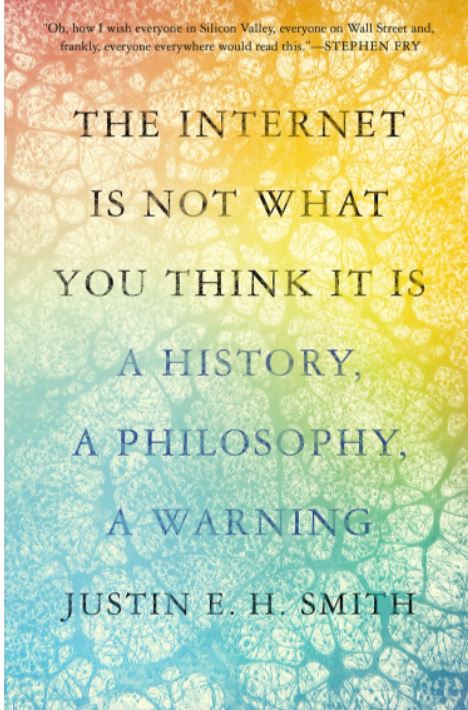
The Internet Is Not What You Think It Is: A History, a Philosophy, a Warning
Justin E.H. Smith
New Jersey: Princeton University Press, 2022. 256 pp

Many think of the internet as an unprecedented and overwhelmingly positive achievement of modern human technology. But is it? In The Internet Is Not What You Think It Is, Justin Smith offers an original deep history of the internet, from the ancient to the modern world—uncovering its surprising origins in nature and centuries-old dreams of radically improving human life by outsourcing thinking to machines and communicating across vast distances. Yet, despite the internet’s continuing potential, Smith argues, the utopian hopes behind it have finally died today, killed by the harsh realities of social media, the global information economy, and the attention-destroying nature of networked technology.

Ranging over centuries of the history and philosophy of science and technology, Smith shows how the “internet” has been with us much longer than we usually think. He draws fascinating connections between internet user experience, artificial intelligence, the invention of the printing press, communication between trees, and the origins of computing in the machine-driven looms of the silk industry. At the same time, he reveals how the internet’s organic structure and development root it in the natural world in unexpected ways that challenge efforts to draw an easy line between technology and nature.

Combining the sweep of intellectual history with the incisiveness of philosophy, The Internet Is Not What You Think It Is cuts through our daily digital lives to give a clear-sighted picture of what the internet is, where it came from, and where it might be taking us in the coming decades.

David Beer, The Internet Is Only What You Think It Is: Go, Go Gadget Philosophy, Berfrois, 20 April 2022

The Internet Is Not What You Think It Is: A History, a Philosophy, a Warning
Justin E.H. Smith
New Jersey: Princeton University Press, 2022. 256 pp

A classic lecture theatre layout. I was high in ‘the gods’ listening sporadically to a lecture on how to send an email. It was part of a weekly course guiding us through the internet and some other information technologies. Much of it was new to us. Yet even at the time the sessions felt a bit comical. Part of the assessment required us to successfully send an email to the lecturer. Picking up Justin E.H. Smith’s ambitious new book, which seeks to rethink our understanding of the internet, I can’t help but think back to my early encounters. Pulling philosophy from his sleeves, Smith’s aim, as the title alludes, is to tell the reader The Internet Is Not What You Think It Is. In those early moments of surfing I knew exactly what I thought it was. It was crap. A gimmick. Flimsy content, empty, slow, pointless. Nothing much to capture the imagination and certainly no danger of an attention grab. Of course, things got very complicated very quickly.

[…]
To give this method and approach a label, Smith talks of a ‘historical ontology’, a phrase drawn from the work of Ian Hacking. The approach is also described in terms of it being an adapted version of Foucault’s genealogy. Instead of isolating historical moments of rupture though, Smith is looking for the stable and enduring in what he calls a type of ‘perennialist genealogy’. The aim here, presumably, is to see what keeps coming back. Smartphones, for instance, are said to be ‘concretions of a certain kind of natural activity in which human beings have been engaging all along’. Smith wants to build a sense of something ongoing in the internet, something that has always been and which is finding certain new forms that blend the old with some potentially new properties.

Mark Murphy (ed.) Social Theory and Education Research. Understanding Foucault, Habermas, Bourdieu and Derrida, Routledge, 2nd edition, 2022

Book Description
Social Theory and Education Research is an advanced and accessible text that illustrates the diverse ways in which social theories can be applied to educational research methodologies. It provides in-depth overviews of the various theories by well-known and much-debated thinkers – Michel Foucault, Jürgen Habermas, Pierre Bourdieu and Jacques Derrida – and their applications in educational research.

Updated throughout and with new extended introductions to each theorist and a new chapter on the application of socio-theoretical concepts in education research methodologies and the how-to of research practice, this second edition assists education practitioners and researchers in their acquisition and application of social theory. This book contextualizes the various theories within the broader context of social philosophy and the historical development of different forms of thought.

Social Theory and Education Research will be incredibly useful to postgraduate students and early career researchers who wish to develop their capacity to engage with these debates at an advanced level. It will also prove of great interest to anyone involved in education policy and theory.

Table of Contents
Part I: Introduction

Social theory and education research: An introduction (Mark Murphy)
Social theory and methodology in education research: From conceptualisation to operationalisation (Mark Murphy and Cristina Costa) 
Part II: Foucault 

Foucault and his acolytes: Discourse, power and ethics (Julie Allan)
Retooling school surveillance research: Foucault and (post)panopticism (Andrew Hope)
Using Foucault to examine issues of girls’ education in a religiously driven postcolonial-security state (Ali Sameer)
Part III: Habermas

Jürgen Habermas: Education’s increasingly recognized hero (Terence Lovat)
Between the state and the street: Habermas and education governance (Mark Murphy)
Applying Habermas’ theory of communicative action in an analysis of recognition of prior learning (Fredrik Sandberg)
Part IV: Bourdieu

Bourdieu and educational research: Thinking tools, relational thinking, beyond epistemological innocence (Shaun Rawolle and Bob Lingard)
Research in Christian Academies: Perspectives from Bourdieu (Elizabeth Green)
Bourdieu applied: Exploring perceived parental influence on adolescent students’ educational choices for studies in higher education (Irene Kleanthous)
Part V: Derrida

Derrida and educational research: An introduction (Jones Irwin)
‘Derrida applied’: Derrida meets Dracula in the geography classroom (Christine Winter)
Engaging with student teachers on reflective writing: Reclaiming writing (Duncan Mercieca)

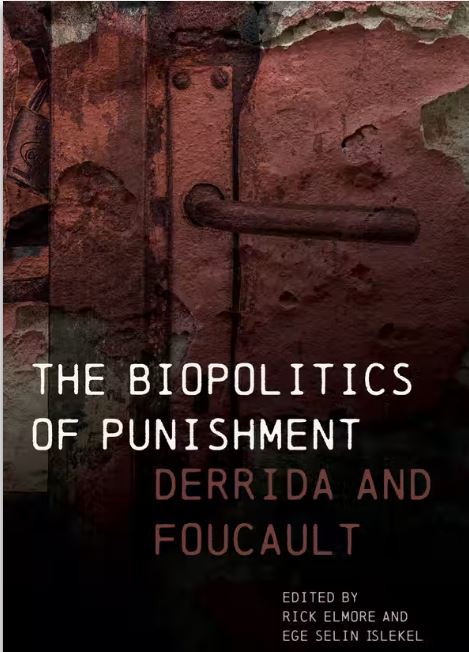
The Biopolitics of Punishment, Derrida and Foucault
Edited by Rick Elmore and Ege Selin Islekel, Northwestern University Press, 2022

This volume marks a new chapter in the long-standing debate between Jacques Derrida and Michel Foucault regarding argumentative methods and their political implications. The essays chart the undertheorized dialogue between the two philosophers on questions of life, death, punishment, and power—an untapped point of departure from which we might continue to read the convergence and divergence of their work. What possibilities for political resistance might this dialogue uncover? And how might they relate to contemporary political crises?

With the resurgence of fascism and authoritarianism across the globe, the rise of white supremacist and xenophobic violence, and the continued brutality of state-sanctioned and extrajudicial killings by police, border patrols, and ordinary citizens, there is a pressing need to critically analyze our political present. These essays bring to bear the critical force of Derrida’s and Foucault’s biopolitical thought to practices of mass incarceration, the death penalty, life without parole, immigration and detention, racism and police violence, transphobia, human and animal relations, and the legacies of colonization. At the heart of their biopolitics, the volume shows, lies the desire to deconstruct and resist in the name of a future that is more just and less policed. It is this impulse that makes reading their work together, at this moment, both crucial and worthwhile.

Contents

Editors’ Introduction
Part I. Punishment and Sacrifice: Death Penalty and the Penitentiary
1. Biopolitics and the Politics of Sacrifice: Derrida on Life, Life Death, and the Death Penalty – Michael Naas
2. Posthuman and Postanimal Futures or the Possibilities of a Deconstructive Biopolitics – Rick Elmore
3. Blood on Our Minds, Blood On Our Hands – Brad Elliott Stone
4. Foucault and the Biopolitics of the Penitentiary: Death in/by Incarceration – Ege Selin Islekel
Part II. Taking Lives, Letting Die: Biopolitics of Race
5. Making Die or Letting Die: Derrida, Foucault, and the Refugee Crisis – Kelly Oliver
6. Counting Heads: Reason, The Human, and Capital Punishment(s) – María de la Cruz Salvador López
7. From the Will to Race to Hygienic Feminism: Race, State, Habit – Tamsin Kimoto
Part III. Resistance in Action
8. Fearless Lives: Parrhesia in a Biopolitical Frame – Sarah Hansen
9. The Silent Exception: Hunger Striking and Lip-Sewing – Banu Bargu
10. The Etymology of Unity – Janos Toevs

Harsin, Jayson. “Post-Truth and Critical Communication Studies.” Oxford Research Encyclopedia of Communication. 20 Dec. 2018 https://oxfordre.com/communication/view/10.1093/acrefore/9780190228613.001.0001/acrefore-9780190228613-e-757.

Summary
While the periodizing concept “post-truth” (PT) initially appeared in the United States as a key word of popular politics in the form “post-truth politics” or “post-truth society,” it quickly appeared in many languages. It is now the object of increasing scholarly attention and public debate. Its popular and academic treatments sometimes differ in respect to its meaning, but most associate it with communication forms such as fake or false news, rumors, hoaxes, and political lying. They also identify causes such as polarization and unethical politicians or unregulated social media; shoddy journalism; or simply the inevitable chaos ushered in by digital media technologies. PT is sometimes posited as a social and political condition whereby citizens or audiences and politicians no longer respect truth (e.g., climate science deniers or “birthers”) but simply accept as true what they believe or feel.

However, more rigorously, PT is actually a breakdown of social trust, which encompasses what was formerly the major institutional truth-teller or publicist—the news media. What is accepted as popular truth is really a weak form of knowledge, opinion based on trust in those who supposedly know. Critical communication approaches locate its historical legacy in the earliest forms of political persuasion and questions of ethics and epistemology, such as those raised by Plato in the Gorgias. While there are timeless similarities, PT is a 21st-century phenomenon. It is not “after” truth but after a historical period where interlocking elite institutions were discoverers, producers, and gatekeepers of truth, accepted by social trust (the church, science, governments, the school, etc.). Critical scholars have identified a more complex historical set of factors, to which popular proposed solutions have been mostly blind.

Modern origins of PT lie in the anxious elite negotiation of mass representative liberal democracy with proposals for organizing and deploying mass communication technologies. These elites consisted of pioneers in the influence or persuasion industries, closely associated with government and political practice and funding, and university research. These influence industries were increasingly accepted not just by business but also by (resource-rich) professional political actors. Their object was not policy education and argument to constituents but, increasingly strategically, emotion and attention management. PT can usefully be understood in the context of its historical emergence, through its popular forms and responses, such as rumors, conspiracies, hoaxes, fake news, fact-checking, and filter bubbles, as well as through its multiple effects—not the least of which the discourse of panic about it.

Keywords
fake news, fact-checking, rumor, disinformation, trust, attention economy, journalism, democracy, political communication, communication and critical studies

Subjects
Communication and Social Change, Critical/Cultural Studies, Communication and Culture, Media and Communication, Policy, Political Communication

[…]
Scholars in the 1990s had begun to discuss popular culture in the context of legitimate and illegitimate knowledges as well as trust in authority, dramatized by TV series such as the X-Files (Bellon, 1999; Lavery, Hague, & Cartwright, 1996). Working on the popular fascination with “conspiracy culture,” Dean (1998) was already speaking of American society as characterized by “fugitive truth” at the turn of the 21st century. A small group of scholars continued to pursue questions of popular knowledges and politics through Foucault’s concepts of truth regimes and subjugated knowledges, with particular emphasis on conspiracy theory and gossip (Birchall, 2006; Bratich, 2008) as well as through Stephen Colbert’s satirical coinage “truthiness,” what is felt to be true (Jones, 2009). However, thus far, the scholarly emphasis on truth, media and politics, dominant and subjugated knowledges and power did not identify a conjunctural shift with regard to public truth and trust and had not begun to explore in depth the multiple, converging mechanisms behind such a thesis.
[…]

Special Issue on Foucault. Revista de Filosofia Aurora. Journal of Philosophy Aurora, v. 34 n. 61 (2022)

Open access
Note: The DOIs might not be working yet. Please follow link above to journal site

Editorial
DOI: https://doi.org/10.7213/1980-5934.34.061.ED01
Léo Peruzzo Júnior; Jelson Oliveira, Antonio Valverde, Cesar Candiotto, Philippe Sabot

Dossiê
La santé au prisme de la biopolitique
DOI: https://doi.org/10.7213/1980-5934.34.061.DS01
Philippe Sabot

Sobre el estatuto de la vida en el paradigma biopolítico foucaultiano
DOI: https://doi.org/10.7213/1980-5934.34.061.DS02
Marcelo Sergio Raffin

Neoliberalismo, democracia e constituição do sujeito em Michel Foucault
DOI: https://doi.org/10.7213/1980-5934.34.061.DS03
César Candiotto

Querer não querer:
A análise foucaultiana da obediência monástica e se índice crítico à biopolitica em tempos de neoliberalismo
DOI: https://doi.org/10.7213/1980-5934.34.061.DS04
Marcos Nalli

Reflexiones en torno a la crítica foucaultiana del liberalismo en tanto marco de racionalidad de la biopolítica
DOI: https://doi.org/10.7213/1980-5934.34.061.DS05
Iván Gabriel Dalmau

Biopolítica, Neoliberalismo e guerra às drogas
DOI: https://doi.org/10.7213/1980-5934.34.061.DS06
Ernani Chaves, Eduardo Neves Lima Filho

Corpos (in)dóceis:
intersecções da vida artista no biopoder
DOI: https://doi.org/10.7213/1980-5934.34.061.DS07
Renan Pavini

Biopolitics and (in)security in Foucault:
elements for a diagnosis of the management of the COVID-19 pandemic in Brazil
DOI: https://doi.org/10.7213/1980-5934.34.061.DS08
Daniel Verginelli Galantin, Thiago Fortes Ribas

El Hospicio hispano para pobres.
Un tosco inicio del biopoder
DOI: https://doi.org/10.7213/1980-5934.34.061.DS09
Martín Bernales Odino

Vitam instituere:
biopolítica afirmativa e pensamento instituinte em Roberto Esposito
William Costa

Foucault, Esposito y las posibilidades de una biopolítica afirmativa:
supuestos, tensiones e implicancias
DOI: https://doi.org/10.7213/1980-5934.34.061.DS11
Sebastián Botticelli

El Dispositivo Biopolítico de mejoramiento humano del siglo XXI:
poder molecular sobre la vida y producción de nuevas subjetividades
DOI: https://doi.org/10.7213/1980-5934.34.061.DS12
Daniel Gihovani Toscano López

Sodoma y el barón Haussmann
Por una deslocalización queer
DOI: https://doi.org/10.7213/1980-5934.34.061.DS13
Pablo Pérez Navarro

Políticas de vidas e dívidas:
faces do poder pastoral e da constituição do sujeito de necessidades na Biopolítica contemporânea
DOI: https://doi.org/10.7213/1980-5934.34.061.DS14
Regiane Lorenzetti Collares, Luis Celestino França Jr

Entrevistas
Entrevista com o Filósofo Timothy Morton
DOI: https://doi.org/10.7213/1980-5934.34.061.EN01
Thiago Pinho

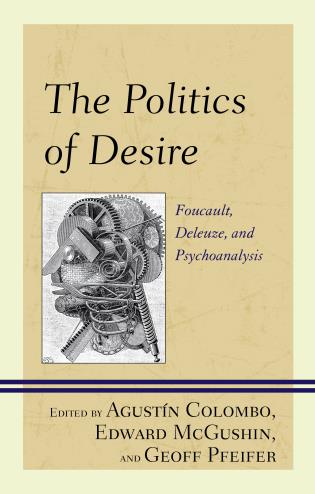
Agustín Colombo, Edward Mcgushin and Geoff Pfeifer (eds.) The Politics of Desire. Foucault, Deleuze, and Psychoanalysis, Rowman & Littlefield Publishers, 2022

In his preface to Deleuze and Guattari’s Anti-Oedipus, Michel Foucault notes that in the late sixties, there is a turn away from Freud anda movement toward what he calls an “experience and technology of desire that is no longer Freudian”. Foucault, Deleuze, and Guattari were interested in, and engaged with this shift and their collective work in these areas spawned a larger post-Freudian literature.

This book gathers contributions from international scholars with the aim of exploring the social, political, and philosophical dimension of Deleuze and Guattari’s, and Foucault’s critical encounters with psychoanalytic thought: Their possible connections, their divergences, the fields of reflection that these encounters open, and the problems and debates that led Foucault and Deleuze and Guattari to engage with psychoanalysis in the ways that they did. In doing so, the main goal of the book is not to engage in a critique of the discipline of Psychoanalysis as such, but to investigate how Foucault’s and Deleuze’s critique of Psychoanalysis gives rise to a political reflection that draws on some of Psychoanalysis key notions. Among these, the concept of Desire is central as it allows us to grasp the different ways in which Foucault and Deleuze politically engage with Psychoanalysis: for Deleuze, Desire is the element through which Revolution becomes possible, whereas for Foucault Desire is a cornerstone of the modern mechanisms of subjection.

Drawing both on new material like Confessions of the Flesh, the 4th volume of Foucault’s History of Sexuality and on Foucault and Deleuze’s main work, the book covers a variety of topics including the contrast between Foucault’s and Deleuze political understanding of desire and pleasure; the genealogy of desire as a way to investigate the historical shaping of psychoanalysis; the relationship between psychoanalysis and the normalizing mechanisms of power (e.g. biopolitics and disciplinary regimes); the ways in which psychoanalysis and neoliberalism come together in particular moments, the status and role of desire in revolt, resistance, and transformation; Foucault and Deleuze’s different approaches to the unconscious; the role of desire in the formation of identity; etc. In the 50th anniversary of Deleuze and Guattari’s Anti-Oedipus, one of the major references that inspires the many chapters in this book, we aim to pay homage to these two important figures of contemporary thought by enriching and opening new lines of thought and problematization of the political reflection on Desire that Foucault and Deleuze developed.

stuartelden's avatarProgressive Geographies

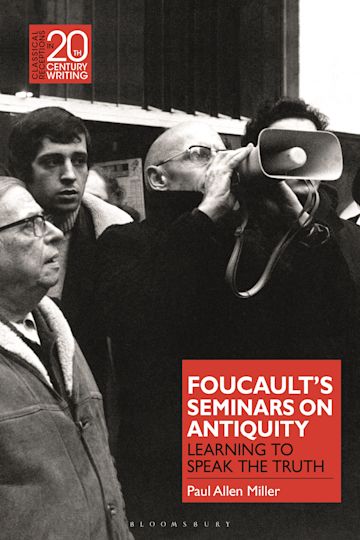
At Berfrois, I review Paul Allen Miller’s recent book Foucault’s Seminars on Antiquity: Learning to Speak the Truth

… As Foucault tells the story, he turned to pagan antiquity because he needed to break from the secondary accounts he had initially relied upon. Foucault scholarship has long grappled with the choice Foucault made to return to much older material, initially based on the published books and a few traces of teaching or shorter publications. Now, with the publication and translation of all his late lecture courses in Paris, as well as lectures or short courses delivered elsewhere, there is much more material available. In Foucault’s Seminars on Antiquity, Paul Allen Miller, Carolina Distinguished Professor of Classics and Comparative Literature at the University of South Carolina, discusses his final five courses in detail. The result is a convincing and nuanced study of Foucault’s engagement with classical texts…

View original post

Ryan P. Deuel (2021) Governing higher education toward neoliberal governmentality: a Foucauldian discourse analysis of global policy agendas, Globalisation, Societies and Education, DOI: 10.1080/14767724.2021.1897000

ABSTRACT
Intergovernmental organisations (IOs) have developed global policies that have shaped the practices of higher education for decades. The OECD, WTO, and World Bank have long framed higher education as both a contributor to human capital and a driver of economic growth. Yet, their policy agendas have transformed over time and more recently taken up neoliberal narratives. This paper analyses a corpus of IO texts to demonstrate how these organisations have shifted the governing responsibility for higher education, subordinated higher education to the practice of lifelong learning, and created the conditions for increasing international student mobility. Applying a Foucauldian analysis of discourse and studies in governmentality, this paper broadly explores the complexity of IO governing policies, which have (re)imagined and (re)positioned the purpose of higher education and its role as a technology of government. As global environmental, social, political, and health crises demand globally researched and financed solutions, this exploration of IO policy is a necessary step in the work of reimaging the future practices of higher education.

KEYWORDS: Higher education, governmentality, governance, knowledge economy, lifelong learning

Peter Triantafillou (2022) Biopower in the age of the pandemic: the politics of COVID-19 in Denmark, European Societies, DOI: 10.1080/14616696.2022.2061553

ABSTRACT
The exceptional forms of state power mobilized under COVID-19 have attracted scholarly attraction and created important insights on the pandemic politics. However, it seems that the current understanding tends to regard the states’ responses as a zero-sum game between two powers only, a game in which liberal rule in varying degrees is traded for raw sovereign power. Inspired by the notion of biopower, this article aims to provide a more nuanced account of the various powers invoked to handle the pandemic. Based on the case of Denmark, it is argued that three forms of power were mobilized: sovereignty, discipline and security mechanisms. Yet, indirect security mechanisms informed by epidemiological knowledge and modelling have played a far more comprehensive role than the two other power mechanisms. In a complex interaction with epidemiological expertize, liberal governmentalities limited the mobilization of sovereignty and discipline and, instead, tended to endorse indirect security mechanisms.

KEYWORDS:
Biopolitics, state power, pandemics, epidemiological regulations, Foucault