Foucault News

News and resources on French thinker Michel Foucault (1926-1984)

Jan-Peter Herbst and Jonas Menze, Gear Acquisition Syndrome. Consumption of Instruments and Technology in Popular Music, University of Huddersfield Press, 2021

Open access

“Gear Acquisition Syndrome, also known as GAS, is commonly understood as the musicians’ unrelenting urge to buy and own instruments and equipment as an anticipated catalyst of creative energy and bringer of happiness. For many musicians, it involves the unavoidable compulsion to spend money one does not have on gear perhaps not even needed. The urge is directed by the belief that acquiring another instrument will make one a better player. This book pioneers research into the complex phenomenon named GAS from a variety of disciplines, including popular music studies and music technology, cultural and leisure studies, consumption research, sociology, psychology and psychiatry. The newly created theoretical framework and empirical studies of online communities and offline music stores allow the study to consider musical, social and personal motives, which influence the way musicians think about and deal with equipment. As is shown, GAS encompasses a variety of practices and psychological processes. In an often life-long endeavour, upgrading the rig is accompanied by musical learning processes in popular music.”

[…] Arsel and Bean (2013), inspired by Foucault’s (1991) concept of ‘regime of practice’, consider ‘taste regimes’ central for the standardisation of practices that can take the form of expected equipment amongst musicians for specific purposes or different levels of professionalism. The authors define taste regimes as a ‘discursively constructed normative system that orchestrates the aesthetics of practice in a culture of consumption. A taste regime may be articulated by a singular, centralized authority such as an influential magazine or blog’ (Arsel & Bean 2013: 899f). […] (p.128)

Pan, S., & Mou, Y. (2025). Dancing With a Loving Chatbot: Power Dynamics Between Women and Their AI Partners. Social Science Computer Review, 0(0).
https://doi.org/10.1177/08944393251340693

Abstract
With the growing prevalence and accessibility of AI companions, contemporary women are forming relationships with virtual partners. It is important to examine the relational, social, and gender-related implications of this phenomenon. Our research sheds light on the complex power dynamics in young urban Chinese women’s engagements with the AI partner Replika. By analyzing 342 relevant posts from an online chatbot community, guided by Foucault’s concept of power, we uncover inherent and actively exercised power dynamics in three typical user-bot relational pairings: customer-product, human-machine, and woman-man/woman-woman. Following the Foucauldian theories, we analyzed the interplay of truth, desire, knowledge, and power. We discovered three specific neoliberal subjectivities that both free and constrain female users in their engagement with Replika. While these female users challenge traditional gender norms through erotic roleplays with Replika, Generative AI introduces potential risks of sexual harassment and gender bias channeled from the extensive online world through AI partners to individual users.

Clare O’Farrell, Foucault, Radio Interview 2: Madness Silenced, Refracted Input blog, 29 July 2025

Citation from Michel Foucault, Histoire de la folie a l’âge classique. Entretien avec Michel Foucault. Diffusion le 11 juillet 1961 sur France III National. In Michel Foucault, Entretiens radiophoniques, 1961-1983, Flammarion / VRIN / INA, 2024, pp. 17-19.

‘[…] no other society except ours, grants the status of mental illness alone to the madman. In all other societies, the status of the mad is much more complex and in a sense richer. The mad have a religious significance, a magical significance. The madman is out in the open, his manifestations eagerly awaited with attempts made to decypher them. But this kind of annihilation by psychology, medicine and mental pathology is characteristic of our culture; and up to a certain point at least, it’s an impoverishment.’ (p.19)

See commentary on the Refracted Input blog

Vasiliou, Elena (2025). Self-destruction in prison: A queer view on pain through decolonial and psychoanalytic theory. Theoretical Criminology.

https://doi.org/10.1177/13624806251350622

Abstract
Much research on suicide or self-harm in prison settings draws on medical and psychological preventive discourses, rather than engaging with broader social or structural approaches. Such perspectives have been critiqued for leaning toward individualizing, pathologizing, and punitive interpretations. This article advocates for queer, decolonial, and psychoanalytic perspectives to revisit interventions against self-destruction in prison. In doing so, it explores how former prisoners’ narratives of self-harm and suicide reveal a negotiation of pain, acts of resistance, sabotage of futurity, and how they are fueled by desire/pleasure. The data is based on 20 interviews with former prisoners and the author’s experience as an educator and researcher at Nicosia Central Prison in Cyprus. The article contributes to political and non-pathologizing ethics of care in penological analyses.

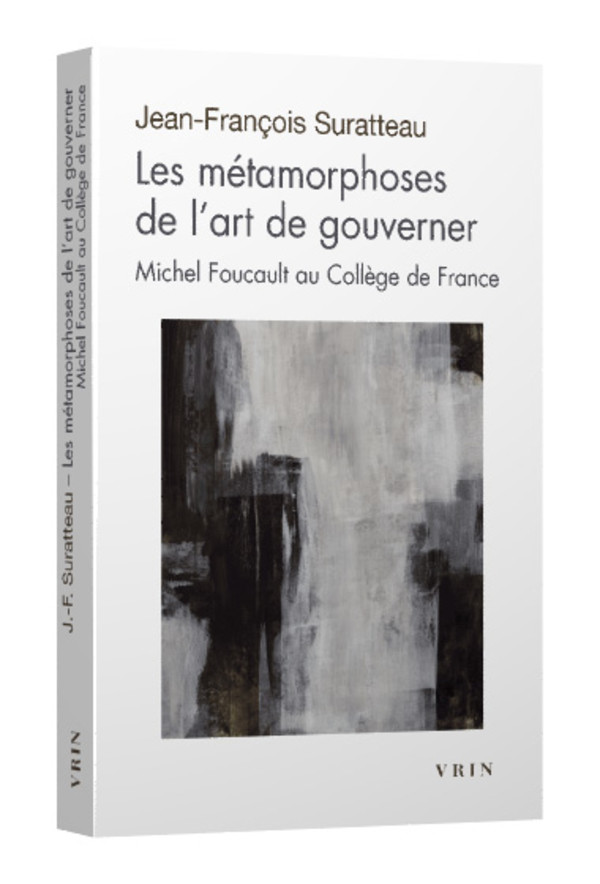
Dictionnaire Roland Barthes. Sous la direction de Claude Coste, Honoré Champion, 2025.

Animée par un déplacement incessant qui la conduit de l’engagement des Mythologies au structuralisme (« Analyse structurale des récits », « Éléments de sémiologie ») au post-structuralisme (S/Z), puis à l’essayisme de L’Empire des signes, des Fragments d’un discours amoureux et de La Chambre claire, l’œuvre de Roland Barthes manifeste une grande fidélité à des valeurs fondamentales comme la passion du sens, l’amour de la littérature, le « non-vouloir-saisir » ou le goût de la nuance. C’est cette extraordinaire diversité que le dictionnaire a l’ambition de mettre en évidence, grâce à une équipe réunissant une soixantaine de spécialistes internationaux. À chaque livre, aux articles les plus connus, aux intellectuels contemporains, aux principaux concepts ou mots-clés correspond une entrée suivie d’une courte bibliographie. Une place importante est réservée aux archives conservées à la BnF, qu’il s’agisse du monumental fichier, des séminaires inédits à l’École pratique de hautes études ou des esquisses de Vita nova, le projet de roman qui a occupé Barthes jusqu’à la fin de sa vie.

Professeur de littérature à l’université de Cergy Paris, Claude Coste consacre une grande partie de sa recherche à l’œuvre de Roland Barthes dont il a édité plusieurs séminaires au Seuil et auquel il a consacré plusieurs monographies.
 
Review: Neil Badmington, More than a French fry. The global impact of Roland Barthes’s writing, Times Literary Supplement, July 2025

[…] The 335 entries cover the full range of Barthes’s work and include both what we would expect to see in a volume of this kind (“fragment”, “writing”, “photography” and “body”, for example) and the less familiar (“stupidity”, “Greece”, “hippies” and “fear”). Sections on other writers with whom Barthes’s work was in dialogue – including Jacques Derrida, Michel Foucault, Julia Kristeva and Friedrich Nietzsche – establish both the indebtedness and the distinctiveness of Barthes’s contribution to twentieth-century criticism. There are dedicated entries for all of Barthes’s major works, including the many texts that have appeared in print since his his death in 1980. […]

With thanks to Colin Gordon for this news

Howell, P. (2025). Foucault, Parrhesia and the politics of presence: on not speaking truth to power. Cultural Geographies, 0(0).
https://doi.org/10.1177/14744740241310238

Abstract
This paper considers the take-up by geographers and others of Foucault’s late work on parrhesia, the ancient Greek concept of frank or fearless speech. While there has been productive work on its genealogy and geographies, parrhesia has been commonly translated as ‘speaking truth to power’ and discussion has centred around resistance. This paper argues that ‘speaking truth to power’ selects and simplifies the range of practices considered in Foucault’s history of truth and subjectivity. But Foucault’s genealogy of parrhesia suffers from the same problem that besets the idea of ‘speaking truth to power’. This is the privileging of the immediate presence of the speaking subject. The phonocentric ideal distorts our understanding of the geographies of parrhesia, particularly in the modern period, where political speech is never unmediated. This leaves the normative significance of parrhesia vulnerable to liberal academic self-congratulation as well as hampering the exploration of frank speech in our own day.

Call for Papers
La volontà di sapere | The Will to Knowledge
Vesper No. 14, Università Iuav di Venezia

Call for abstracts by September 5, 2025
See PDF of call for complete details

[…] Michel Foucault, in La volonté de savoir (1976), described how the mechanisms of the examination of conscience belonging to the pastoral tradition of the 17th century progressively extended to all areas of society, marking the threshold of a biopolitical modernity. Here, the ‘will to knowledge’ is not the subject’s drive for research, but the injunction to bring into the field of knowledge-power those borderline domains of life that had been previously excluded from it: death, birth, sexuality. By the mid-Seventies it was already clear that power was no longer a matter of limitation and denial, but of injunction and stimulation of life. Foucault’s concise book opens a fundamental philosophical reflection on biopolitics, yet it does so through an immanent and concrete mode of thought that possesses its own archaeology: if knowledge once sought signs, on the body of the witch, of her relationship with the evil that lay ‘outside’ her, Foucault says, it will later seek to reveal an evil that is internal and introjected, arising from within the body of the possessed woman in her convulsions. This process of the adherence of knowledge to bodies entirely invests our time and urges us to reflect on the figures of the ‘will to knowledge’ in the new millennium: the questions of surveillance, of the constant and widespread mapping of life in its social and biological dimension – with the implosion, indeed, of this threshold – of ubiquitous visibility, of the collapse of the limits between inside and outside, between inside and outside of work, of wakefulness, of private life, are explored by artistic and design forms. Philippe Parreno, with his Marquee (2006 onwards), exhibits illuminated thresholds that lead to no interior, the mere threshold itself, the glow of a crossing, the condition of possibility of going elsewhere. But it is the thresholds of the modern body, invested by the will to knowledge, that lie at the centre of an intense exploration within visual culture: Vesalius’s flayed men bear witness to the split that traverses their bodies – ‘someone has skinned them, but they are still alive […] it seems that they want to say something’ (J. Gil, ‘Corpo’, in Enciclopedia Einaudi, 1978) – and contemporary arts explore the biological substratum of flesh, both as an object of visualisation (the now proverbial journey that Mona Hatoum undertakes with a probe inside her own body, Corps étranger, 1994) and as an actor of an ‘other’ speech act, written with blood and viscera, a discourse of the ‘anterior body’ that precedes the body as image (R. Barthes, Réquichot and His Body, 1982).

‘The will to knowledge’ also carries a more straightforward, primary meaning: here we encounter the sphere of the desire for knowledge and its challenges, a theme constantly evoked today – above all, that of finding orientation within a hypertrophic labyrinth of information. Thus, a few years after Foucault’s work, we encounter another text on the inexhaustible drive towards knowledge, its infinite resources of seduction, its lethal traps. With The Name of the Rose (1980), Umberto Eco constructs a thriller whose origin lies in the will to knowledge, with a book at its centre and, surrounding it, the desire of the aspiring initiates in opposition to the strenuous defence mounted by the custodians of tradition; for the reader, meanwhile, a comparable journey unfolds through the multi-layered plot of coded quotations, in one of the greatest examples of a dialogic textual machine, as Bakhtin defines it. […]

Call for abstracts and call for papers

“Vesper” is structured in sections; below the call for abstracts and the call for papers according to categories.
All final contributions will be submitted to a double-blind peer review process, except for the section ‘Tale’.
Following the tradition of Italian paper journals, “Vesper” revives it by hosting a wide spectrum of narratives, welcoming different writings and styles, privileging the visual intelligence of design, of graphic expression, of images and contaminations between different languages. For these reasons, the selection process will consider the iconographic and textual apparatuses of equal importance.

“Vesper” is a six-monthly, double-blind peer-reviewed journal, multidisciplinary and bilingual (Italian and English), included into the list of the National Agency for the Evaluation of the University System and Research (ANVUR) of Class A journals in the competition sectors 08/D1 ‘Architectural Design’, 08/F1 ‘Urban and Landscape Planning and Design’ and 11/C4 ‘Aesthetics and Philosophy of Languages’, as of No. 1. Vesper is included in the ANVUR list of scientific journals for the non-bibliometric areas 08 ‘Civil Engineering and Architecture’, 10 ‘Antiquities, Philology, Literary Studies, Art History’ and 11 ‘History, Philosophy, Pedagogy and Psychology’, as of No. 1 (with the exception of their bibliometric subfields). “Vesper” is indexed in SCOPUS, EBSCO, Torrossa and JSTOR.

Open access issues are available at the following link: http://www.iuav.it/en/node/1011.

Call for abstracts by September 5, 2025

With thanks to Progressive Geographies for this news

Vaccarino Bremner, S. (2025), The Relativized A Priori, the Historical A Priori, and the Symbolic Form. Philosophy Compass, 20: e70044.
https://doi.org/10.1111/phc3.70044

ABSTRACT
Recent work in philosophy of science has suggested that scientific paradigms in the wake of revolutions can be conceived as relativized a priori frameworks. In this paper, I put these accounts in dialog with two accounts of broadly “cultural” accounts of the relativized a priori in the history of philosophy: Ernst Cassirer’s account of symbolic forms, on which, I show, the general “categories” stay the same but their expressions change, and Michel Foucault’s account of the historical a priori, which is more thoroughly relativized than Cassirer’s. I conclude that Foucault can offer helpful resources for philosophy of science insofar as the historical a priori admits of internal tensions that account for the possibility of a transition to a new a priori, and Foucault makes a similar, but more fully developed, appeal to social power than contemporary philosophy of science does in order to make sense of the changes between frameworks. Cassirer, on the other hand, helpfully puts emphasis on the cognitive activity of the subject, I rather than on the constitutive a priori principles themselves.

Gavin Rae (2025). From reason to madness and back: Critiquing reason through the Derrida–Foucault debate. History of the Human Sciences
https://doi.org/10.1177/09526951251337677

Abstract
There has recently been something of a resurgence of interest in the Derrida–Foucault debate, with this leading to a reassessment of its aims, content, and outcome. This article contributes to that endeavor by following Amy Allen’s claim that the debate was not concerned with madness per se, but with a critique of reason. However, I depart from Allen’s conclusion in two ways: First, Allen does not actually engage with the debate per se but sets out to offer arguments for why we should side with Foucault’s approach. As such, second, Allen not only falls into the logic of binary opposition of winner and loser, but also returns us to and so restricts critique to the parameters of Foucault’s thinking. In contrast, I argue that it is the disagreement itself that provides the ‘positive’ moment in the debate, insofar as it brings us to critique reason itself without necessarily restricting us to the parameters of either thinker. In short, the Derrida–Foucault debate continues to be of interest, not because of what it divulges about Foucault’s History of Madness per se, but because the differences that are revealed between Derrida and Foucault stimulate a critique—understood in terms of a questioning of the conditions of possibility—of reason itself, including its composition and limit, as well as its relationship to its other, including the question of that other.

Koncz, L., Boas, A. V., & Candiotto, C. (2025). Spiritual Integration of Migrants: A Lisbon Case Study Within the Common Home Agenda and Polyhedron of Intelligibility Framework. Religions, 16(6), 711.

https://doi.org/10.3390/rel16060711

Abstract
Migration is a multidimensional process that reshapes identities and communities. This article adopts a polyhedral framework inspired by Pope Francis’s Laudato si’ and Michel Foucault’s concepts of “subjectivation” and the “polyhedron of intelligibility”. Both emphasize spirituality as a transformative force in individuals’ lives and a concept that connects philosophy and theology to support resilience among migrant populations. Using Portugal as a case study, the research examines migration’s historical and contextual landscape and its discursive framework. Through a Lisbon-based research project of interviews with migrants, the study explores the concept of spiritual integration by presenting how spirituality functions to preserve cultural identity while facilitating integration without full assimilation into the host community. Spirituality includes many rules and choices regarding ways of life; therefore, the interview projects’ migrants interpret the concept of spiritual integration in a subjective and polyhedron manner. Creating strong ties to their homes, traditions, cultures, spirituality, sports, and culinary practices, as well as practicing, sharing, and teaching these practices, protects them from total subjection, while learning the host society’s customs and rituals helps them to fit in. The findings show that spirituality serves as an integrational tool, a coping mechanism, and a form of resistance, providing a space for migrants to address and overcome challenges. The article emphasizes the importance of integration policies to create a “safe place” of inclusivity within host communities.

Keywords:
common home agenda; migration; integration; Lisbon; spirituality; polyhedron; subjectivation; Michel Foucault