Foucault News

News and resources on French thinker Michel Foucault (1926-1984)

Vogt, Katja, “Seneca”, The Stanford Encyclopedia of Philosophy (Spring 2020 Edition), Edward N. Zalta (ed.)

First published Wed Oct 17, 2007; substantive revision Wed Jan 15, 2020

Seneca is a major philosophical figure of the Roman Imperial Period. As a Stoic philosopher writing in Latin, Seneca makes a lasting contribution to Stoicism. He occupies a central place in the literature on Stoicism at the time, and shapes the understanding of Stoic thought that later generations were to have. Seneca’s philosophical works played a large role in the revival of Stoic ideas in the Renaissance.

[…]
After several centuries of relative neglect, Seneca’s philosophy has been rediscovered in the last few decades, in what might be called a second revival of Senecan thought. In part, this renewed interest is the result of a general reappraisal of Roman culture. It is also fuelled by major progress that has been made in our understanding of Greek Hellenistic philosophy, and by recent developments in contemporary ethics, such as a renewed interest in the theory of emotions, roles and relationships, and the fellowship of all human beings. And finally, some influential scholars have found, in the wake of Foucault’s reading of Seneca, that Seneca speaks to some distinctively modern concerns.

Sánchez-Pinilla, M.D., González, D.J.D.
Punitive rationalities. An epistemology for the objectification and historicity of punishment policies [Racionalidades punitivas. Una epistemología para la objetivación y la historicidad de las políticas del castigo]
(2021) Enrahonar, 67, pp. 131-157.

DOI: 10.5565/rev/enrahonar.1358
Open access

Abstract
Michel Foucault’s idea of rationality does not refer to a universal criterion of reason as pure and neutral knowledge, but rather is understood in the plural, as «rationalities». His perspective functions as a regime of truth that not only produces new concepts and a historical organisation of observation, but also areas of regulation and political and technical intervention. Applied to the punitive economy, and by extension to the economy of power, punitive rationalities have enabled an unusual critical analysis of punishment systems to flourish. This analysis is produced through different concepts, apparently usual, that reach an unusual radicality in the objectification of the networks of power/knowledge that spread beyond both the field of penal policy and that of rigid materialist explanations. And ultimately it has allowed a macro-social punitive order and macro-forms of domination to be constructed out of the diversity of micropower. © 2021 Universitat Autonoma de Barcelona and Universitat de Girona. All rights reserved.

Author Keywords
Foucault; Norm and law; Objects of knowledge; Punishment of the body; Punitive rationality; Strategy

Vicente L. Rafael, The Sovereign Trickster. Death and Laughter in the Age of Duterte, Duke University Press, 2022

In The Sovereign Trickster Vicente L. Rafael offers a prismatic view of the age of Rodrigo Duterte in the contemporary Philippines. Framing Duterte as a trickster figure who boasts, jokes, terrorizes, plays the victim, and instills terror, Rafael weaves together topics ranging from the drug war, policing, and extrajudicial killings to neoliberal citizenship, intimacy, and photojournalism. He is less concerned with defining Duterte as a fascist, populist, warlord, and traditional politician than he is with examining what Duterte does: how he rules, the rhetoric of his humor, his use of obscenity to stoke fear, and his projection of masculinity and misogyny. Locating Duterte’s rise within the context of counterinsurgency, neoliberalism, and the history of electoral violence, while drawing on Foucault’s biopower and Mbembe’s necropolitics, Rafael outlines how Duterte weaponizes death to control life. By diagnosing the symptoms of the authoritarian imaginary as it circulates in the Philippines, Rafael provides a complex account of Duterte’s regime and the social conditions that allow him to enjoy continued support.

Table of Contents
Introduction. Prismatic Histories 1
1. Electoral Dystopias 6

Sketches I: The Dream of Benevolent Dictatorship 18
2. Marcos, Duterte, and the Predicaments of Neoliberal Citizenship 21

Sketches II: Motherland and the Biopolitics of Reproductive Health 36
3. Duterte’s Phallus: On the Aesthetics of Authoritarian Vulgarity 42

Sketches III: Duterte’s Hobbesian World 57
Duterte’s Sense of Time60
4. The Sovereign Trickster 63

Sketches IV: Comparing Extrajudicial Killing 87
Death Squads 89
On Duterte’s Matrix 94
Fecal Politics 98
5. Photography and the Biopolitics of Fear: Witnessing the Philippine Drug War 103
Conclusion. Intimacy and the Autoimmune Community 131

Author

Vicente L. Rafael is Professor of History and Southeast Asian Studies at the University of Washington and author of Motherless Tongues: The Insurgency of Language amid Wars of Translation; The Promise of the Foreign: Nationalism and the Technics of Translation in the Spanish Philippines; White Love and Other Events in Filipino History; and Contracting Colonialism: Translation and Christian Conversion in Tagalog Society under Early Spanish Rule, all also published by Duke University Press.

stuartelden's avatarProgressive Geographies

The Early Foucault is discussed at the New Books in Critical Theory podcast with Dave O’Brien

What were the key ideas and influences on Michel Foucault’s early career? In The Early Foucault (Polity Press, 2021), Stuart EldenProfessor of Political Theory and Geography at the University of Warwick and author of the Progressive Geographies blog, charts Foucault’s formative intellectual years leading up to the publication of the ground-breaking The History of Madness. The book uses a range of new archival material, much of which has been only recently accessible, to show the influence of teachers, mentors, and colleagues, as well as Foucault’s practice as an academic and writer during the 1950s and early 1960s. Telling the story of the possible intellectual trajectories, in psychology and philosophy, Foucault might have followed, along with a clear examination of the roots of his later work, the book is essential reading…

View original post 34 more words

Vallentin, S., Murillo, D.
Ideologies of Corporate Responsibility: From Neoliberalism to “varieties of Liberalism”
(2021) Business Ethics Quarterly

DOI: 10.1017/beq.2021.43

Abstract
Critical scholarship often presents corporate social responsibility (CSR) as a reflection or embodiment of neoliberalism. Against this sort of sweeping political characterization we argue that CSR can indeed be considered a liberal concept but that it embodies a “varieties of liberalism.”Building theoretically on the work of Michael Freeden on liberal languages, John Ruggie and Karl Polanyi on embedded forms of liberalism, and Michel Foucault on the distinction between classical liberalism and neoliberalism, we provide a conceptual treatment and mapping of the ideological positions that constitute the bulk of modern scholarly CSR debate. Thus, we distinguish between embedded liberalism, classical liberalism, neoliberalism, and re-embedded liberalism. We develop these four orientations in turn and show how they are engaged in “battles of ideas”over the meaning and scope of corporate responsibilities – and how they all remain relevant for an understanding of contemporary debates and developments in the field of CSR and corporate sustainability. © The Author(s), 2021. Published by Cambridge University Press on behalf of the Society for Business Ethics.

Author Keywords
classical liberalism; CSR; embedded liberalism; ideology; neoliberalism

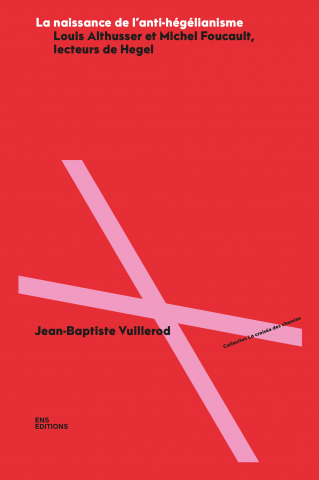
</a Jean-Baptiste Vuillerod, La Naissance de l’anti-Hégélianisme. Louis Althusser et Michel Foucault, lecteurs de Hegel, Lyon: ENS Éditions, 2022

Accès ouvert

Contre une lecture simpliste de l’anti-hégélianisme qui caractérise les œuvres de Louis Althusser et de Michel Foucault dans les années 1960, l’ouvrage propose un parcours dans les textes de jeunesse de ces philosophes pour mettre au jour l’ancrage hégélien de leurs problématiques. À l’aide de nombreux documents d’archives et d’une lecture minutieuse de l’évolution intellectuelle d’Althusser et de Foucault, cet ouvrage cherche à montrer comment ces derniers ont élaboré leur pensée à travers une critique immanente de l’hégélianisme. La compréhension renouvelée de la raison, du sujet et de l’histoire qui s’est développée dans la philosophie française des années 1960 nous apparaît dès lors de manière nouvelle : loin de s’être construite unilatéralement contre Hegel, la formidable réinvention philosophique qui a eu lieu à cette époque est née d’un dialogue, conflictuel mais fécond, avec l’œuvre hégélienne. Le sens et la vision que nous avons de la philosophie française du second XXe siècle dans son ensemble s’en trouvent ainsi profondément transformés.

Jean-Baptiste Vuillerod est agrégé et docteur en philosophie. Il a publié Hegel féministe. Les aventures d’Antigone (Vrin, 2020), Adorno et la domination de la nature (Amsterdam, 2021) et a notamment dirigé le dossier « Spinoza révolutionnaire ? La lecture de Gilles Deleuze » aux Archives de philosophie (2021). Il a également assuré l’édition scientifique du texte de Jacques Martin, L’individu chez Hegel (ENS Éditions, 2020).

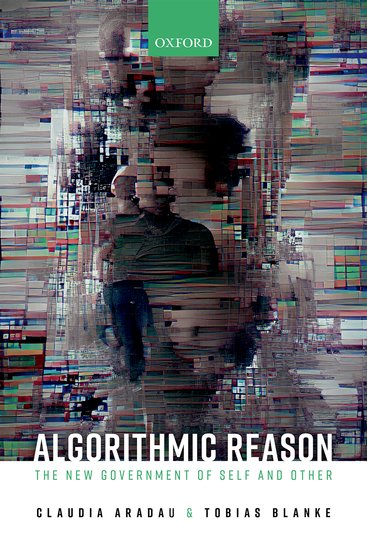
Claudia Aradau and Tobias Blanke, Algorithmic Reason, The New Government of Self and Other, Oxford University Press, forthcoming May 2022

Open access

  • Provides a critical analysis of algorithmic reason and its impact on key political concepts
  • Adopts a global transdisciplinary perspective on algorithmic operations
  • Explores well-known controversies such as the Cambridge Analytica scandal, predictive policing in the US, and the use of facial recognition in China

An open access title available under the terms of a CC BY-NC-ND 4.0 International licence

stuartelden's avatarProgressive Geographies

Mark G.E. Kelly, Normal Now: Individualism as Conformity – Polity, March 2022

This is a book about what we consider normal. It details how the very concept of normality emerged in the modern era, and how it has changed over the centuries.

By the mid-twentieth century, the expansion of norms across various areas of human endeavour generated a governing normative order in Western societies. Normality was defined as conformity with a narrow model of conventional human behaviour. However, this model has since been displaced by an anti-conformism, in which normality is defined as absolute self-fulfilment, defying older restrictions on our behaviour. Paradoxically, narcissistic individualism and rebellion against conformity have become compulsory.

Normal Now explores in detail how this new normative order plays out today in the arenas of politics, health, and sex and sexuality. In all these areas, the uncompromising perfectionism of our norms of self-expression leads to increasingly deep-seated…

View original post 105 more words

Nørup, I., Jacobsen, B.
Not seeing the elephant in the room: How policy discourses shape frontline work with child poverty
(2021) Social Policy and Administration

DOI: 10.1111/spol.12784

Abstract
Based on strong discourses of individualization, active welfare reforms in Denmark have changed the financial security of vulnerable families and increased numbers of children are growing up in poverty. This study investigates how poverty is reflected in frontline workers’ categorizations of children considered vulnerable. Empirically, the study draws on qualitative group interviews with 56 informants and descriptive results from two surveys with almost 2000 respondents each. Findings are analysed using Foucault’s theory of disciplinary power. The findings give an important insight as to how policy discourse influences and steers the moral and professional judgement in the frontline and why social work with vulnerable clients takes on particular forms. The results show that frontline workers implement and reproduce an individualised discourse found in recent social policy reforms while overlooking societal structures defining the individual’s possibilities. In particular, poverty is left unrecognised, as categorizations of ‘normal’ versus ‘vulnerable’ revolve around family relations and perception of personal shortcomings of the parents. © 2021 John Wiley & Sons Ltd.

Author Keywords
children’s services; implementation; public policy making; regulation and accountability; social work and workers

Spicksley, K.
Early career primary teachers’ discursive negotiations of academisation
(2021) British Journal of Sociology of Education

DOI: 10.1080/01425692.2021.2003183

Abstract
This article reports findings from a small-scale research project which explored the professional identities of early career teachers working in primary academies in England. During interviews and focus groups, these new teachers resisted identifying as ‘academy teachers,’ constructing academy status as an unimportant feature when deciding where to work. I theorise this phenomenon using Foucault, arguing that the willingness of new teachers to construct academy schools as ‘no different’ to their maintained counterparts is a key factor in the success of post-2010 academisation as a biopolitical project. © 2021 The Author(s). Published by Informa UK Limited, trading as Taylor & Francis Group.

Author Keywords
Academisation; Discourse Analysis; Early Career Teachers; Teacher Identity