Foucault News

News and resources on French thinker Michel Foucault (1926-1984)

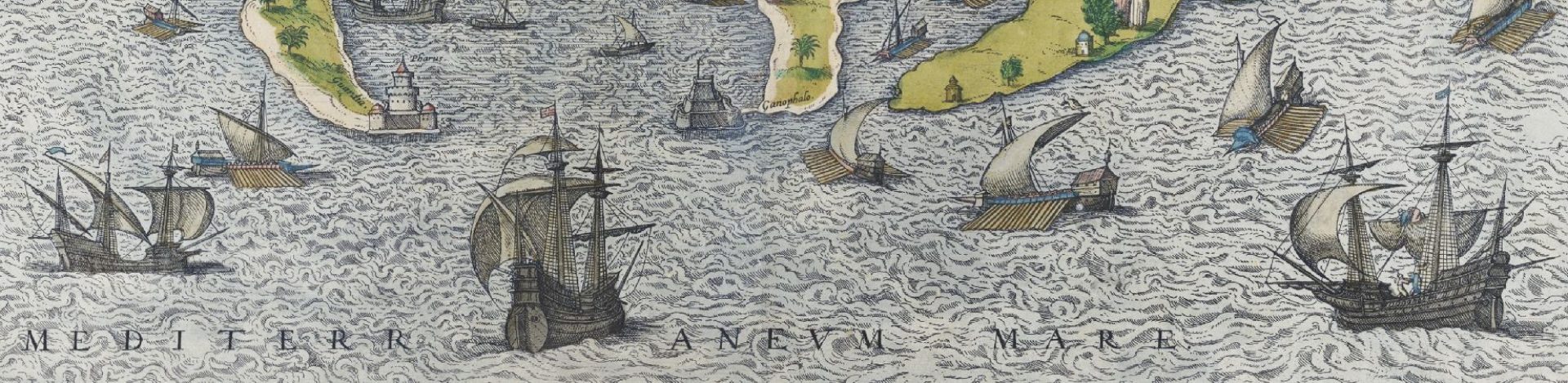
Chris Philo,‘A great space of murmurings’ Madness, romance and geography, Progress in Human Geography April 2013 vol. 37 no. 2 167-194 https://doi.org/10.1177/0309132512460980 Abstract Prompted by the 50th anniversary of the first publication of Foucault’s famous book commonly known in English as Madness and Civilization, this essay explores how the book has changed between versions, in …
Continue reading

Varela, C.R. The Romantic Realism of Michel Foucault The Scientific Temptation (2012) Journal for the Theory of Social Behaviour, 43 (1), pp. 1-22.  https://doi.org/10.1111/jtsb.12000 Abstract Beatrice Han has argued that the theories of subjection (determinism: structure) and subjectivation (freedom: agency) are the “the blind spot[s] of Foucault’s work.” Furthermore, she continues, as historical and transcendental theories, respectively, Foucault left them …

Continue reading

Eduardo Rivera Vicencio,  Foucault: His influence over accounting and management research. Building of a map of Foucault’s approach, International Journal of Critical Accounting, 2012 Vol.4, No.5/6, pp.728 – 756 https://doi.org/10.1504/IJCA.2012.051466 Abstract: The aim of this work is to build a map of Foucault’s approach. To achieve this objective, this work is focused on a broad …

Continue reading

Michel Foucault, The Mesh of Power, Viewpoint Magazine, 2 (September 2012). Translated by Christopher Chitty Full article online We will attempt to proceed towards an analysis of the concept of power. I am not the first, far from it, to attempt to skirt around the Freudian schema that pits instinct against suppression [répression], instinct against …

Continue reading

Allen, A. (2012) Using Foucault in education research, British Educational Research Association on-line resource. Michel Foucault is frequently cited in educational research. Care should, nevertheless, be taken when reading work that makes use of Foucault as interpretations of Foucault’s ideas vary almost as widely as the uses to which they are put. This resource, designed …

Continue reading

Carlsson, P. Foucault, Magritte and negative theology beyond representation (2013) Studia Theologica – Nordic Journal of Theology. Published online: 20 Feb 2013 https://doi.org/10.1080/0039338X.2012.733729 Abstract Recent theological writings on the French philosopher Michel Foucault often mention Foucault in relation to negative theology. This article discusses the negative motion in Foucauldian thinking through Foucault’s essay on the Belgian painter …

Continue reading

Oels, A.(2013), Rendering climate change governable by risk: From probability to contingency Geoforum, 45, pp. 17-29. https://doi.org/10.1016/j.geoforum.2011.09.007 Abstract In this paper, I use Foucault’s concept of governmentality to investigate changes in the risk management of climate change. In an exploratory analysis of primary and secondary sources, I demonstrate that the risk construction of climate change has shifted significantly …

Continue reading

David Nowell Smith, Surfaces: Painterly illusion, metaphysical depth, Paragraph, Volume 35, Issue 3, 2012, Pages 389-406 https://doi.org/10.3366/para.2012.0066 Abstract This essay analyses the way in which the relation between surface and depth in modern painting is endowed with philosophical significance in the work of Michel Foucault, Maurice Merleau-Ponty and Michel Henry. Whereas Foucault considered the work …

Continue reading

Marnia Lazreg, Poststructuralist theory and women in the Middle East: Going in circles? (2013) Contemporary Arab Affairs, 6 (1), pp. 74-81. https://doi.org/10.1080/17550912.2012.757884 Abstract This article examines the effects of the uncritical use of the poststructuralist Foucauldian theoretical approach on studies of Middle Eastern women and gender. Focusing on the twin concepts of ’empowerment’ and ‘resistance’ …

Continue reading

Teresa Macias, ‘Tortured bodies’: The biopolitics of torture and truth in Chile (2013) International Journal of Human Rights, 17 (1), pp. 113-132. https://doi.org/10.1080/13642987.2012.701912 Abstract In the same way that torture has become a common and privileged instrument of war and political repression, and a regular occurrence of our time, so, too, has the question of …

Continue reading