
Out of Unmündigkeit – Final Thoughts on Translating Kant on Enlightenment
Extract from a post from James Schmidt’s blog Persistant Englightenment.
Where Foucault Got it Right
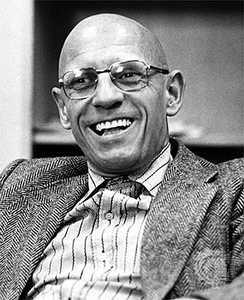 In opting for “exit” I allowed my reason to be guided by one particular discussion of Kant’s essay: that of Michel Foucault. In his Berkeley lecture on the question “What is Enlightenment?” he argued that, for Kant, the concept of Aufklärung
it is neither a world era to which one belongs, nor an event whose signs are perceived, nor the dawning of an accomplishment. Kant defines Aufklärung in an almost entirely negative way, as an Ausgang, an “exit,” a “way out.”5
As I’ve suggested elsewhere, there are a few minor problems with Foucault’s interpretation of Kant’s essay. But they pale in comparison with how much he got right, which means that his lecture has much to tell us both about how to translate Ausgang and, more importantly, about how to think about the question Kant was trying to answer. And, while I’ve have (at last) finished thinking about how to translate the opening sentence of Kant’s little essay, I’m far from finished thinking about Kant’s essay. And I’ve come to think that the best account of why it is so difficult ever to be finished with thinking about the questions that Kant’s answer poses in the one that Foucault offered. I hope to say more about that in future posts.
 Foucault News
One thought on “James Schmidt, Thoughts on Translating Kant on Enlightenment (2013)”